


New Scott Spark RC: Built for Modern Racing

Earlier this year, Scott released an all-new Spark RC, with a complete redesign aimed at the increasingly technical nature of modern racing.
While this is more a look at the bike and not a full blown review, we do have a test bike in the works so stay tuned for our comprehensive review. The new Spark RC remains firmly in the XC race category, the new Spark RC reflects how the discipline has changed. Courses are faster and rougher, with bigger technical features and more demanding descents. For marathon and stage racers, technical singletrack has also become a much bigger part of the race and the engineers at Scott have made changes to address these needs.

The biggest change to the bike is the frame layout – not so much geometry. The rear shock remains hidden inside the frame, but now sits lower in the chassis. Scott says this allows the mass to be more centralized while giving engineers more freedom to tune the carbon structure around the suspension. Although the reposition isn’t overly dramatic, it’s the kind of small change that I’ve noted (on other bikes) does make a profound impact on handling. The shock is accessed through magnetic and clip-mounted frame covers, providing protection from the elements without completely sacrificing serviceability.
The range-topping HMX-SL frame weighs a claimed 1427grams, including the frame covers and pivot hardware. Cleverly, the Spark RC isn’t tied to a proprietary shock – it remains compatible with standard XC shocks, giving riders and teams more freedom when it comes to suspension choice and maintenance.

The frame is designed with a ‘degree of controlled compliance’ rather than simply maximizing stiffness. The idea is to retain pedaling efficiency while allowing the chassis to better track rough terrain and maintain traction. It’s all about getting the right compliance in the right areas. Also cool, Scott has moved the bottle-cage mounting hardware outside the frame to allow for compatibility with longer dropper posts. There is room for two bottles, including on smaller frame sizes – a useful, if not crucial feature for marathon and stage racing.
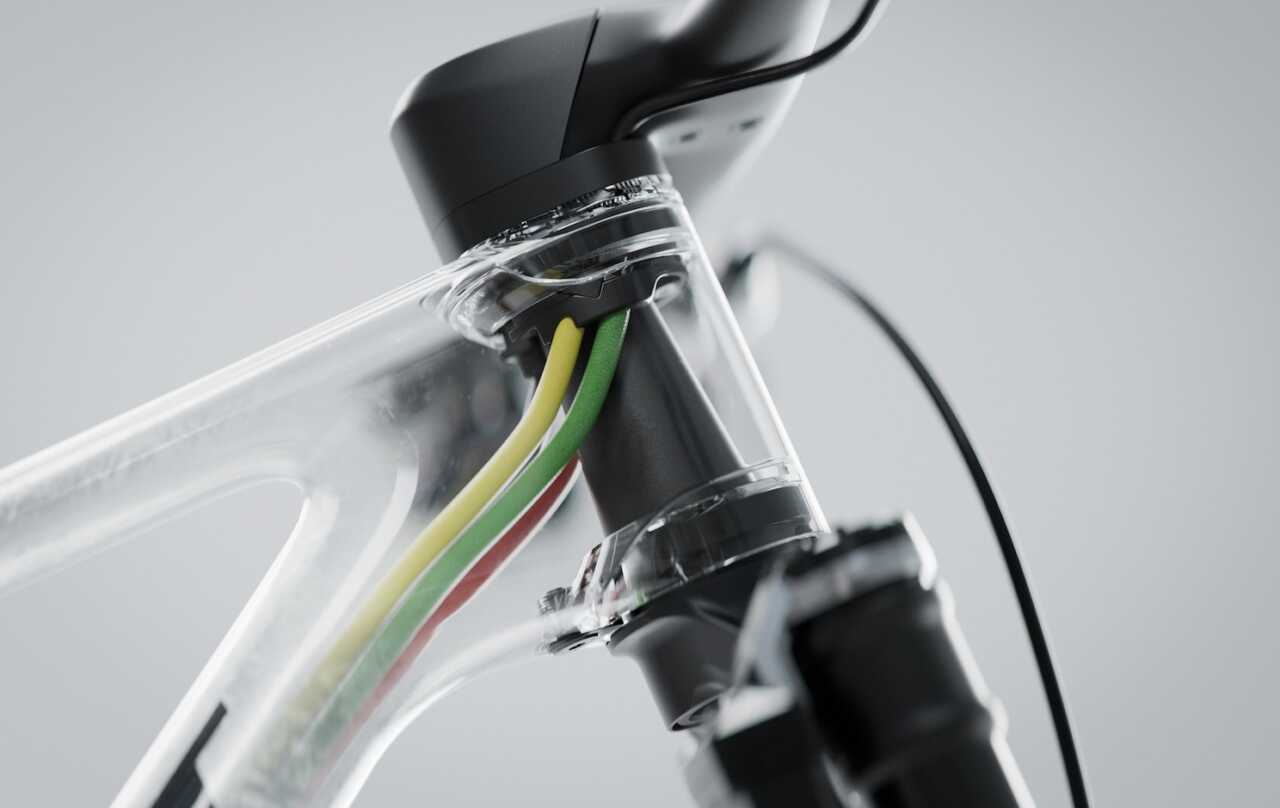
The Spark RC continues the brand’s approach to integrated components, but with a focus on making them reasonably accessible. The Syncros OCT cable-routing system uses colour-coded channels through the headset to simplify routing and maintenance. Selected models also get integrated frame storage for items such as a tube, tyre levers and a pump, along with a concealed multi-tool.
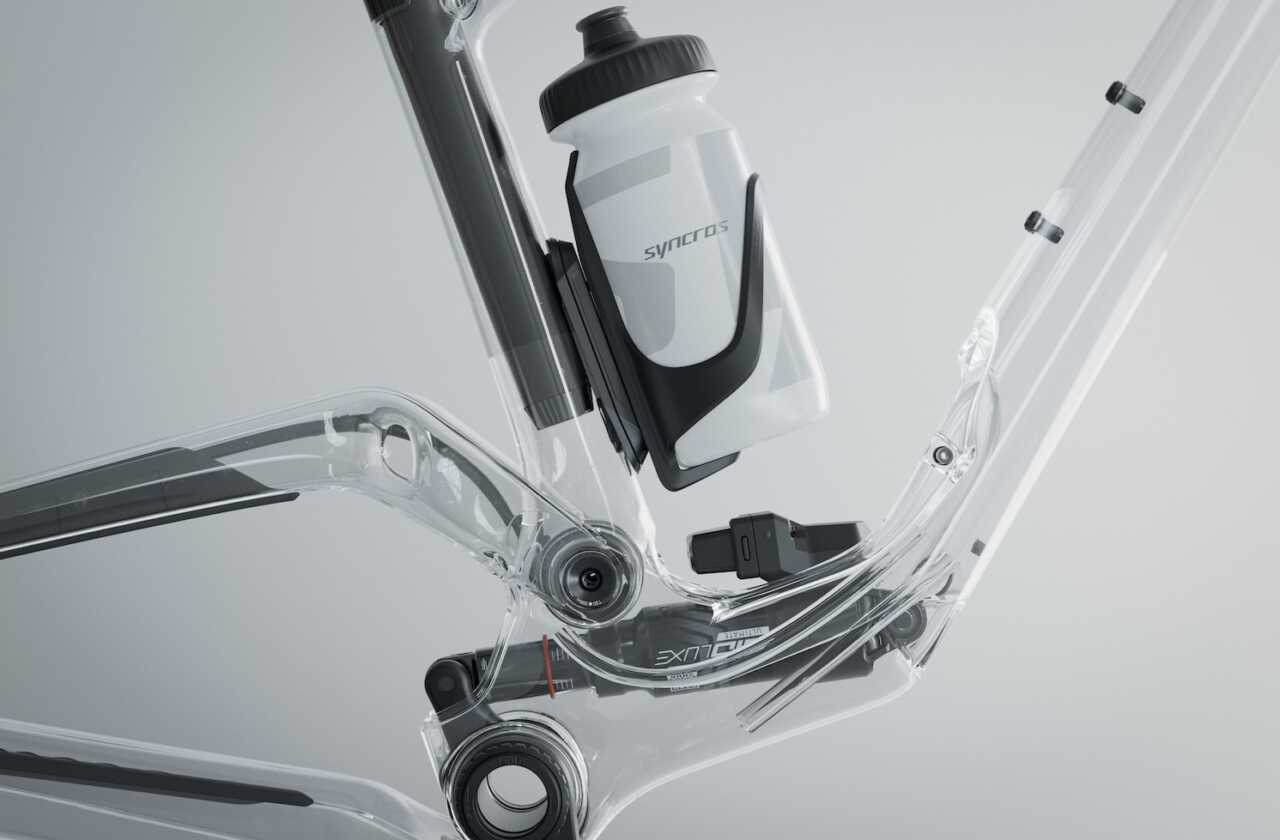
The new Spark RC may look familiar from the outside, largely because the suspension hardware remains hidden within the frame and there is no conventional rear pivot visible. Underneath, however, Scott has made a significant change to the suspension design. The previous Spark used a single-pivot layout with a linkage-driven shock. This fifth-generation Spark RC introduces a short link that rotates around the bottom bracket, with a pivot positioned just below the BB. The result is a more complex arrangement in which the chainstay length actually increases (slightly) as the suspension moves through its travel.
In terms of suspension behaviour, that gives the new Spark RC characteristics similar to a four-bar system, although the layout can also be viewed as resembling a mid-pivot swingarm design. It is a substantial change beneath a frame that still looks remarkably similar to its predecessor.

The new Spark RC was already being raced by Scott-SRAM before its official launch with multiple podiums at World Cups. Those results aren’t proof that the new frame is faster than everything else, but they do show that Scott has developed the bike with racing rather than simply laboratory numbers in mind.
The previous Spark RC was a race-winning machine and (with the help of Nino) was one of the most successful bikes of its generation. The new version takes a slightly different approach: keep the weight low, but give the bike more capability. Whether that translates into faster race times will ultimately be decided at the races. On paper, however, the Spark RC looks well aligned with where racing is heading. In this brand video, you can take a deeper dive into the recently-released Scott Spark RC as the engineers and athletes talk through it’s ride dynamics… //