


Opinion – Will 32ers Replace 29ers?

I spent some time at the recent Cape Epic, speaking to riders and industry insiders and one topic kept resurfacing in quiet conversations and off-the-record chats: 32-inch wheels. Not as a novelty, but as an inevitability – something coming down the line whether the broader market is ready or not. So here’s my take on what to expect.
Okay, so let’s get this out the way early: 32ers are not a gimmick. They’re real, they’re being raced and they’re coming to stores faster than most might be expecting. With governing bodies opening the door and prototypes already ‘around’, this isn’t another short-lived experiment. It’s the next step in a progression we’ve seen play out before.
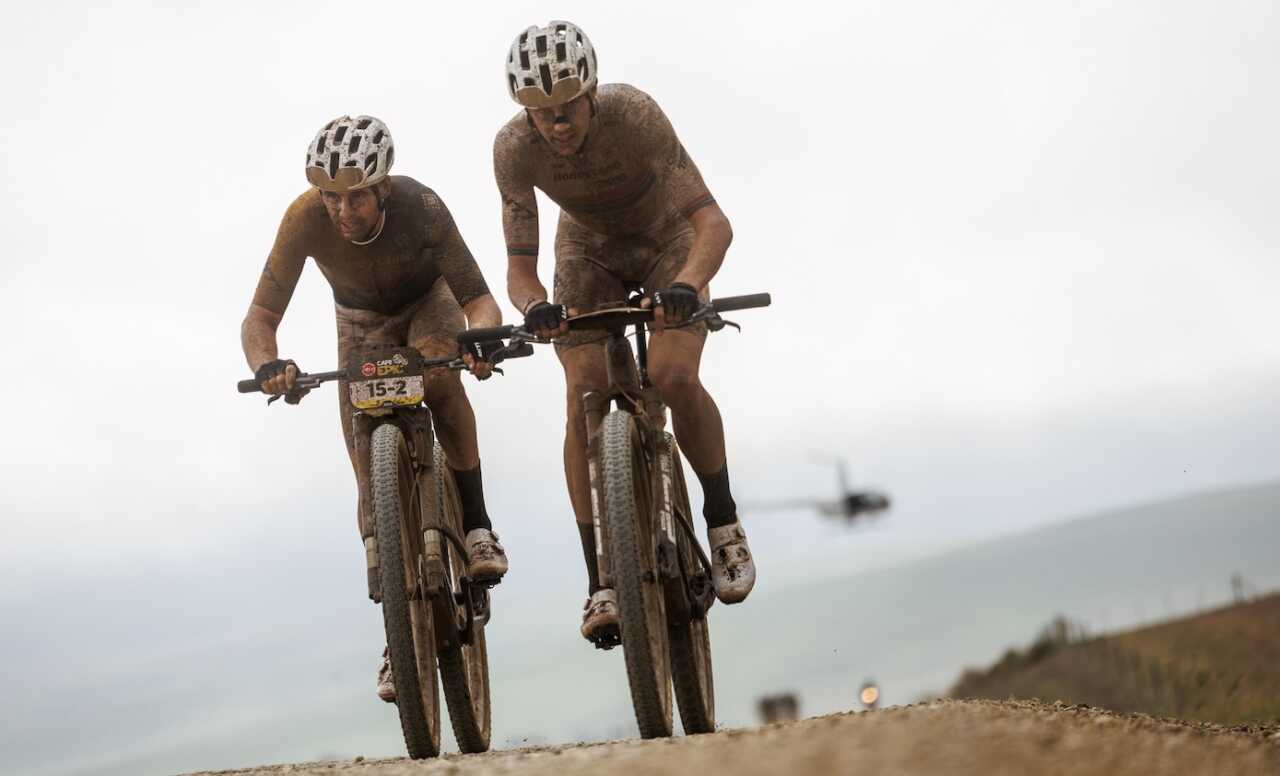
What’s the big deal about monster wheels?
The case for a bigger wheel has always been simple. A larger diameter rolls over obstacles more easily, carries momentum more effectively and delivers greater stability at speed. That’s exactly what made 29ers dominant and it’s exactly what 32ers promise – just more of it. The difference now is not a new concept, but an amplification of an existing principle. I’m told the 32er bike doesn’t just smooth the rough stuff out, it’s pretty much a magic carpet for marathon terrain. Rocks feel smaller, roots feel less edgy and the bike loses less speed every time it hits an edge. On rough marathon terrain, that translates directly into efficiency. Basically, less energy is wasted fighting the ground and more of it goes into forward motion. That alone makes 32ers hard to ignore.
On the bike, I’m told the first thing most riders will notice is the overall stability. The 32er feels planted – almost stubbornly so. Once it’s pointed in a direction, it holds that line with conviction. This is partly down to the increased gyroscopic effect of the bigger wheels, which resists quick directional changes (deflections) and keeps the bike tracking forward. On fast, rough XC or marathon descents, that’s a huge advantage. The 32er bike feels calmer, less deflected and less nervous when things start to get messy. We’ll probably use less energy holding the bike on a line or fighting for traction when their isn’t much.

That same characteristic, however, comes with a trade-off. The stability that makes a 32er so confident at speed, also makes it slower to react. Tight corners, quick line changes and last-second corrections will all require more effort. Where a 29er can still feel relatively agile, a 32er will lean toward a ‘planted not playful’ ride feel.
Momentum is where the bigger wheel really starts to separate itself. I’m told once a 32er gets up to speed, it wants to stay there. The added rotational mass means it holds speed through rough sections and subtle gradients in a way that smaller wheels simply can’t match. On rolling XC terrain, this translates into a faster ride as it carries speed through undulations, with less rider input.
What are the downsides likely to be?
That same mass that helps maintain speed also makes it harder to generate in the first place. Acceleration will take more effort, especially out of corners or on steep climbs. The 32er won’t respond instantly to watts – rather, I hear, it builds speed gradually and it prefers to keep it rather than constantly need to regain it. It’s likely, on tighter XCO courses, this may count against the 32er.

There’s also a subtle but important gain in comfort and traction. The larger wheel reduces the frequency and intensity of impacts, which means less feedback or vibrations coming through the bike (into the rider) and less fatigue over time. Over long rides (think more than two hours), especially on rough terrain, that can make a noticeable difference in how fresh a rider feels. Bigger wheels are unlikely to be a complete replacement for suspension, but it does take the edge off repeated hits and in some circumstances, slightly less travel (±10%) may be better.
The handling shifts further in the direction 29ers already took. If 29ers nudged mountain bikes toward stability, 32ers push them firmly into that territory. They’re less about playfulness and more about control. Riders who like to manual, jump and change lines quickly, will probably find 32ers a bit vanilla-like. Riders who prioritise speed, momentum and traction, will likely feel the opposite.
Where 32ers really make sense is in specific conditions. Fast, rough marathon courses (like the Cape Epic) are the obvious starting point. This terrain rewards momentum, efficiency and the ability to maintain speed through repeated impacts. In that environment, a 32ers strengths line up perfectly with the demands of the terrain. For the high-performance racer, small gains in performance compounded over hours in the saddle mean there’s less rider fatigue, better rolling efficiency and improved traction. In other words, it’s faster.
What about fit?
There’s also a strong case for taller riders. For years, wheel size has lagged behind frame size when it comes to proportional fit. A 32er begins to correct that imbalance, offering better geometry scaling and a more natural ride feel for bigger riders. It’s a niche advantage, but a significant one. Shorter riders however, might need to avoid them completely. I can’t see how someone under about 1.6m tall, is going to handle a technical trail with any level of efficiency (and safety) without risking significant tyre buzz or OTBs.
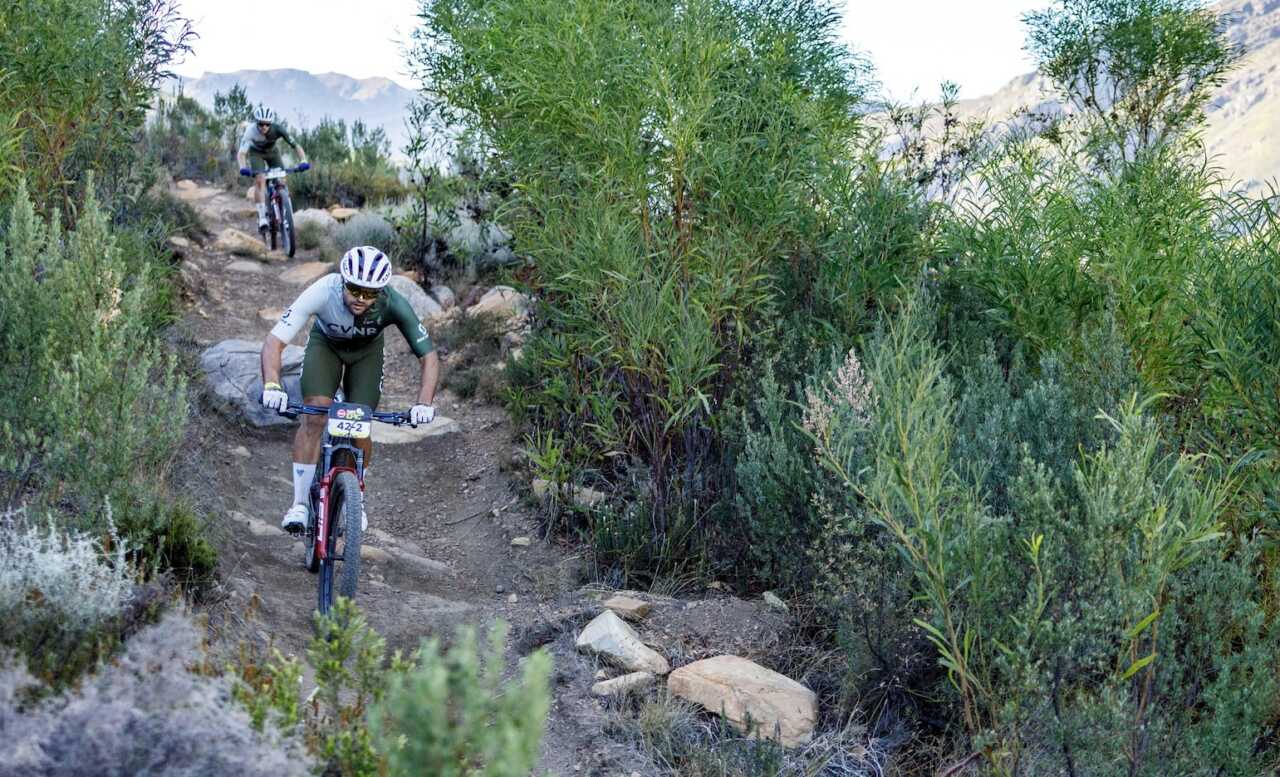
All of that said, 29ers are not going anywhere. In fact, in many situations, they might very likely remain the better choice. Tight, technical trails still favour a more responsive wheel size. Trails that demand constant acceleration, braking and direction changes expose the limitations of a larger wheel. And for riders who value a playful, dynamic ride, a 32er may feel like a bus.
There’s also the reality of availability and practicality. 29ers are established, widely supported and refined. Geometry, components and kinematics are all dialled. With 32ers, that process is only just beginning.
So will 32ers replace 29ers? No. But they don’t need to.
What’s far more likely is that 32ers carve out a specific role at the performance end of the endurance side of the sport. They’ll show up where speed, efficiency and stability matter most – particularly in some cross-country events and many marathon races. And in those environments, they may well prove to be the fastest option available.
For genres outside of Endurance, that’s Trail, Enduro and eBikes, the 29er and MX wheelsize will likely remain the benchmark. 29ers and the MX sizing hit’s the sweetspot between speed and agility, efficiency and fun. The bottom line is simple; a 32er is not going to be better everywhere. But in the right endurance race conditions, with the right rider, it will be faster. And that’s enough to make it matter. //
| Words: Myles Kelsey | Images: Nick Muzik / Cape Epic |