

Review: Giant Anthem Advanced Pro 29 1 | A race-ready XC whip with electronic suspension

How good is the new Anthem? What are the shortcomings of electronic suspension and what’s it like to live with?
Around 12 years ago Giant was one of the first brands to switch their XC bikes to 29er wheels. Despite some initial resistance to the bigger wheels, the early model Anthems were trendy and extremely popular. Fast forward to 2023 and this latest iteration has come a long way to meet the demands of XC racers. Compared to the original Anthem, this new bike is longer, lower and around 5 degrees slacker, has fewer pivots, more travel, a dropper post, and just about everything is carbon. In fact, this model Anthem is a winning bike of the Cape Epic.

At the heart of this model I’m testing is the Fox Live Valve electronic damping. Think of it as a traditional suspension damper with sensors that switch from firm to open settings as the terrain demands. Fox says that in a single second, the Live Valve can adjust the compression by up to 1000 times. That’s 100 times faster than the blink of an eye, which is just nuts! So then, what are the shortcomings of electronic suspension, what’s it like to live with and what of all the innovation in the new Anthem? Let’s get into it.
FEATURES & DETAILS

In South Africa, there are three models of the Anthem available. They all have 100mm rear travel with a 110mm fork, share the same geometry and grade of carbon. There are no alloy models available. Our test machine, the Pro 29 1, features the spicy Fox Live Valve electronic suspension system.

The major changes over the previous edition are 10mm extra travel front and rear, revised geometry which is ‘more sendy’ and an entirely new suspension layout. Seat tube size is now 30.9 which opens up compatibility with more droppers and adds some stiffness. Giant has dropped the short-dual link Maestro system and moved the new Anthem onto a single-pivot layout with a linkage-driven shock. By doing so they have removed one of the pivot points from the bike, which shaves around 250 grams from the frame. The main pivot is forward and pretty high which improves efficiency under power.
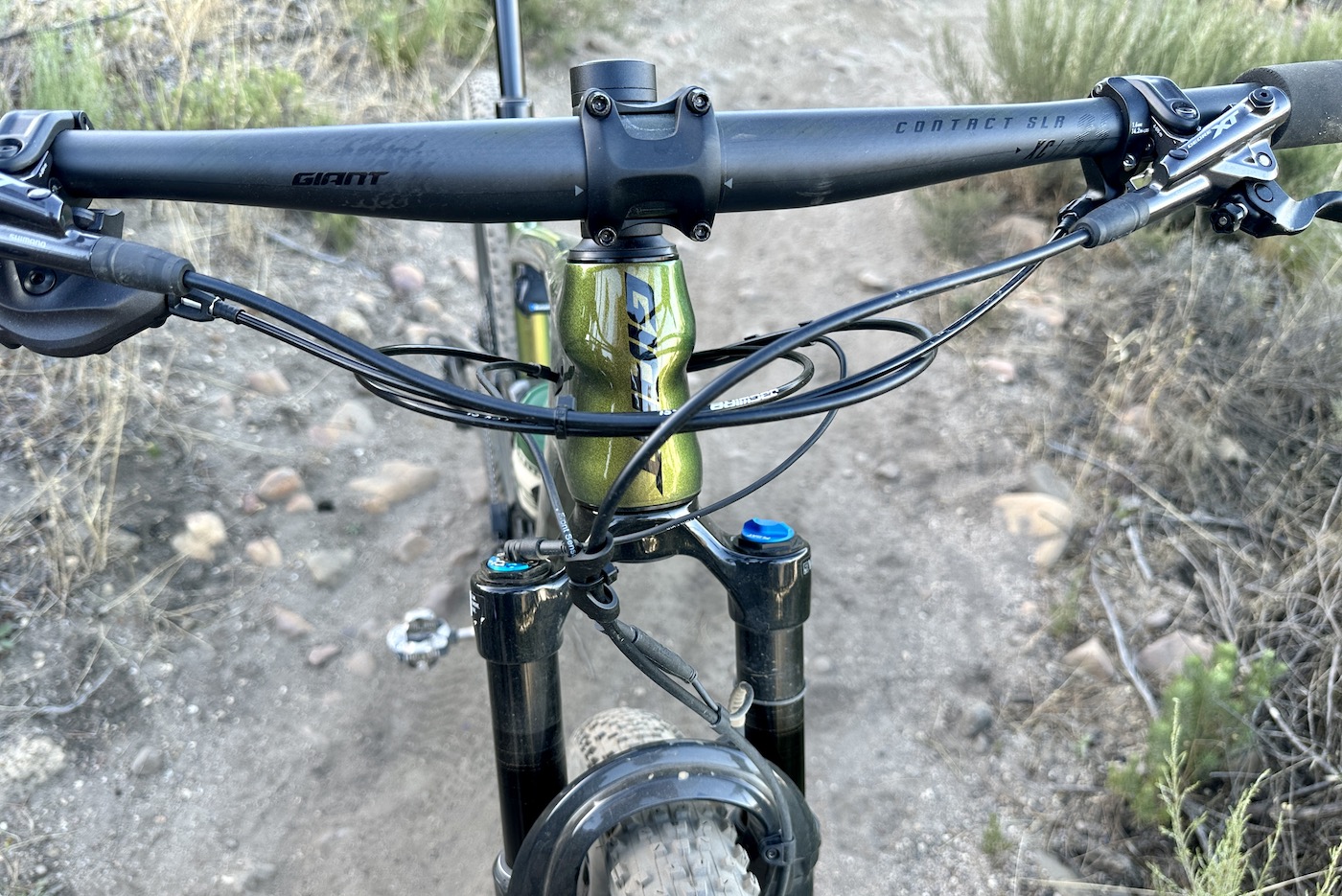


As with most brands, the overall finish of the bike is brilliant. There are smooth design lines, lovely paintwork and careful consideration of cable routing. The cockpit is busy; you’ve got a dropper post cable, two brake cables, a shifting cable and a wire for the fork sensor. The size large (tested) runs a 70mm Giant Contact SL stem paired to the 760mm Giant Contact SLR flat bars.


A 180mm front and 160mm rear rotor with Shimano’s XT brakes handles stopping duties. The Anthem is available in four frame sizes covering reach numbers from 420 to 495mm. A nice touch by the brand is fitting the two smaller frame sizes, with thinner grips. The small and medium frames are sold with 32mm Giant XC Pro grips whereas the two larger frames have 34mm grips.
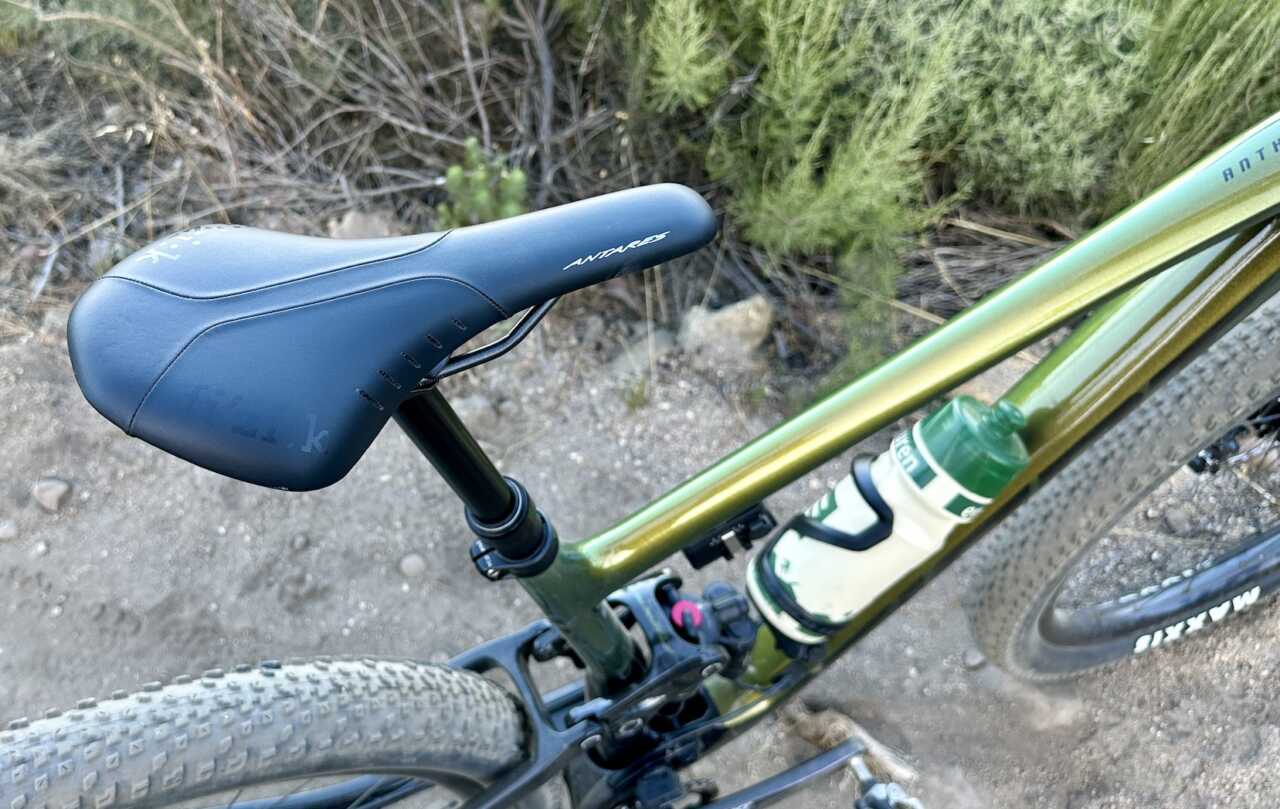
A Fizik Antares saddle is perched up on the 150mm Giant Contact Switch dual seal designed dropper post. The two smaller frame sizes are specced with a 125mm dropper.

The build kit includes race-ready Maxxis Rekon Race tyres – front and back – in the 2.4″ WT variety that are paired to Giant’s ±1500g and super fancy wheelset which has a wide 30mm inner width. The Giant XCR 1 29 Carbon ‘WheelSystem’ is a double-wall rim design with a hookless bead. The hubs have a double flange system which Giant says improves the bracing angles for a stronger and improved ride feel.

Drivetrain and shifting duties are all handled by Shimano’s XT groupset with 175mm crank length, a 32t chainring and the 10-51T, 12-speed cassette. The Anthem is equipped with a Giant specific, MRP chain guide.
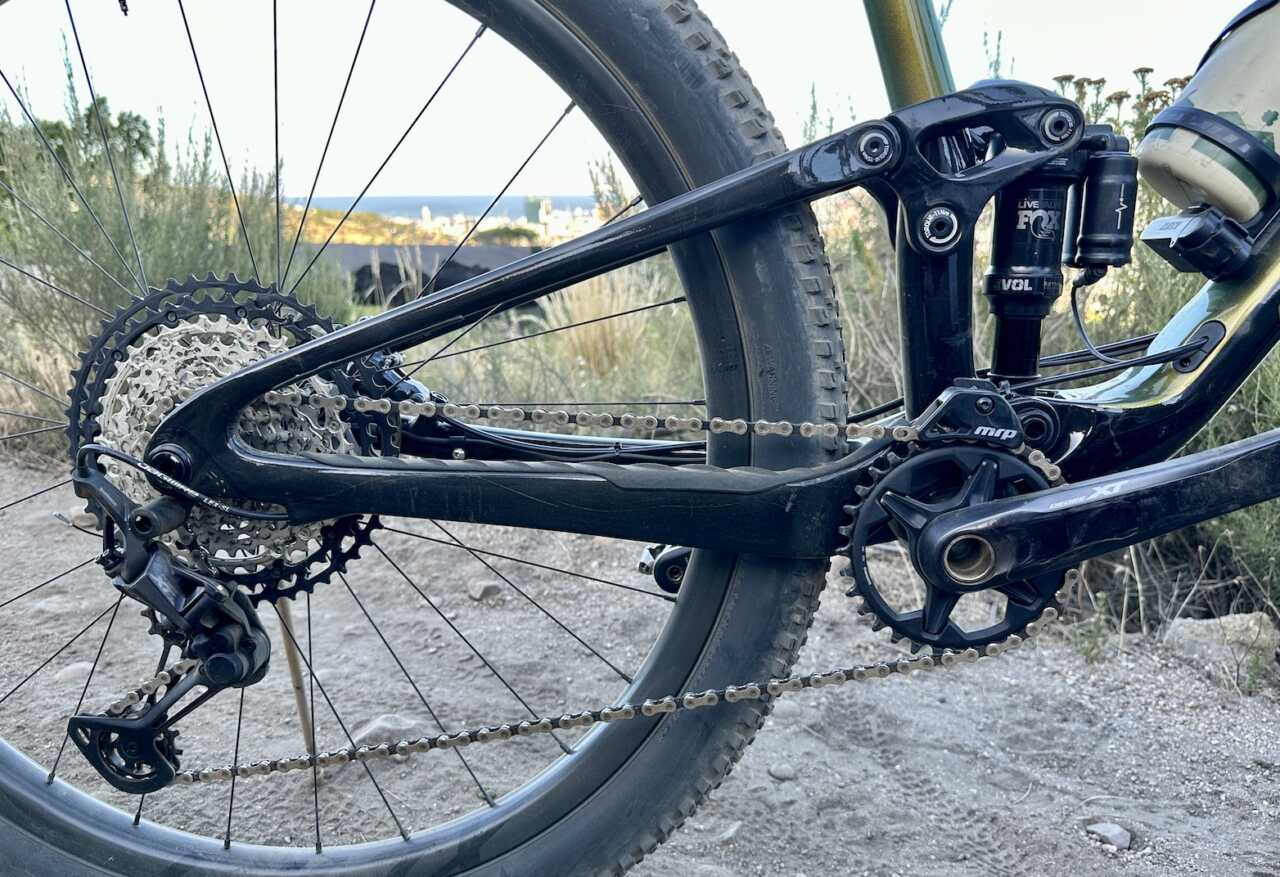
As mentioned earlier, the electronic suspension is supplied by Fox and goes by the name of Live Valve. Through the Live Valve App, there are five suspension modes to choose from and within those modes a further five sensitivity tunes to tailor the bike to your needs.


How does Live Valve work? | The default setting of the Live Valve is almost ‘locked out’ or very firm. Basically, it only opens when the wheels hit bumps or rough terrain. It is either in firm or open mode. A front sensor that is connected to the fork and a rear sensor that is connected to the chainstay near the rear axle, send input to the control unit that sits under the top tube. The control unit then decides what compression setting will optimize efficiency and it adjusts the compression settings (to either be firm or open) in the fork and shock accordingly. Now, this all happens very quickly, up to 1000 times per second – says Fox.

If the accelerometer detects zero gravity (freefall) for longer than 25 milliseconds, such as during a jump or drop, the suspension automatically opens to allow for the next impact. The performance of the system is optimized to work seamlessly in all riding scenarios, from steep climbs, to endless rolling singletrack to rugged descents.
Additional external compression adjuster bolts (operating both LSC and HSC) on the fork and shock allow riders to alter the firmness (compression) when the Live Valve is open. Setting up the Live Valve involves downloading the App and then pairing your phone to the bike which shouldn’t take longer than five minutes to do.

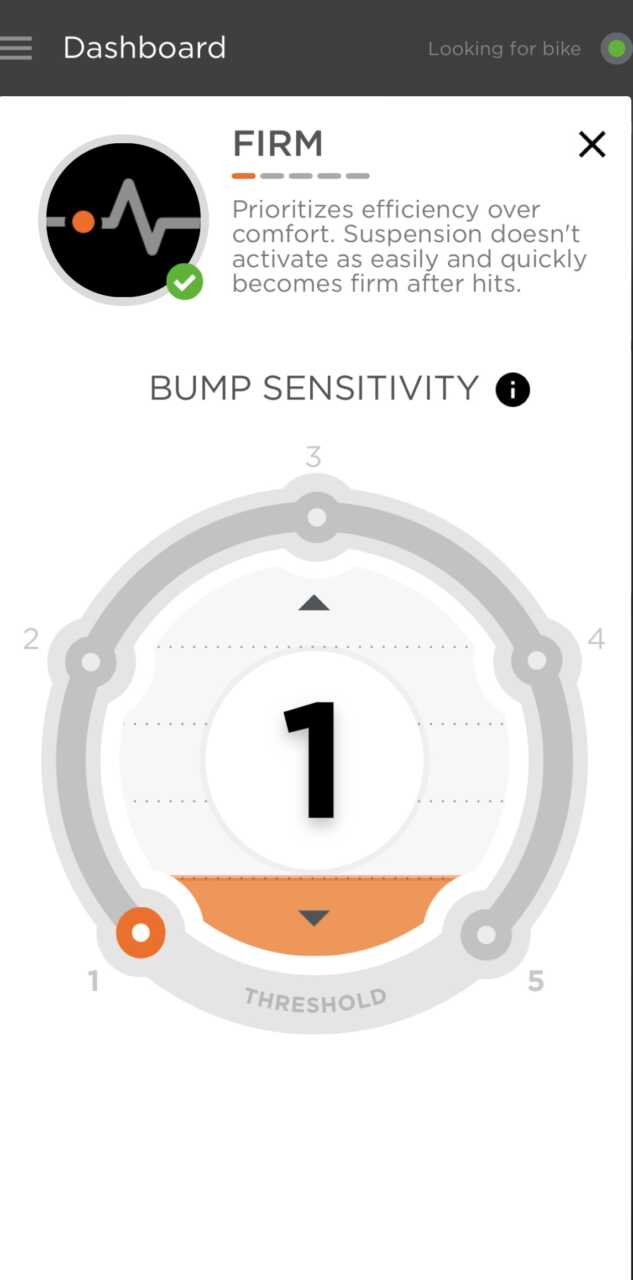
Once inside the App, the five mode settings of Climb, Firm, Sport, Comfort and Open are available for selection and inside each of those, the Bump Sensitivity can be tuned from 1 through to 5, with 1 being the most sensitive. The bike is supplied with a Live Valve tuning guide and a quick start guide that are pretty concise and simplify the setup process.
The Build Kit
| FRAME | 100mm rear, 29″, Advanced-Grade Carbon with new FlexPoint suspension layout |
| MODEL | Giant Anthem Advanced Pro 29 1 |
| RETAIL | R153 000 (at time of testing) |
| FORK | 110mm Fox 34 Float SC Performance Elite with Live Valve |
| SHOCK | Fox Performance Elite Live Valve |
| LOCKOUT | Live Valve electronic system |
| BARS | Giant Contact, 760mm wide, 35mm clamp size |
| STEM | Giant Contact SL, 70mm |
| SADDLE | Fizik Antares R5 |
| SEATPOST | Giant Contact Switch dropper, 150mm |
| WHEELS | Giant XCR 1 Carbons, 30mm Inner Diameter, ±1500g |
| TYRES | Maxxis Rekon Race 2.4″, EXO casing |
| CASSETTE | Shimano XT 10-51T |
| MECH | Shimano XT |
| SHIFTER | Shimano XT, 1×12 |
| CRANKS | Shimano XT, 175mm |
| BRAKES | Shimano XT with 180/160 rotor combo |
| WEIGHT | 11.6kg (As tested, with sealant, bottle cage, multi-tool and no pedals) |
There’s not much to junk on the entire build kit. Absolute weight watchers might look at a carbon crankset to save around 100 grams and racers living in Gauteng might switch the tyres to something less aggressive.
GEOMETRY & SIZING
The geometry update is pretty significant. The Reach is shorter on the small and longer on the XL thereby offering a broader range of fit. The head angle is now 1,5 degrees slacker, the seat tube angle is 2 degrees steeper and the wheelbase is longer.

RIDE IMPRESSIONS
Is it just me or is it human nature that when we are introduced to new technology we are determined to expose its shortcomings? All this electronic fluff – I just don’t want to trust it – surely it’s going to do the wrong thing like firm up when I’m landing a drop, soften when stomping or lower the BB when I’m on a techy climb causing pedal strikes…. Also, why the hell do we even need it?

I did a few rides on this bike. Quite a few. 26 hours of riding to be exact. I mucked about with the suspension settings riding with 10% sag, then riding with 30% sag and finally settling on 20% front and 30% rear. It’s a race bike, a thoroughbred race bike, so I did most of the testing in the Climb and Firm settings.

As far as my mission to find shortcomings of electronic damping – I failed. I’ll add that the Live Valve electronic suspension is actually bloody incredible. There, I said it. On the mountain, the bike feels firm and fast when the trail is smooth. Into the jank, whether its roots, rocks, drops or jumps the bike feels like a traditional, well-damped, full-suspension XC bike. The Live Valve functions seamlessly – in any of the settings. Try as I might, I could not detect any sound or feel of the compression circuits switching from firm to open.

I found there are two main benefits of Live Valve. The first is its broad range of adjustability. The plethora of settings makes it possible to tweak the ride dynamics to suit particular challenges on a particular track. For example, on one of the test loops, there is a very rocky climb that’s difficult to get through without tagging a pedal. I battled with it. On the next ride, I switched to a more supportive suspension mode and the ride dynamics of the bike were altered, holding the BB higher, so I could clear the climb without tagging a pedal. The second main benefit is the peace of mind from knowing the bike is optimizing the suspension settings to help me maximize pace. This will be very helpful for racing snakes, Strava chargers and competitive social riders. When your heart rate is through the roof and you are on the edge, the mental boost of knowing you have sensors maximizing the system below you, is real. To add, the Tuning Manual is very user-friendly and getting set up and familiar with the product isn’t a stressful experience.

If you are still reading then you are likely a serious buyer or just highly curious and around about now you may be asking if I think you absolutely have to buy the Live Valve electronic suspension equipped Anthem. The simple answer is no, you don’t. The other two models available are great. Also, consider that the Live Valve adds around 350 grams over the traditional suspension models. However, in my opinion, the Live Valve does offer marginal gains so if you are serious about speed and have some extra cash in a brown paper bag (or under your sofa), then YES! Go for the Live Valve. You won’t be sorry.

Looking at the chassis, at 1,74m tall I rode the size large. The stock 70mm stem stretched me out too much and I preferred the feel of the bike with a 50mm stem. A benefit I enjoyed from upsizing is the increase in wheelbase. The Anthem is not a very long bike – it is on par with many XC bikes – which I think could all be a little longer – but I’ll save that for another article. The bottom line on the fit is if you feel you are in between sizes then go for the bigger one, the longer wheelbase adds stability at speed and that’s when you need it most.

There’s two highlights on the geometry that I think you should know. The head tubes are pretty short, with the XL only going up to 115mm. This is good. It really helps lower the front end to get the power down, which is a major priority for racing. Secondly, the head tube angle (67,5°) – that’s an excellent number to balance climbing prowess with singletrack shredding. XC bikes in this head angle range are easy to ride, safer at speed and pretty versatile too.

On that versatility of the Anthem: I rode the bike on tar climbs, smooth trails and stuff that’s roff as hell. Giant has designed this bike for Marathons, Ultra-Marathons and XCO racing. Stage racing too. It does handle rough trails well but if you are predominantly looking at a Downcountry / Funcountry / Backcountry machine then I’d say you’d need something stiffer and with more travel. I had this bike on the edge a couple of times and I never crashed, but it’s not the bike I’d buy to ride like a hooligan on. It’s built for XC speed. Having said that, the new Anthem is more of an all-rounder when compared to the outgoing model.

Except for a few shifting quirks – which might be down to the KMC chain that is specced – the build kit performed flawlessly. The dropper returns nice and quickly. The XT drivetrain is pretty quiet. There are no issues with the XT brakes although as weird as it sounds I kind of feel like we need bigger rotors on the back and smaller rotors upfront on XC bikes – as weird as that would look – it might ride better. The 180mm rotor on the front gives tons of stopping power and the 160mm rotor on the back was ting-ting-tinging – a lot! Running very hot that is. The wheels are amazing. Light, fast and strong enough for me. There’s quick engagement in the system too. Maxxis Rekon rubber has so much corner and climbing grip. Great tyres.
VIDEO: The Tech, Live Valve & more
TAKEOUT
I have ridden and was impressed by the rollover of the 2019 year model Anthem. In my opinion, this latest iteration, with its flex stay system, hasn’t lost any of that great rollover. What’s more, the improvements to the geometry are massive and the extra travel was much needed. Whilst I don’t want to see XC bikes crawl high into the R200k price point, I would like to see more electronic suspension offered, across more brands. It’s easy to live with and durability seems fine. Actually, I love it. Kudos to Giant for being one of the first to offer it. If you own or are buying one of these, it’s a bike you will cherish. I did.

| WORDS: Myles Kelsey | IMAGES & VIDEO: Rob Ward |
RELATED: Learn to control mid-race negative thought patterns