


Review: Trek Checkpoint SL 5 | Is this the bike that plunges you into the gravel world?

Combining performance and comfort, the SL 5 is a highly versatile gravel steed — but will it make you feel warm and fuzzy on the inside?
Despite an all-carbon frame, fork and seatpost, the SL 5 we have on test is the middle-tier offering in the Checkpoint family. Retailing at ‘just’ R63k, the affordability is largely augmented by Shimano’s 2×11 GRX gruppo, alloy wheels and alloy bars. Performance and versatility are cranked right up with the gravel-specific geometry, comfort-enhancing tech, a plethora of frame mounts and the large tyre clearance. Drool-worthy aesthetics are underpinned by the Émonda inspired ‘mildly aero’ tube shapes. Two questions remain. If the gravel world tempts you, is the SL 5 worth considering? What components (if any) need changing? Let’s have a look.

Features & Details
Although it is similar to endurance mountain bikes, gravel geometry is now a standalone thing. Recognizing this, Trek has rolled contemporary geometry into the full range of Checkpoints – that’s the alloy and carbon frames.
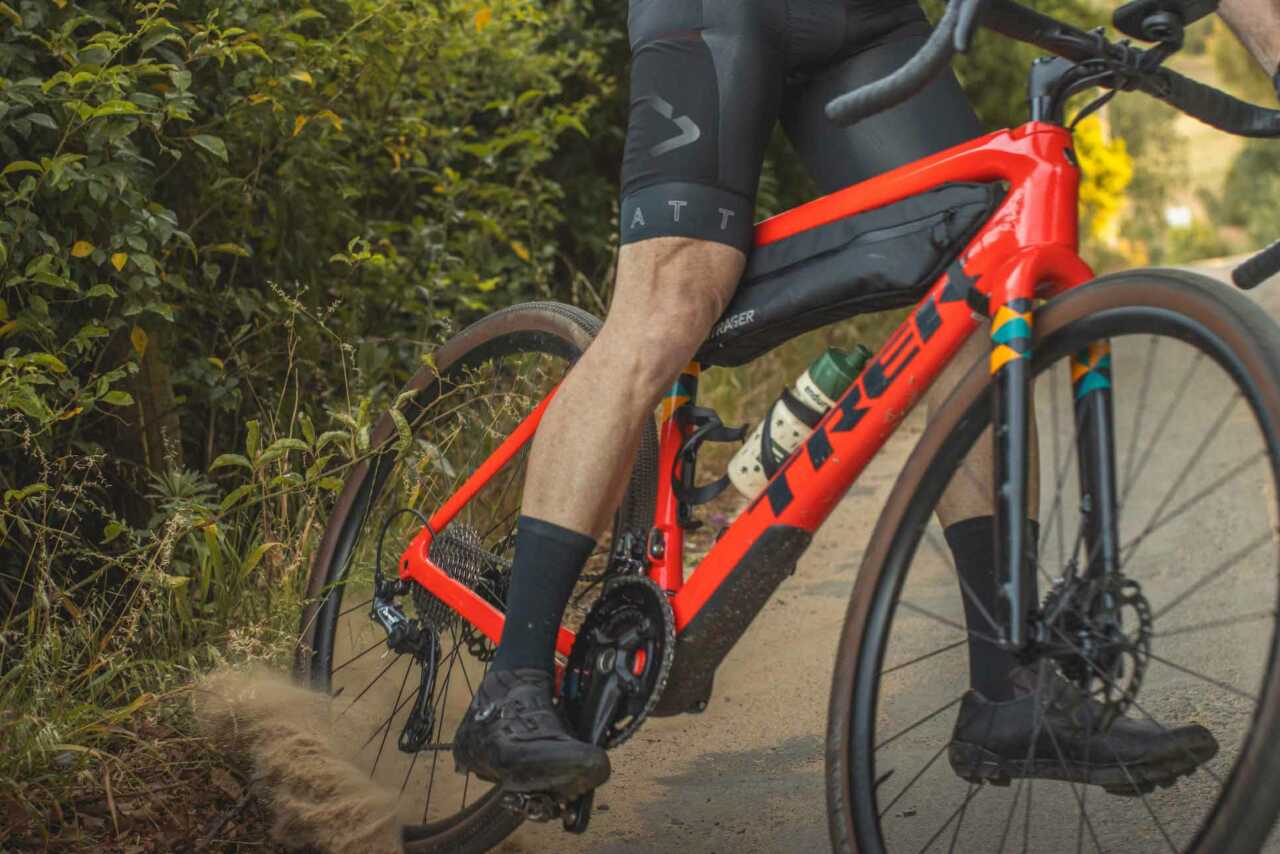
Highlights
| FRAME | 500 Series Carbon, Internal & semi-integrated cabling, Internal Storage, IsoSpeed Seattube |
| FORK | Carbon blades and steerer |
| BRAKES | Shimano GRX (hydraulic) |
| FRONT DERAILLEUR | Shimano GRX |
| REAR DERAILLEUR | Shimano GRX long cage (34t max) |
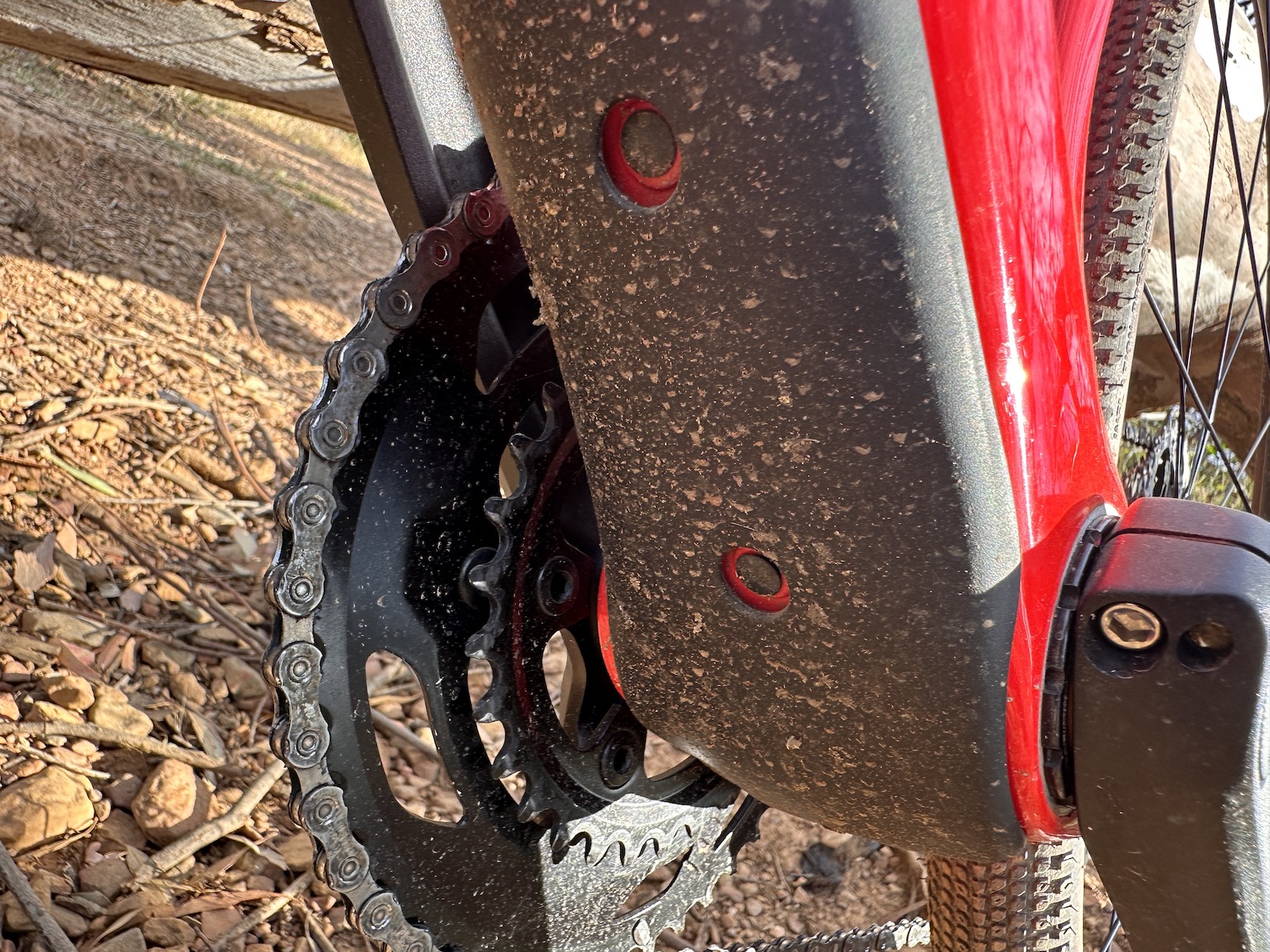
| CRANKSET | Shimano GRX, 46/30t, 172.5mm length |
| CASSETTE | Shimano 105, 11-speed, 11-34t |
| BARS | Bontrager Elite Gravel, 42cm, 13-degree flare |
| STEM | Bontrager Elite, 90mm |
| WHEELS | Bontrager Paradigm SL Tubeless, 21mm inner diameter |
| TYRES | Bontrager GR1, Tubeless, 700c x 40 |
| SADDLE | Bontrager Verse |
| ROTORS | Shimano CentreLock, 160mm front and rear |
| WEIGHT | 9.8kg actual. (Tubeless, no pedals) |
| RETAIL | R63 000 |
The SL 5 frame and fork are of the brand’s ‘light but not the lightest’ OCLV 500 Series carbon. Right at the top tube and seat tube junction is a key piece of vibration-eating technology that Trek has refined since originally introducing it, 11 years ago. Labeled IsoSpeed, it smooths out the ‘little hits’ of off-roading by decoupling the seat tube from the top tube. We understand there is around 10mm of total movement available, under full load.

The damping characteristics of this IsoSpeed are not adjustable – Trek says most riders don’t tweak the settings anyway and by removing the adjustability, the system is also a little lighter. To accommodate the movement, there’s a change in the shape of the lower section of the seat tube — from a round edge to a flat back. More compliance and vibration-damping benefits are derived from the small (27.2mm) round carbon seat post.
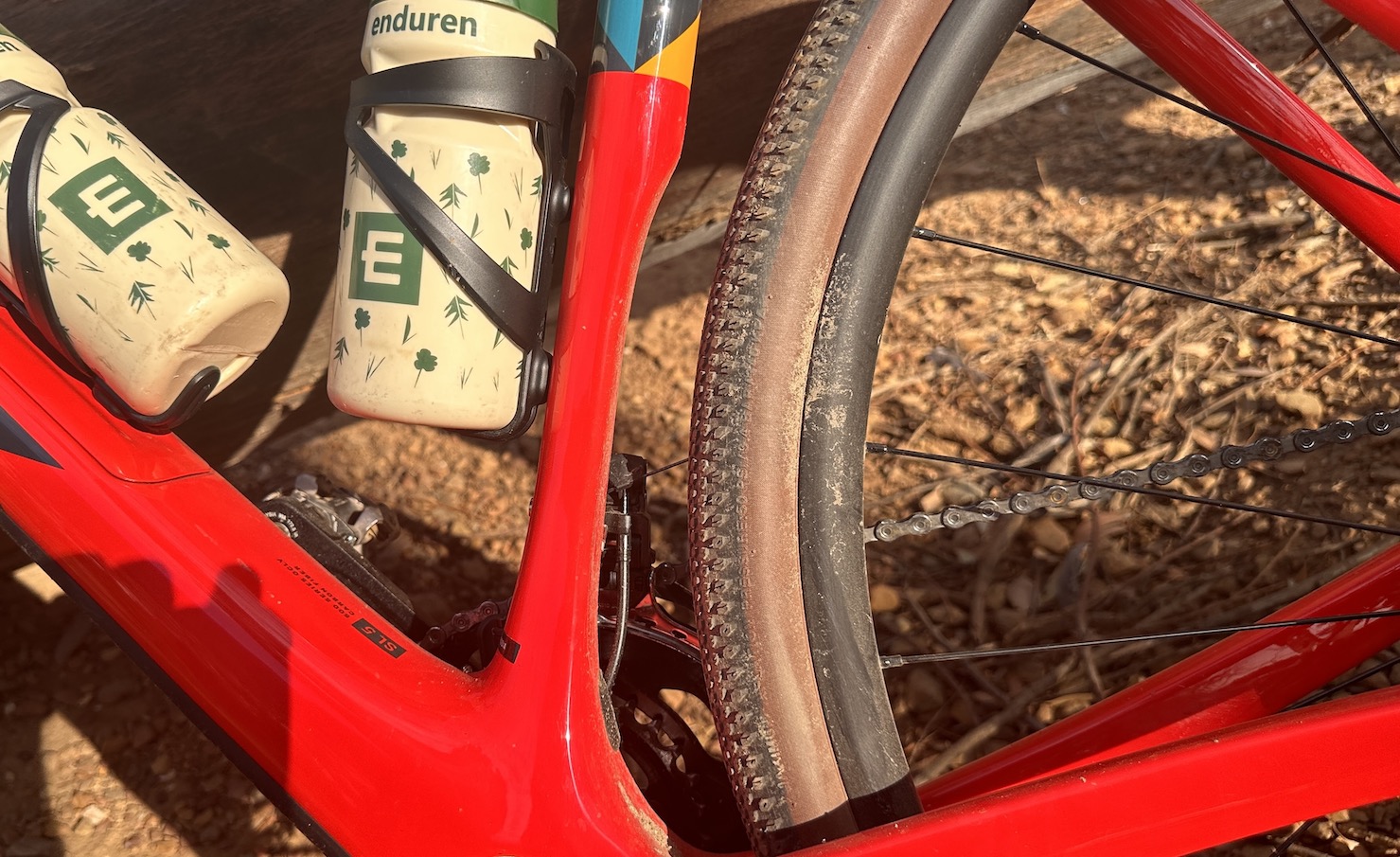
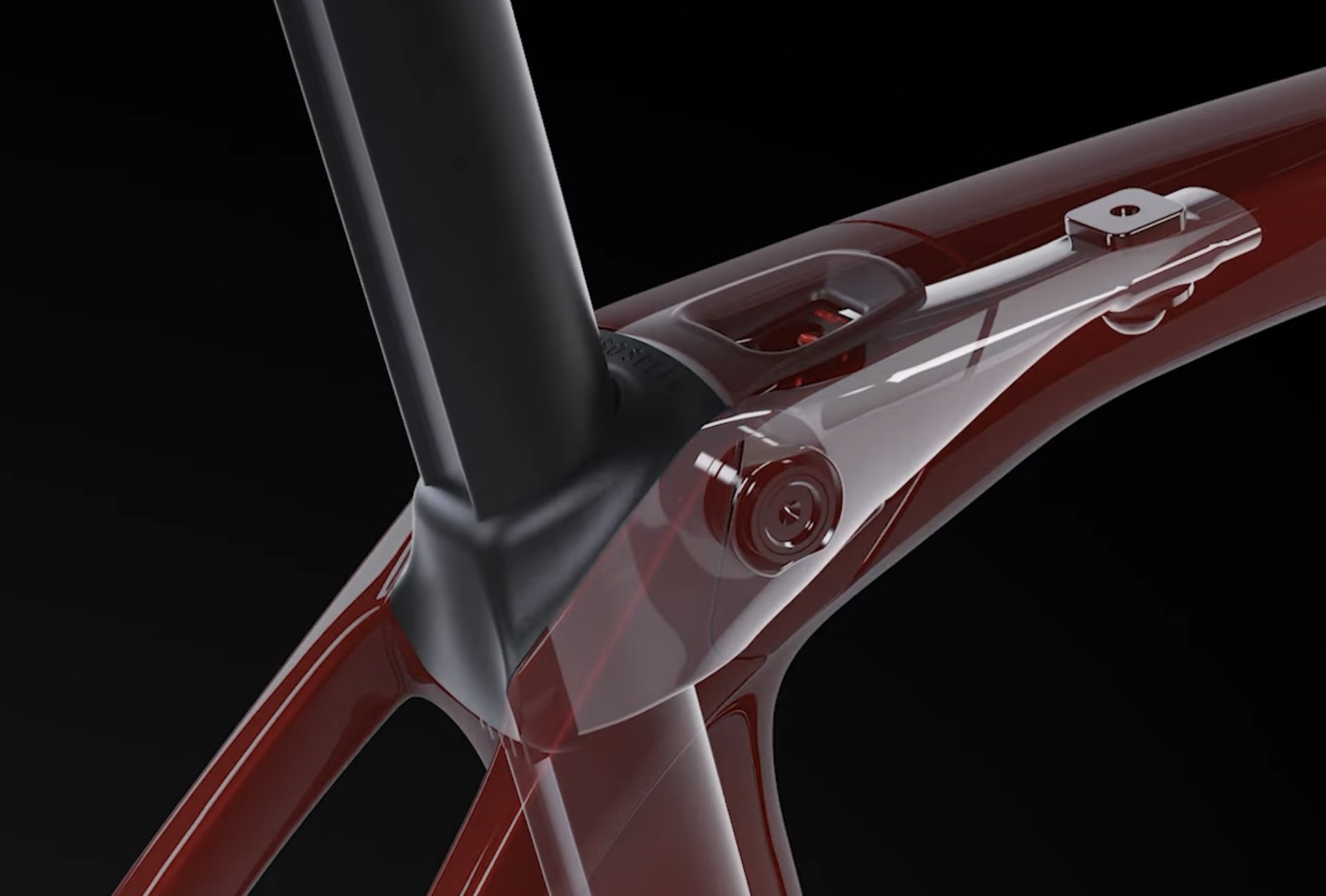

Bigger volume tyres also improve comfort and to that end the Checkpoint can ‘officially’ accommodate 45mm wide tyres on 700c wheels, or 2.1 in 650b. Integrated cabling starts at the head tube and runs throughout the bike adding truckloads of bling – plus a little aero.
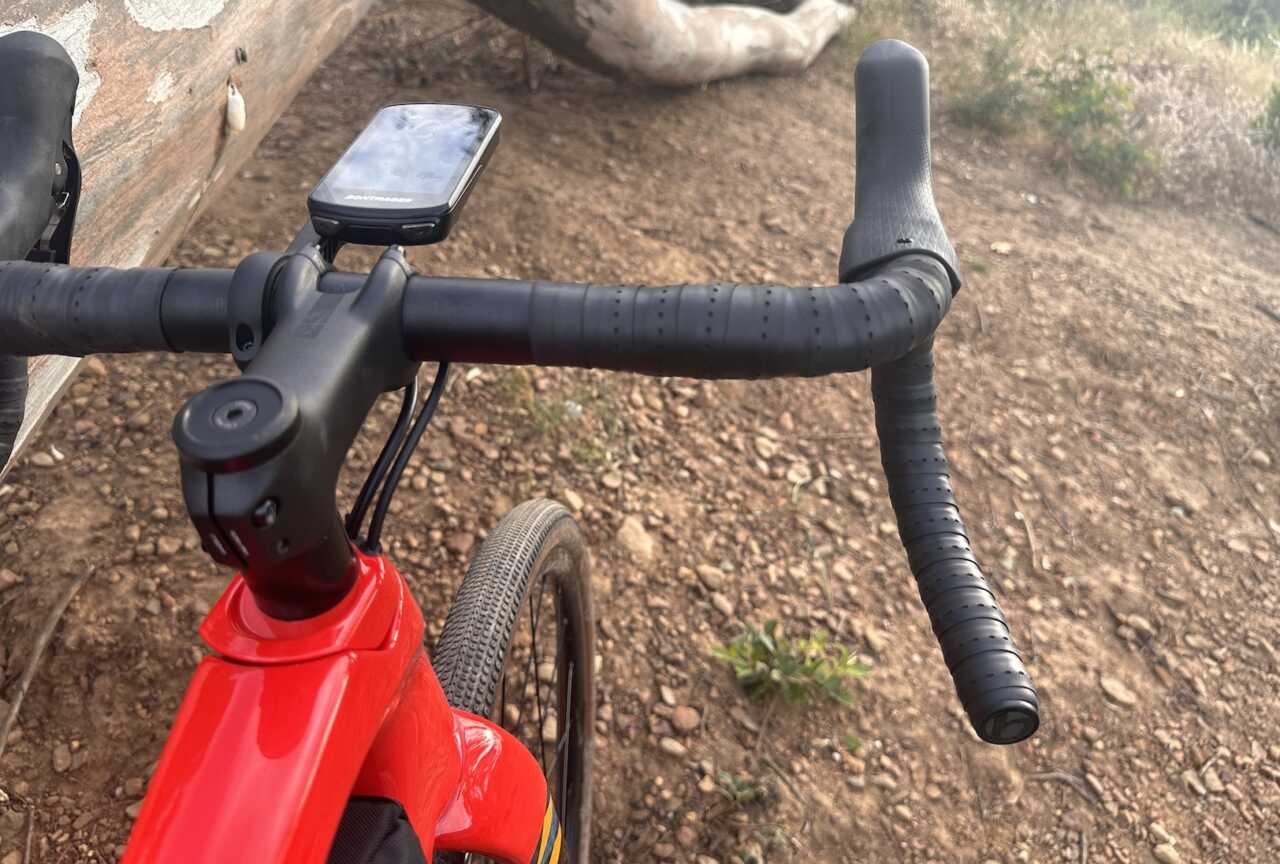
To improve off-road handling the Bontrager bars have a 13-degree flare in the drops and a shorter reach number of 75mm. The stem and bar is on the industry standard 31.8 clamp and they should be compatible with all clip-on aero bars.
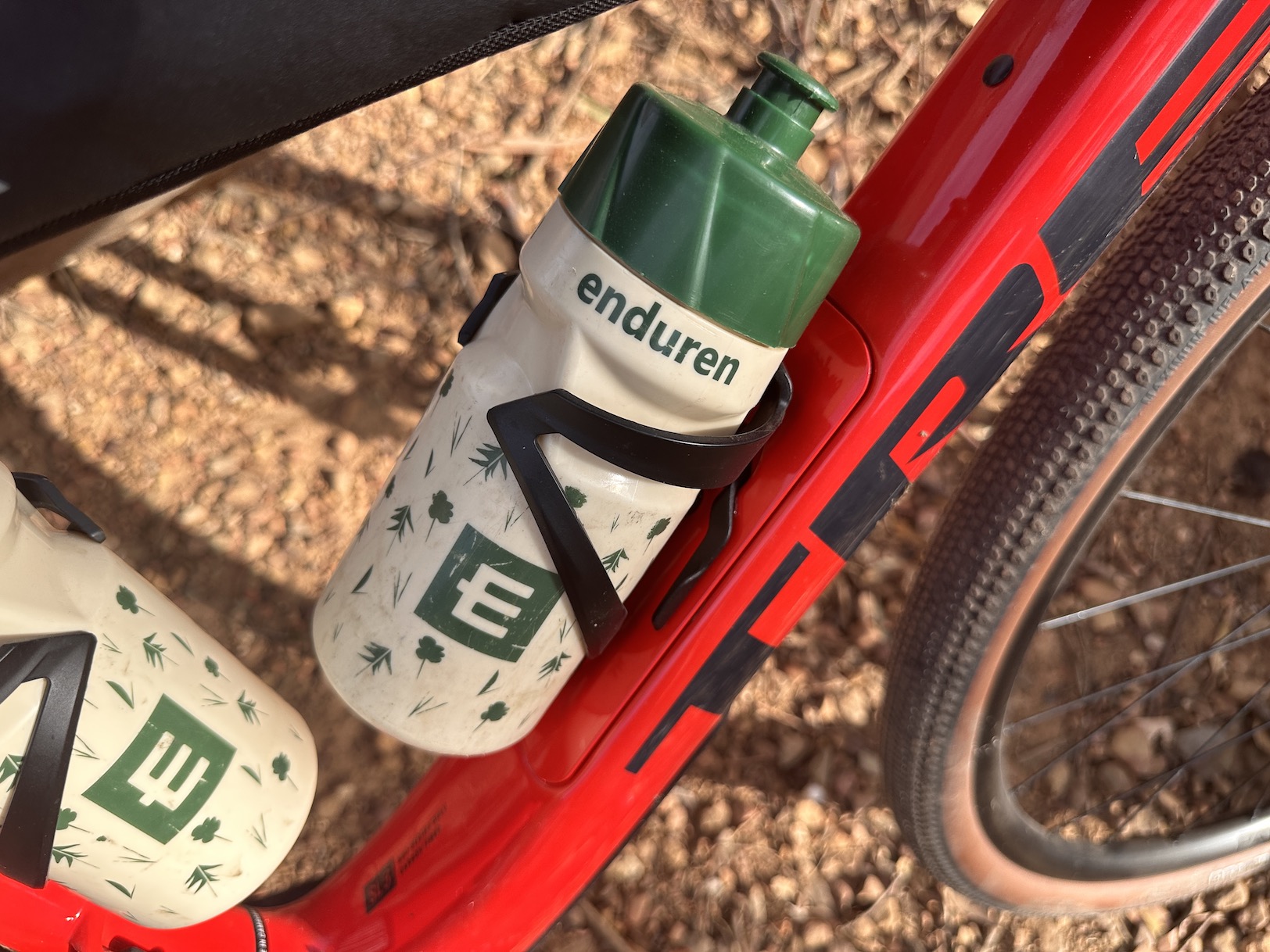
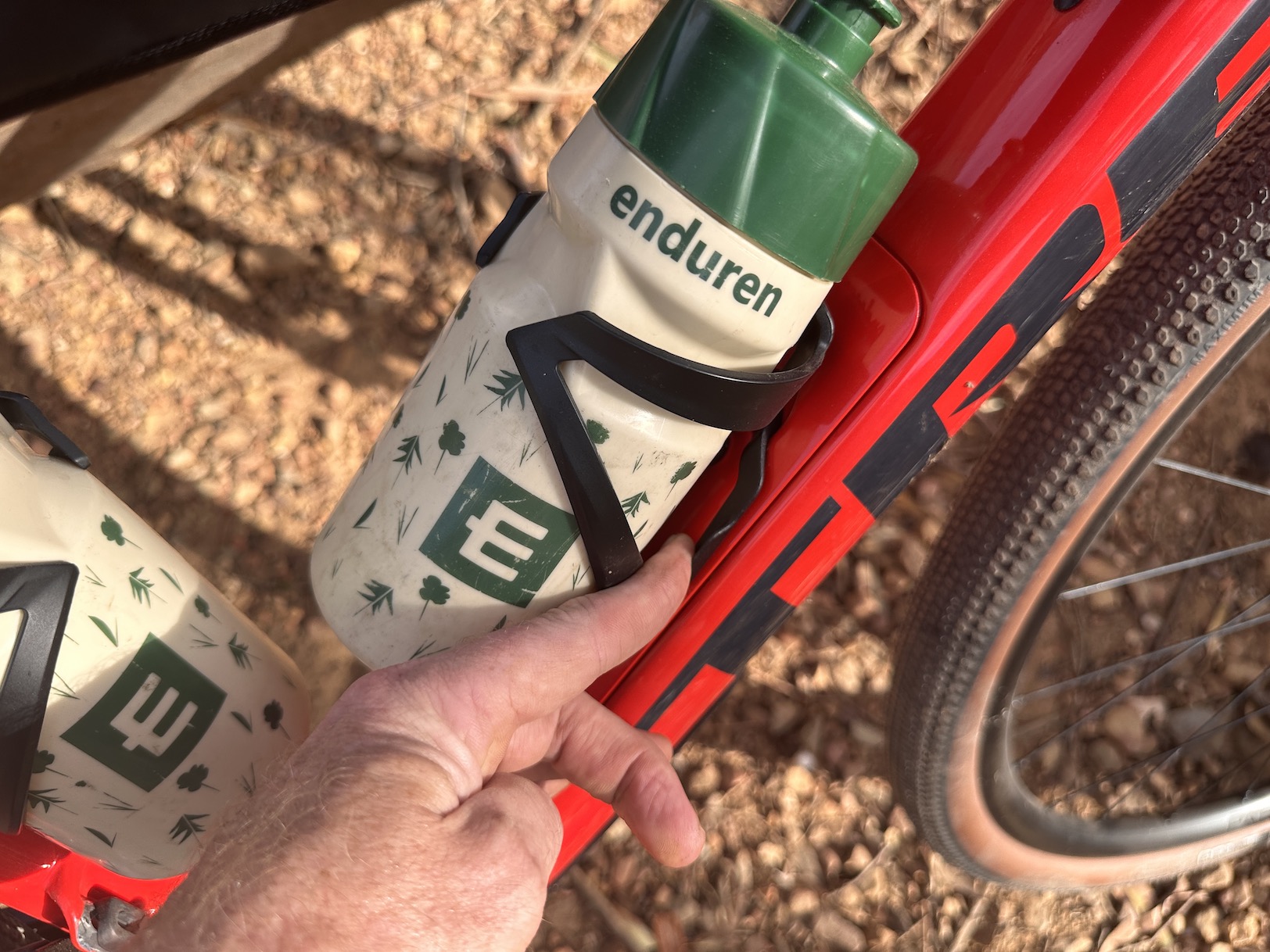

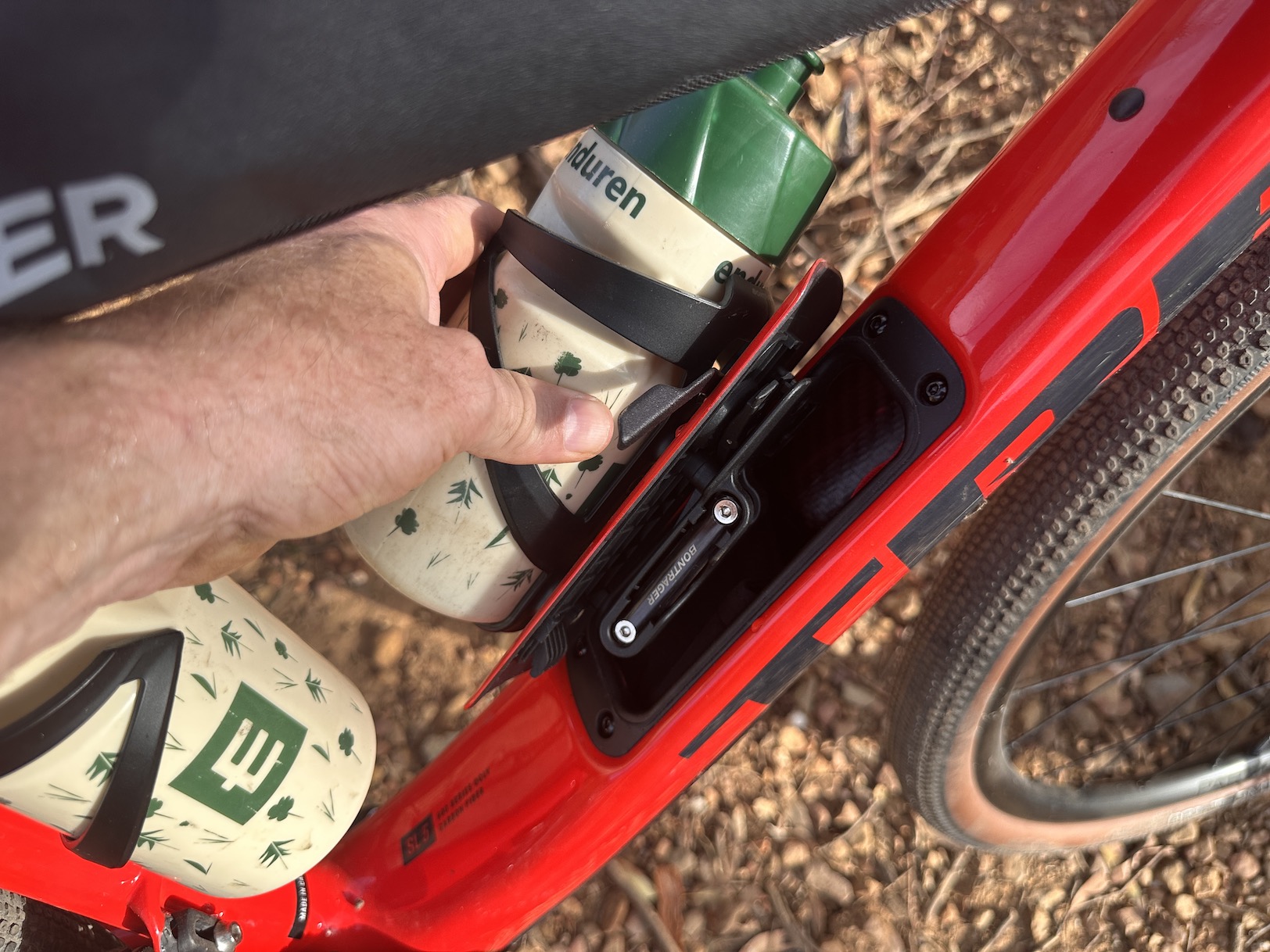
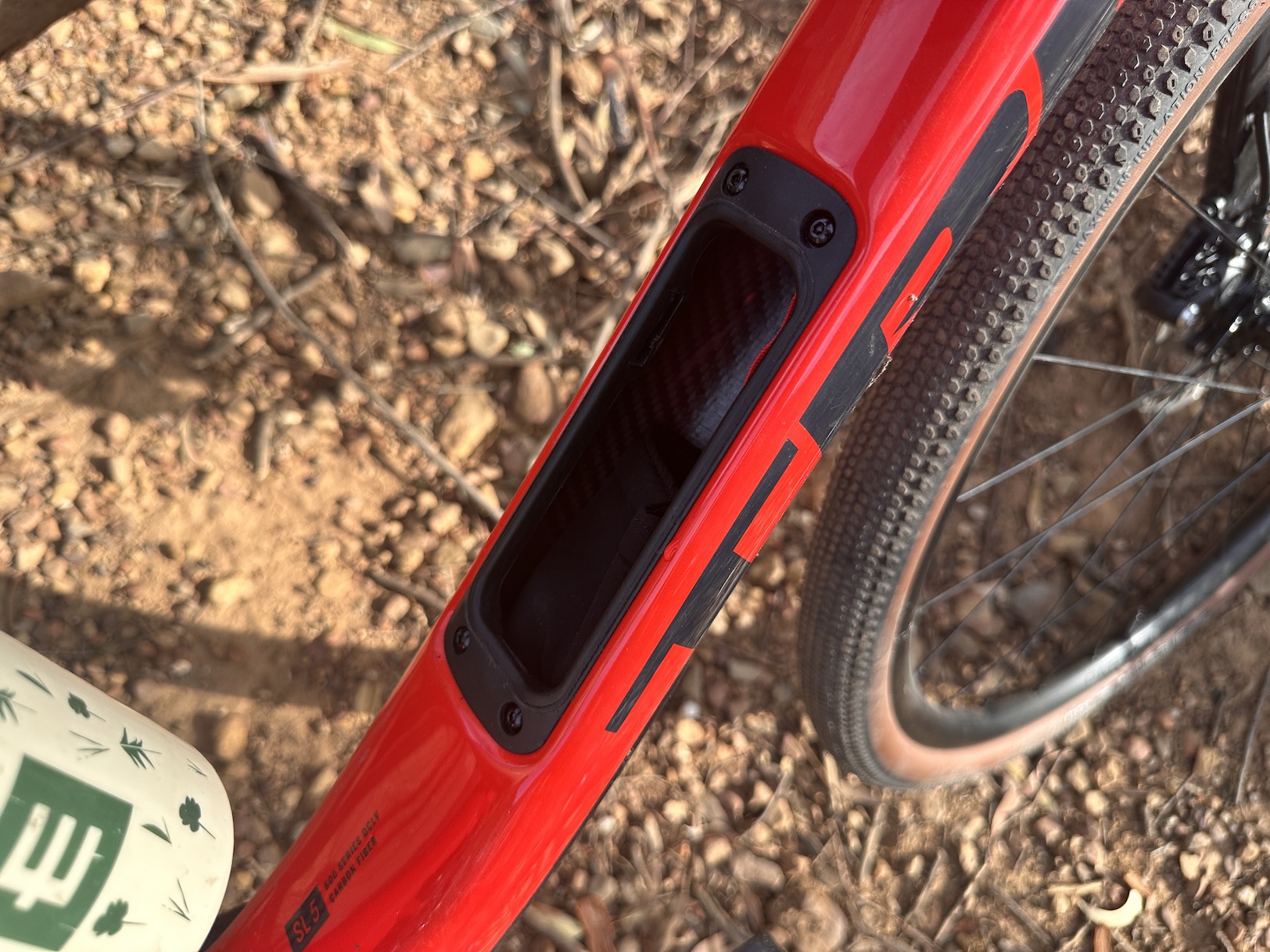
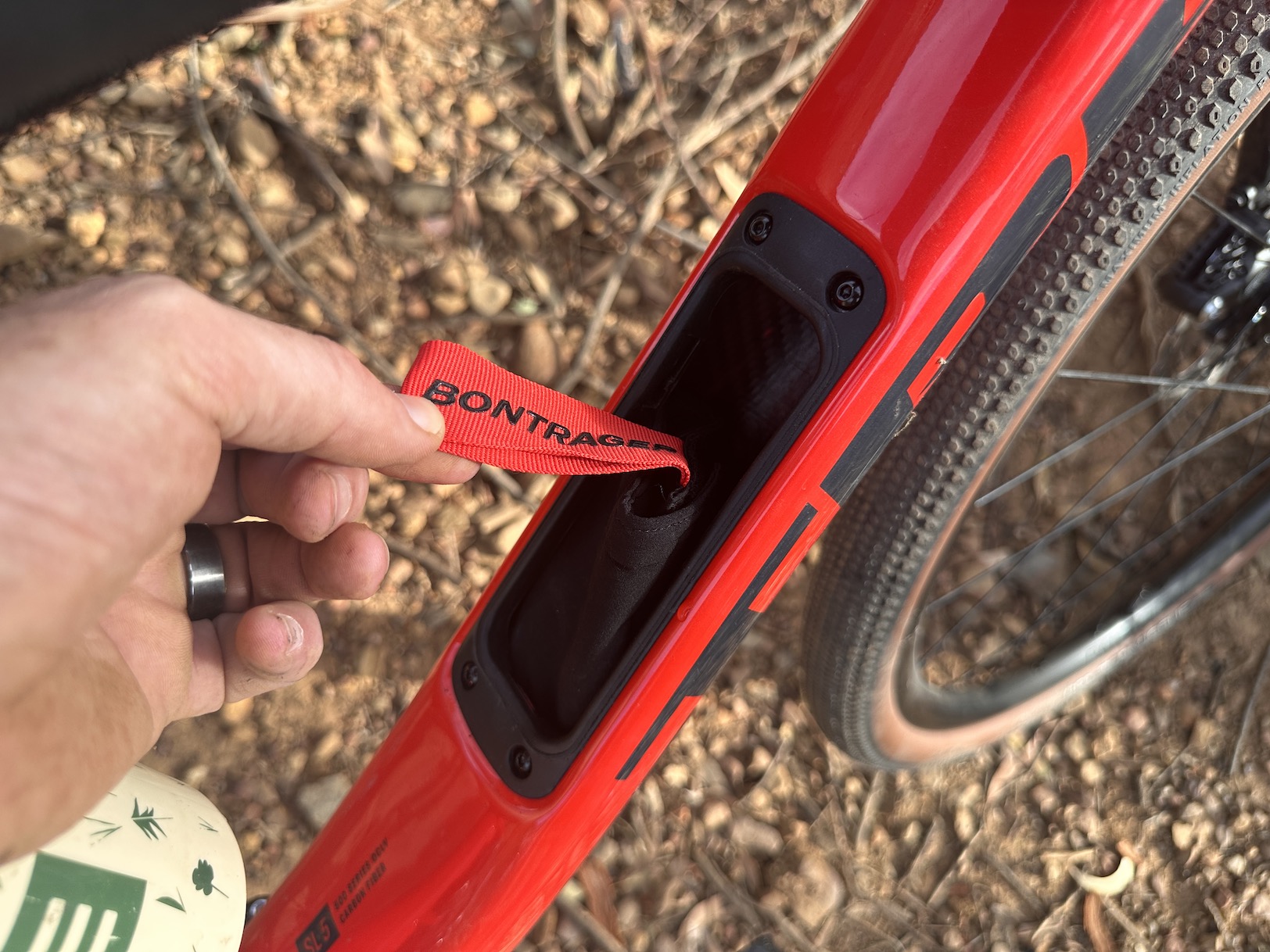
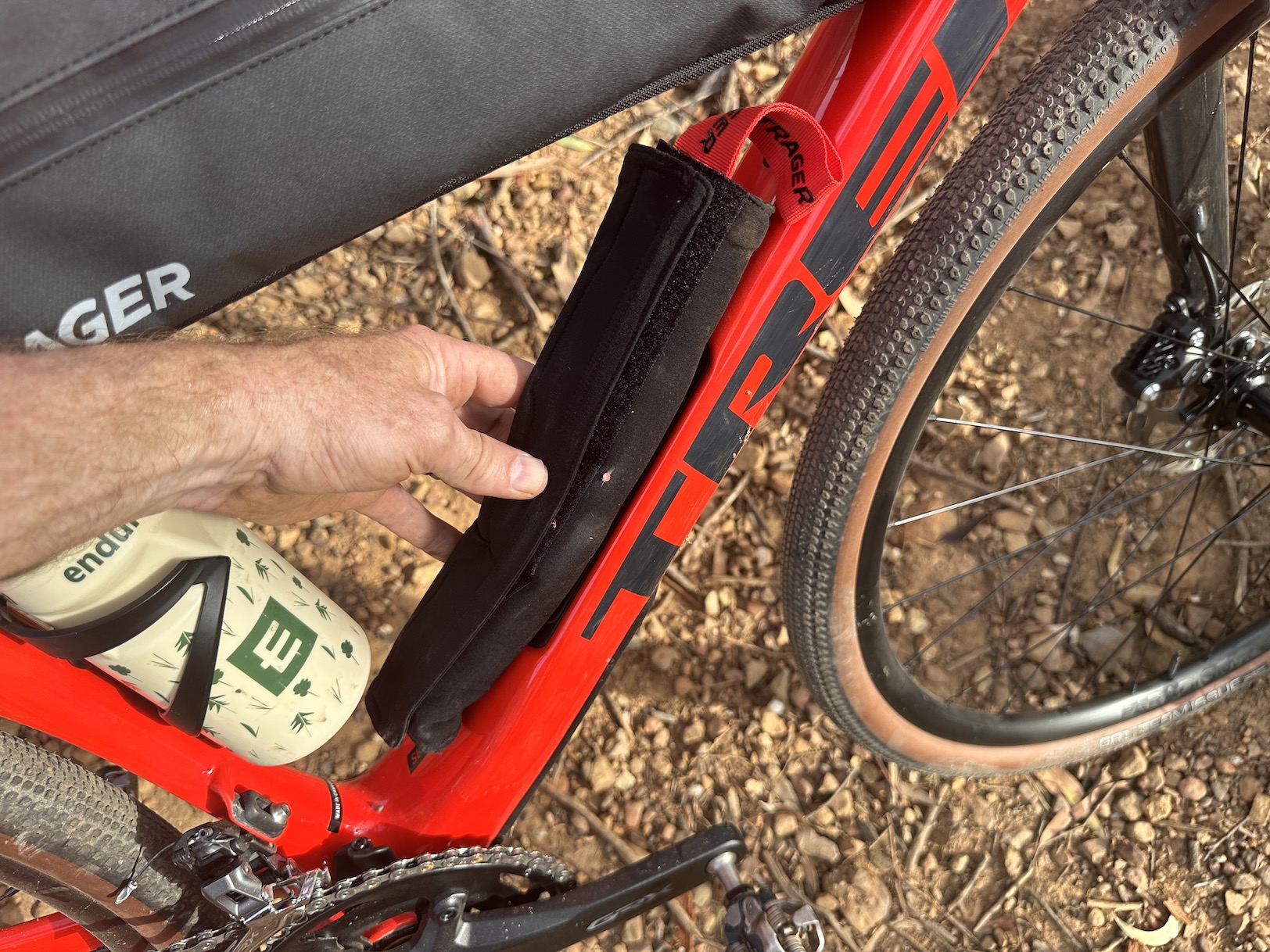
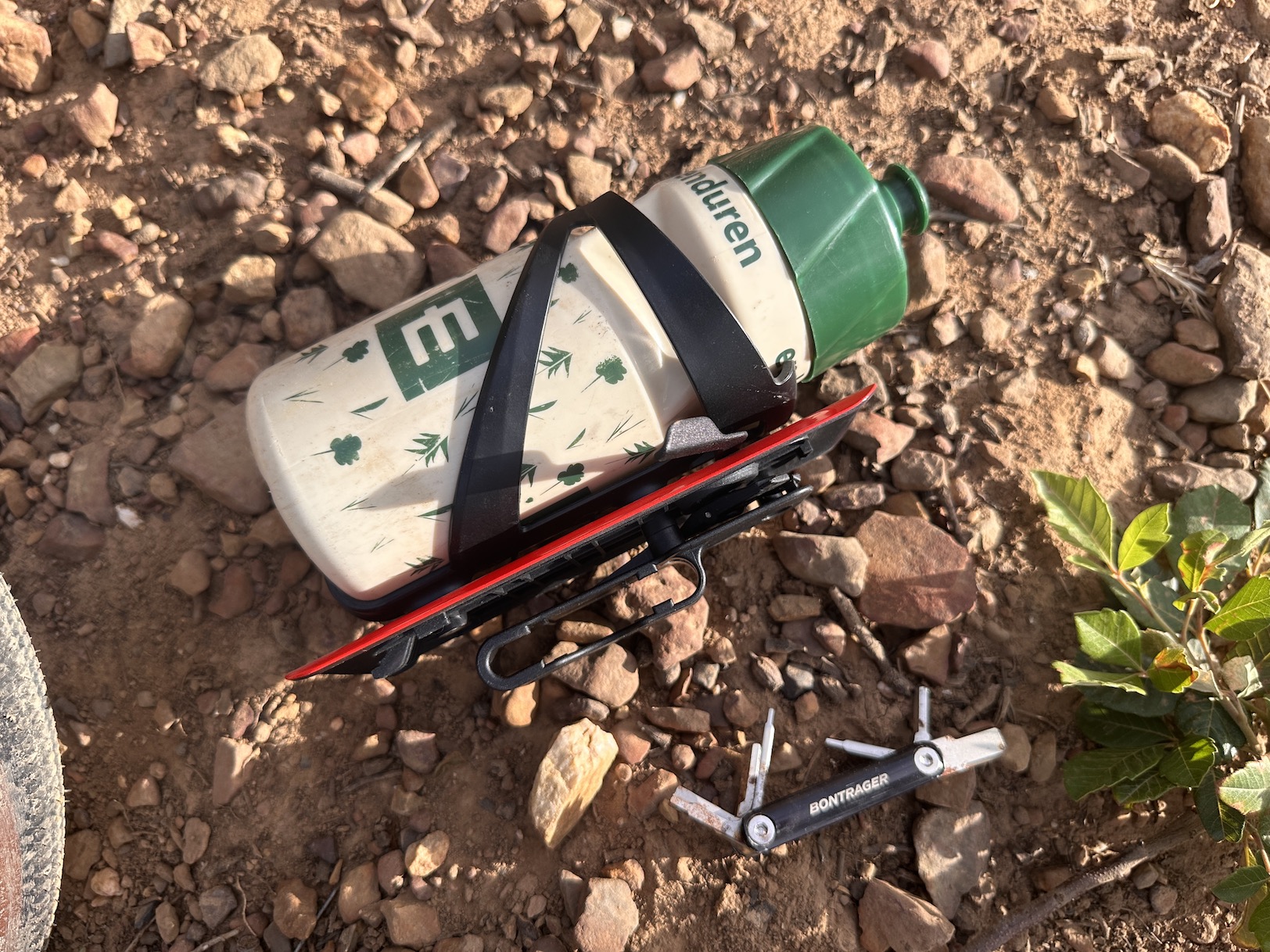

Accessed through the underside of the bottle cage, there’s plenty of space inside the down tube for spares, tools, jackets and boerie rolls. The inside back plate of the bottle cage has an easy-access multi-tool holder.
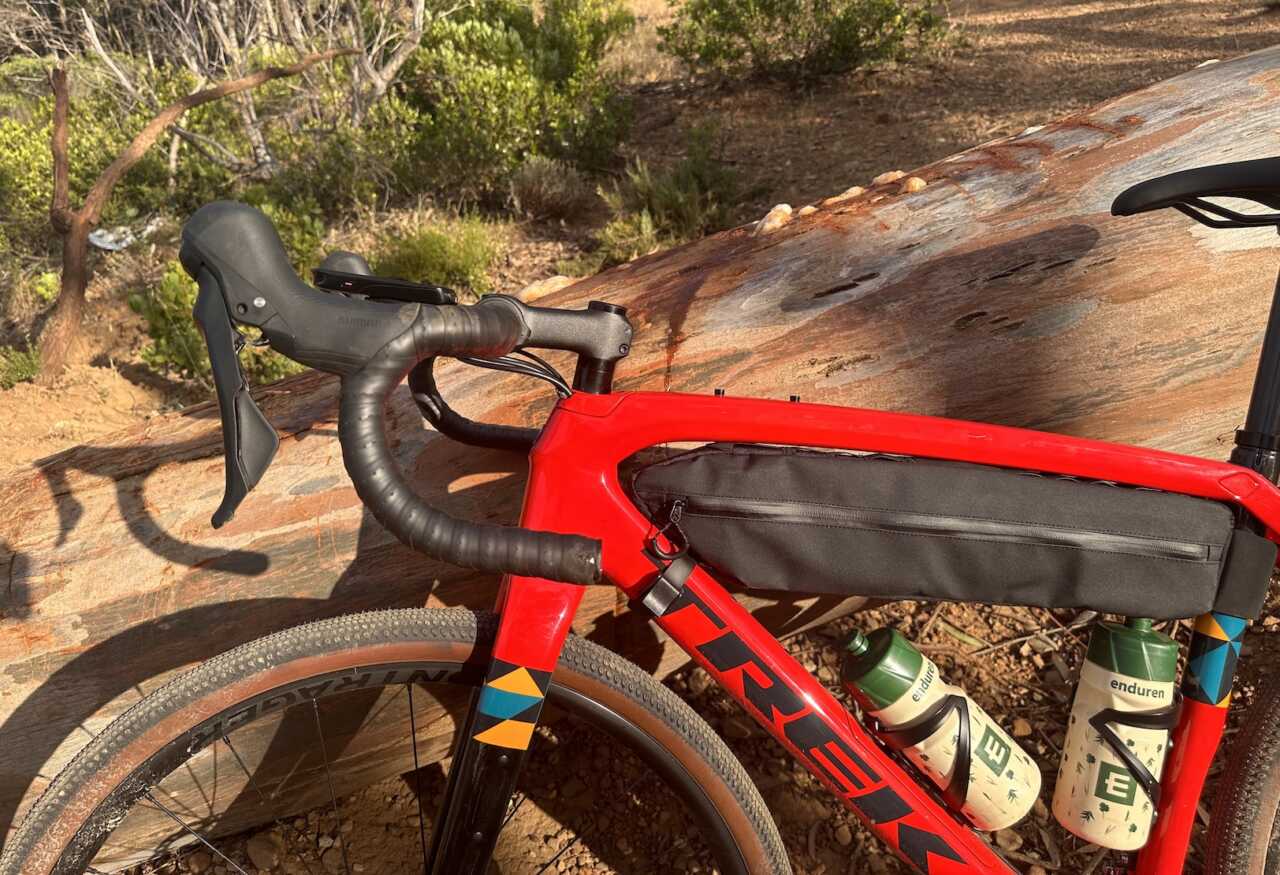
Trek says the Checkpoint can run front suspension although it will raise the front end a little and slightly tweak some of the geo numbers but not to the point where it’s a compromised ride. If you are looking for more safety on the downs you can add a dropper post to this model, not so with the top-of-the-line SLR models.

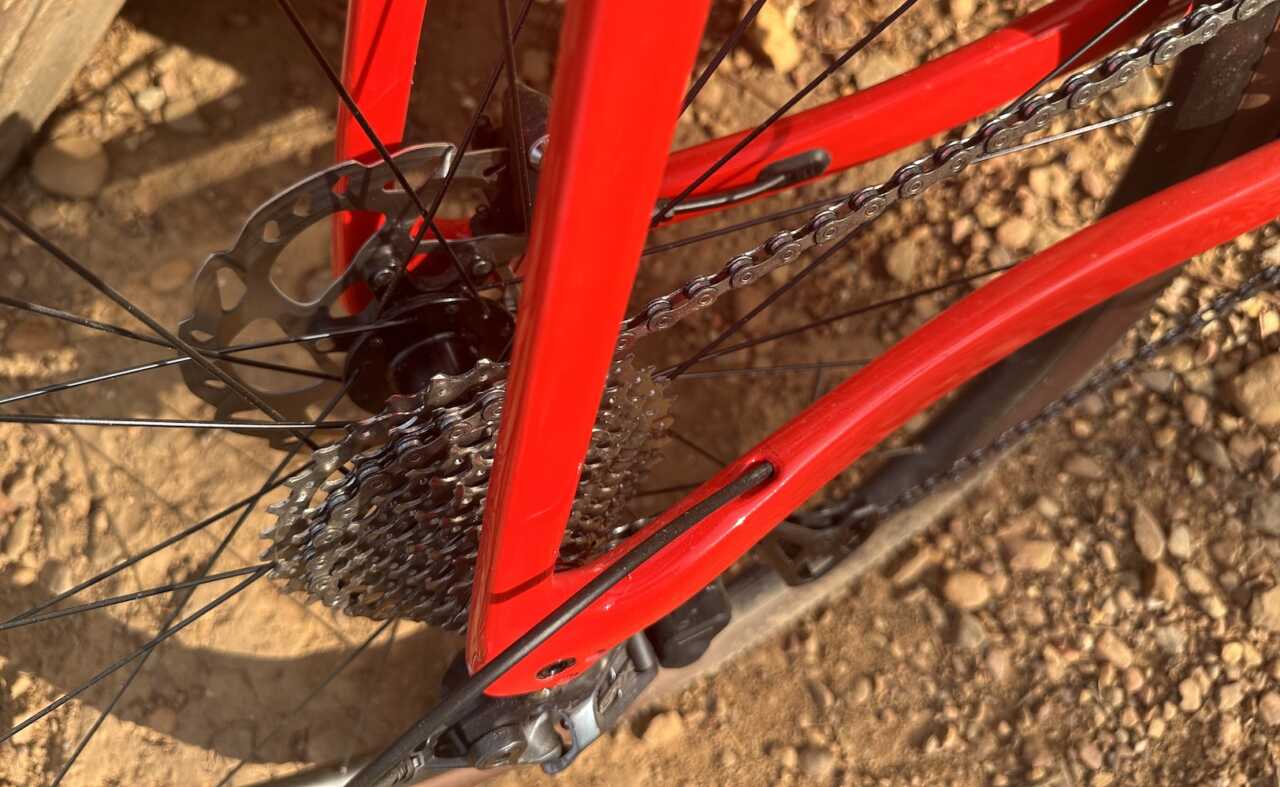
The SL 5 has an 11-speed, mechanical shifting, Shimano GRX drivetrain. The gearing spread is 11-34t on the cassette and 46/30t upfront, with a 172.5mm crank length.
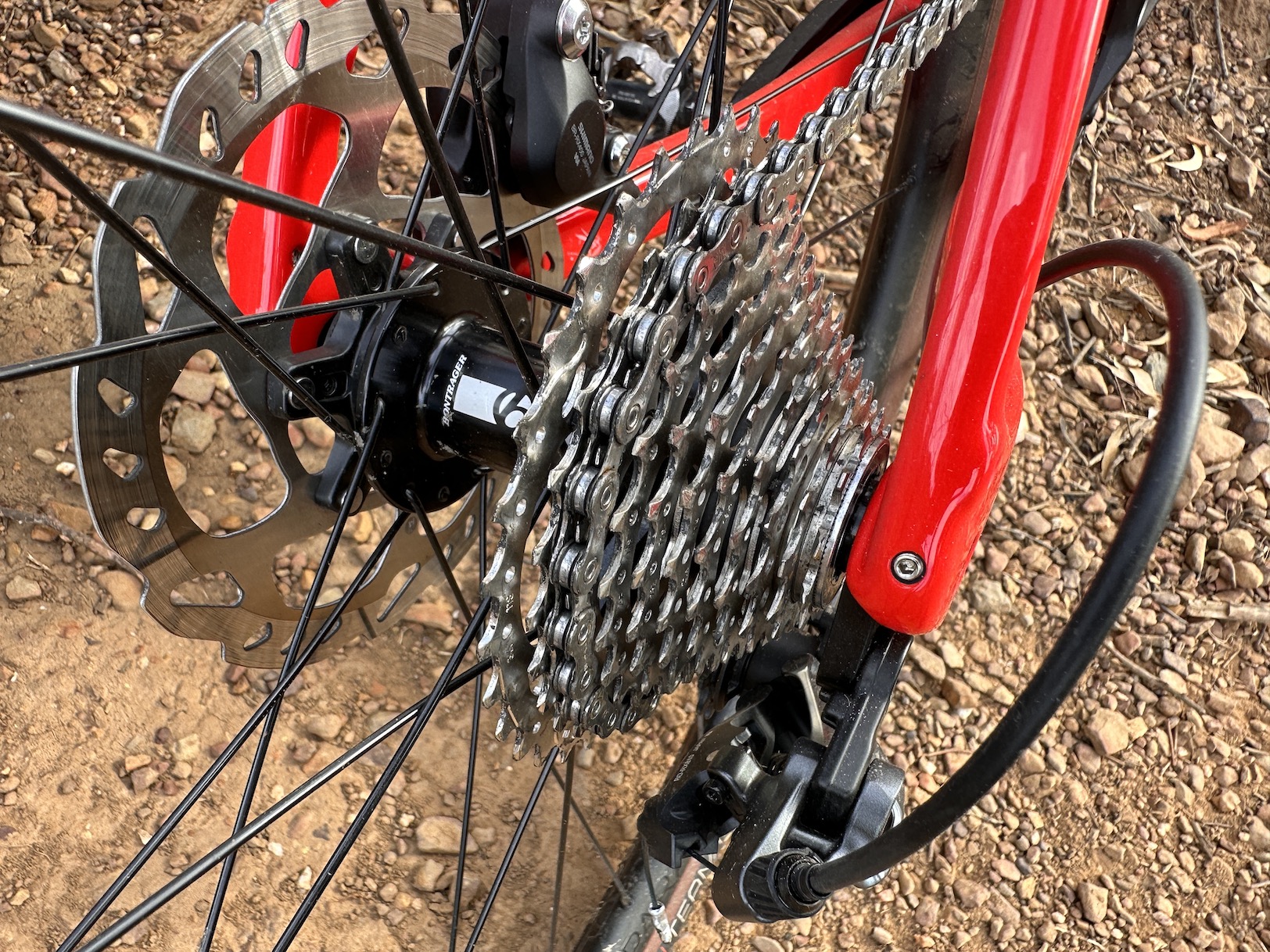
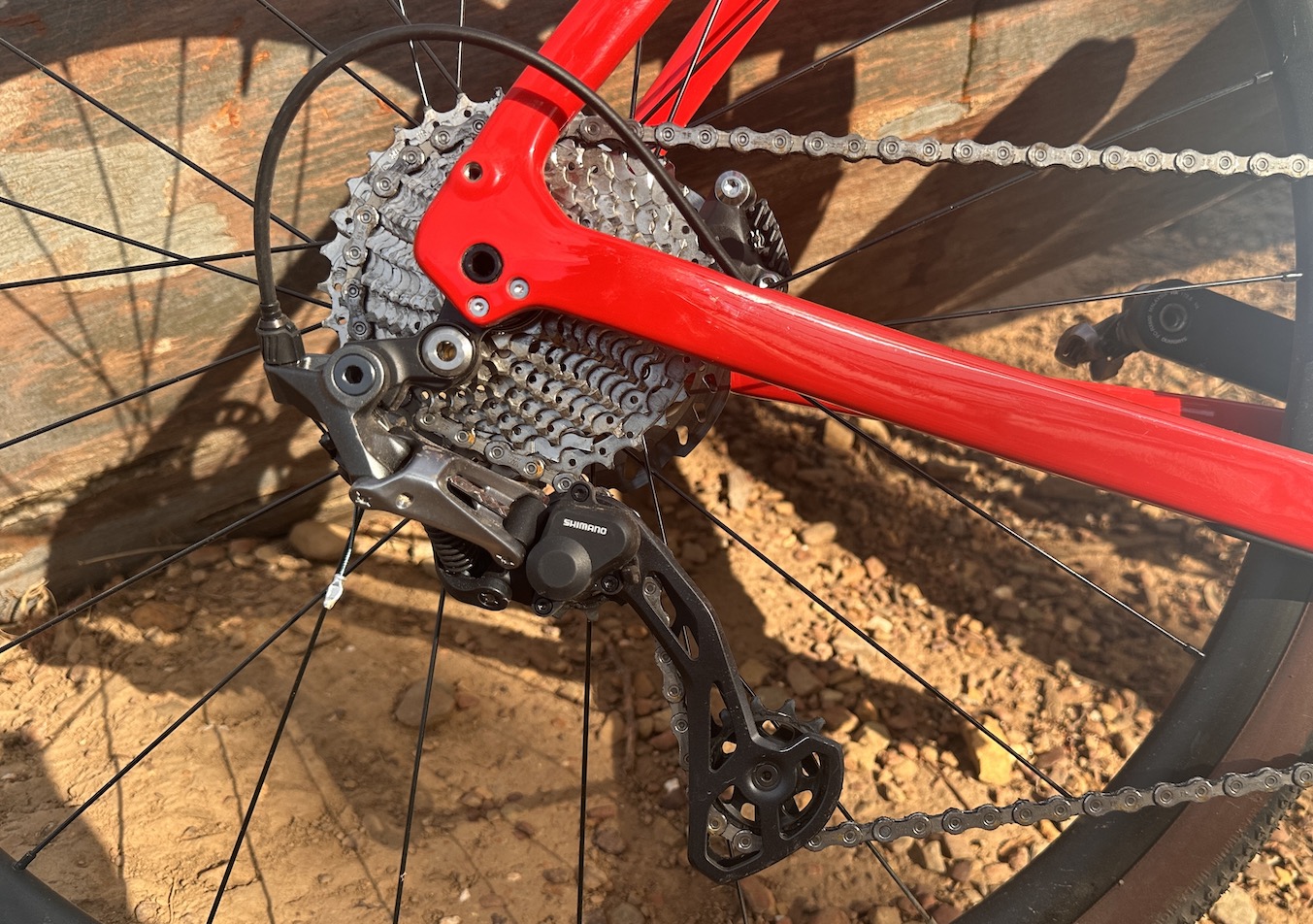
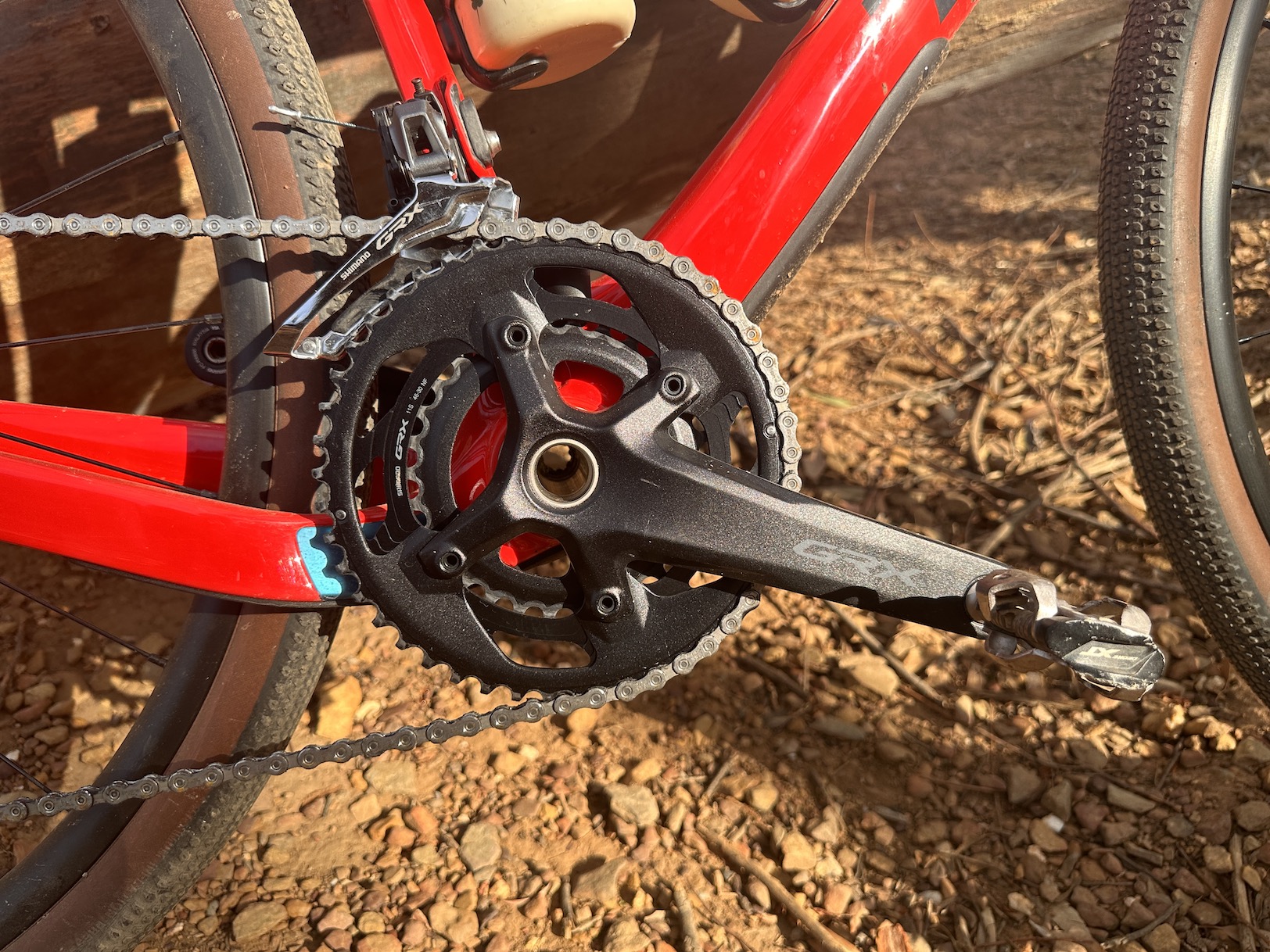
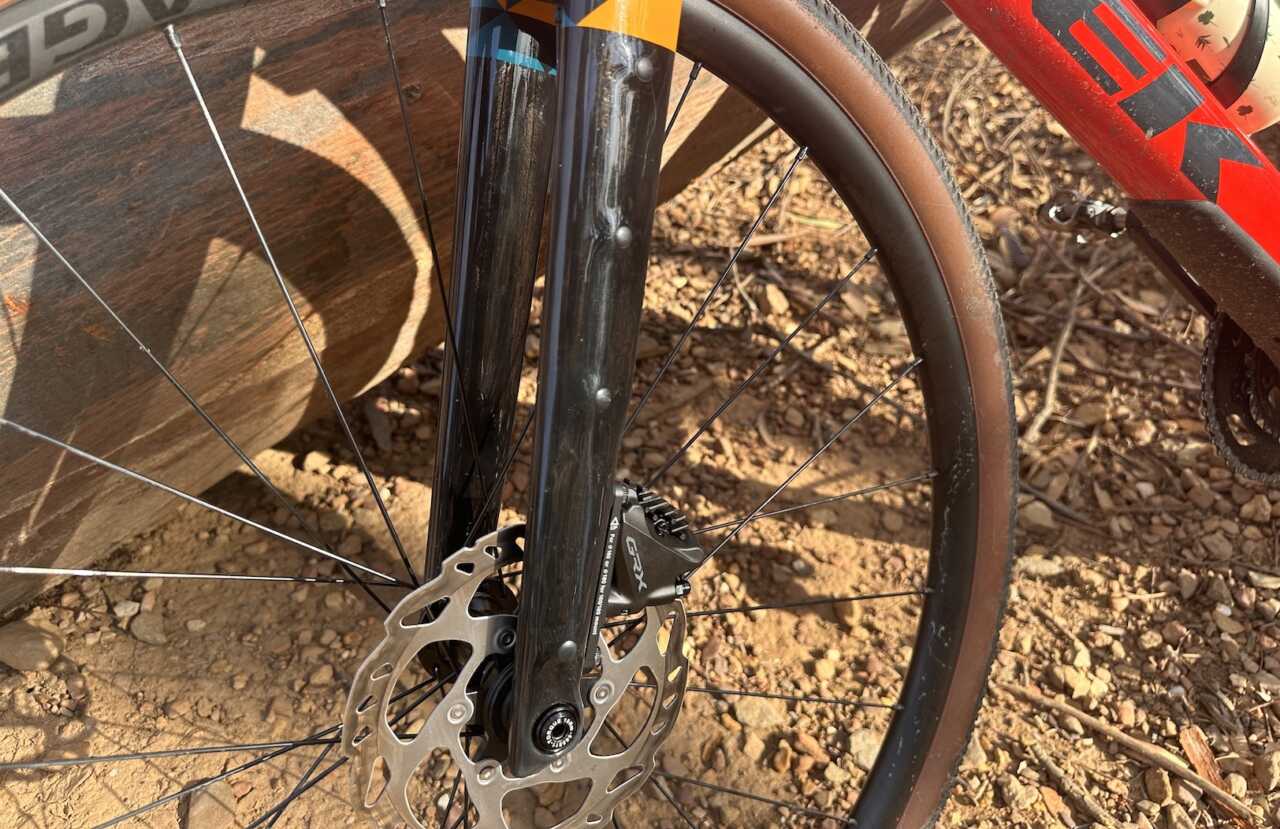
There’s no shortage of frame mounts for fenders, racks, bottles and bags. Trek says the fork blades can carry up to 3kg, each. Out of the box, the SL 5 is specced with 40mm tyres, by Bontrager, which are tubeless ready. The alloy Bontrager Paradigm SL rims have a 21mm inner width.
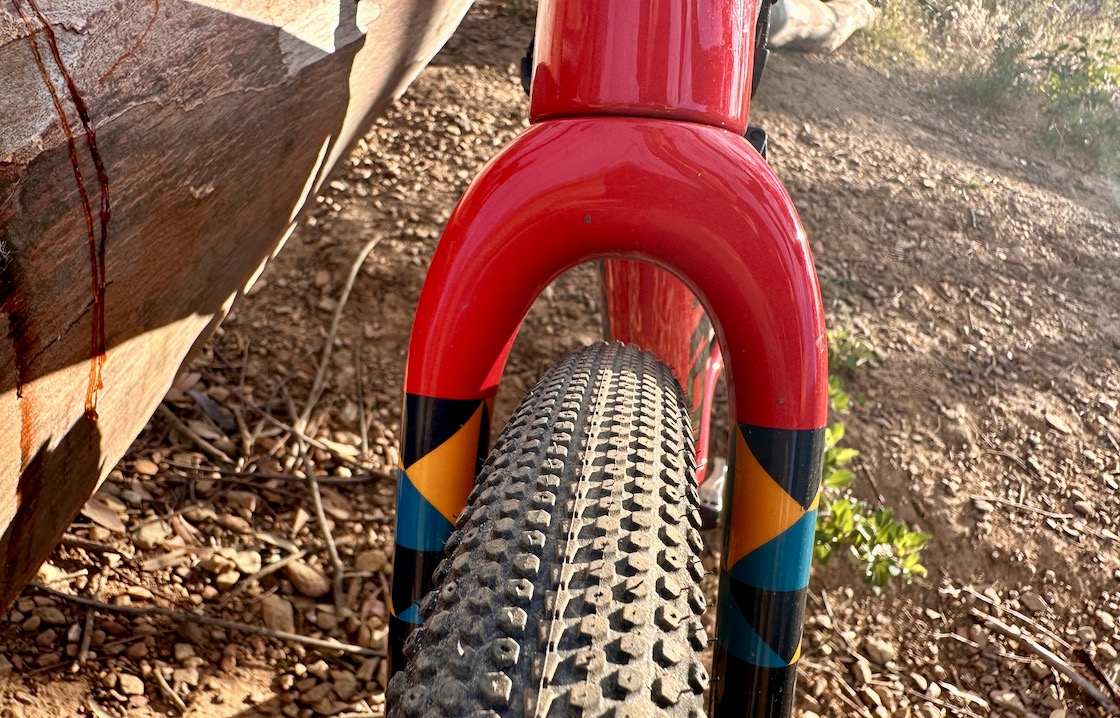
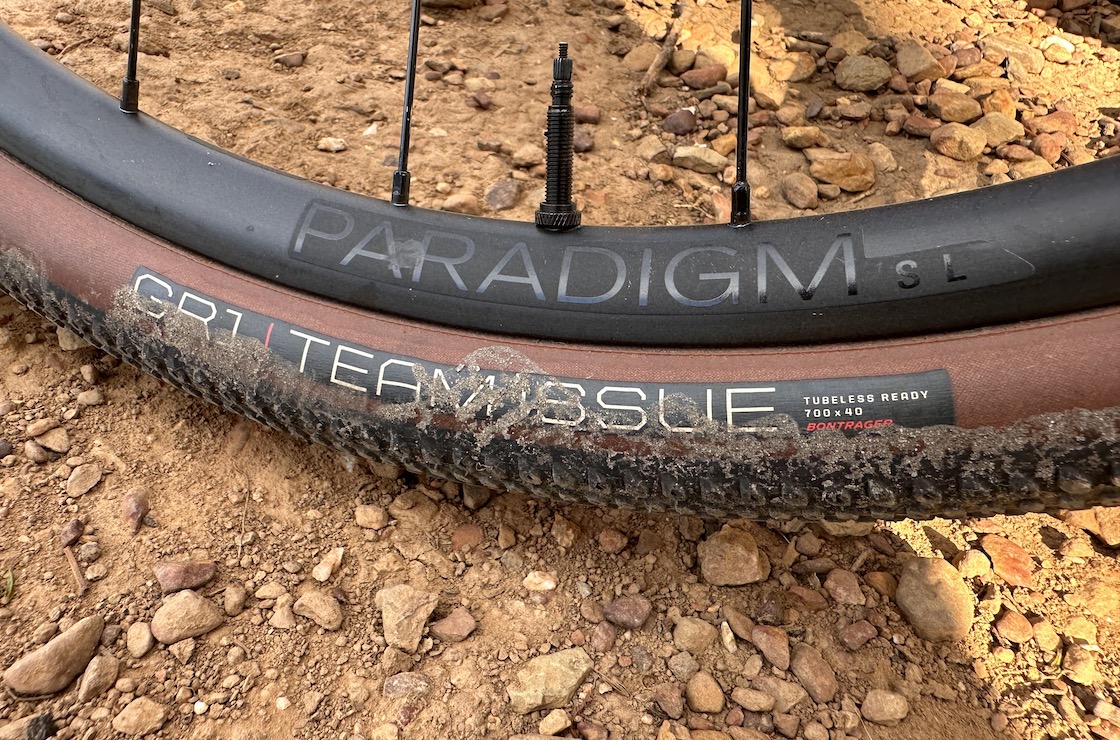
The GR1 Team Issue tyres have plenty of small block-shaped knoblies — some of the leading corner edges are trimmed to maximize rolling speed. As you can see, inside the fork blades there is plenty of space for wider tyres, including going even wider than the 45mm maximum recommended width. Although you never read that here, okay?

Whilst Shimano GRX 11-speed may sound slightly long-in-the-tooth (there’s now a 12-speed version available) a quick visit to shimano.com shows it’s not being canned. In fact, Shimano still offers GRX in a 10-speed version.

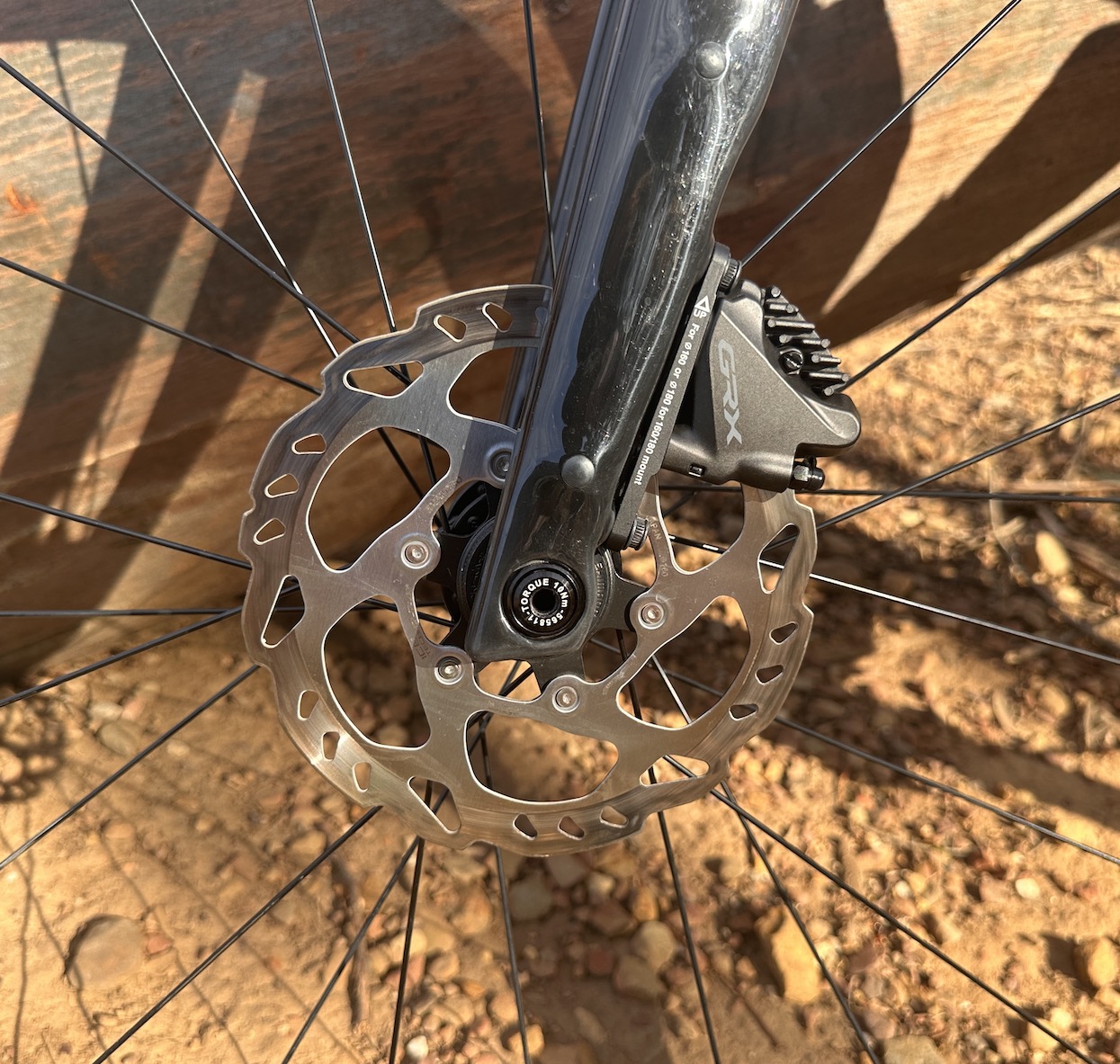
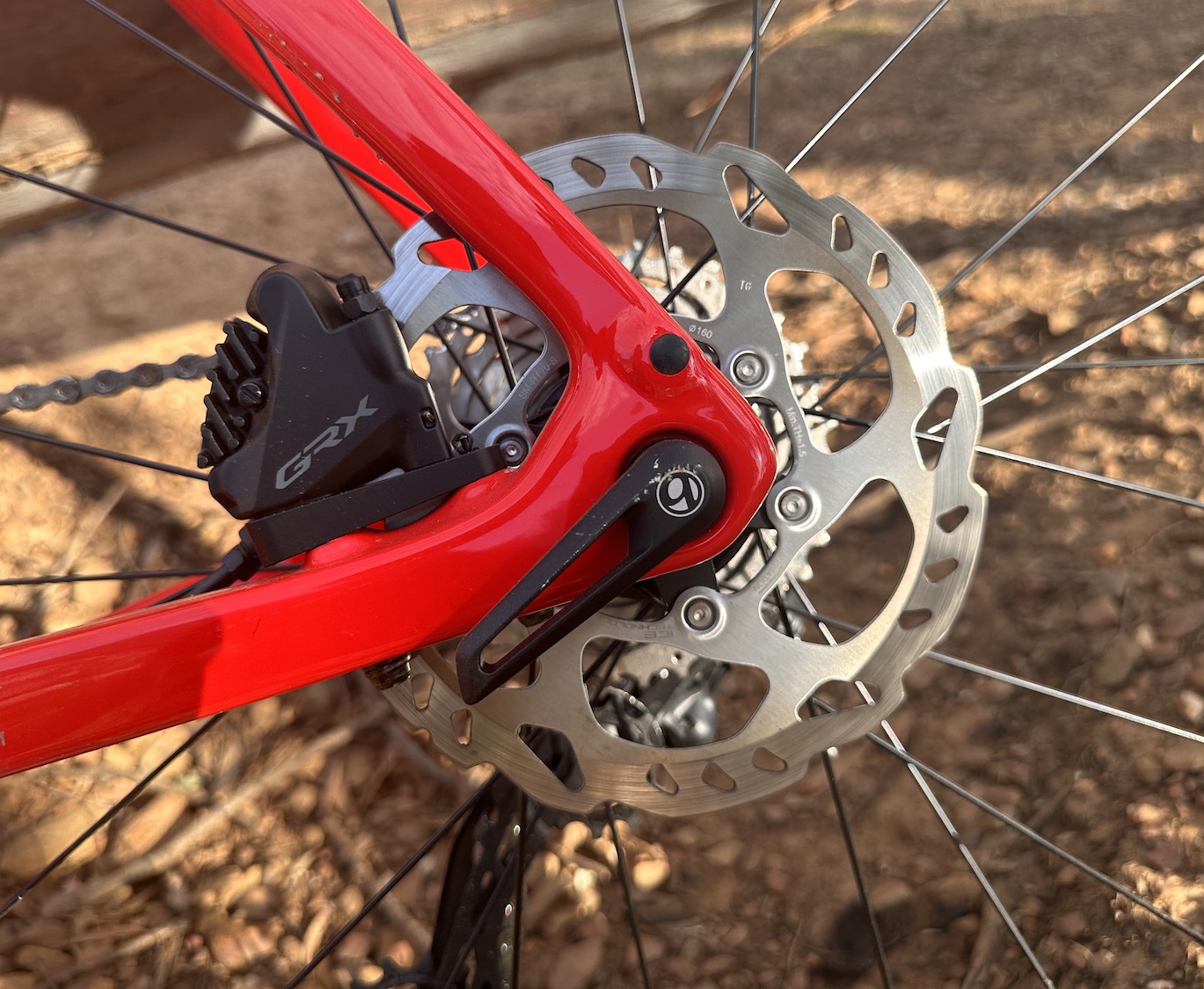
Trek has done well by adding small rubber inserts at all the cable ports to reduce the chances of rattling. Underneath the downtube is a removable armor plate and yet more frame mounts — these features point to the bike’s versatility.
There are six sizes in the lineup, starting at 49cm and running up to a 61cm. Saddle duties are handled by the Bontrager Verse saddle which is an all-gender option, available in multiple widths, each having an extended clamping area, for slamming.

By pushing the geometry numbers closer to that of a mountain bike Trek says they have improved both the high-speed stability and singletrack capabilities of this generation Checkpoint. Most notably, the Checkpoints have about 20mm more reach and run shorter stems to compensate. This puts the front end a little further ahead of the rider. In case you were wondering, we were sent a size 56. Here’s an overview of the geometry numbers:

Ride Impressions
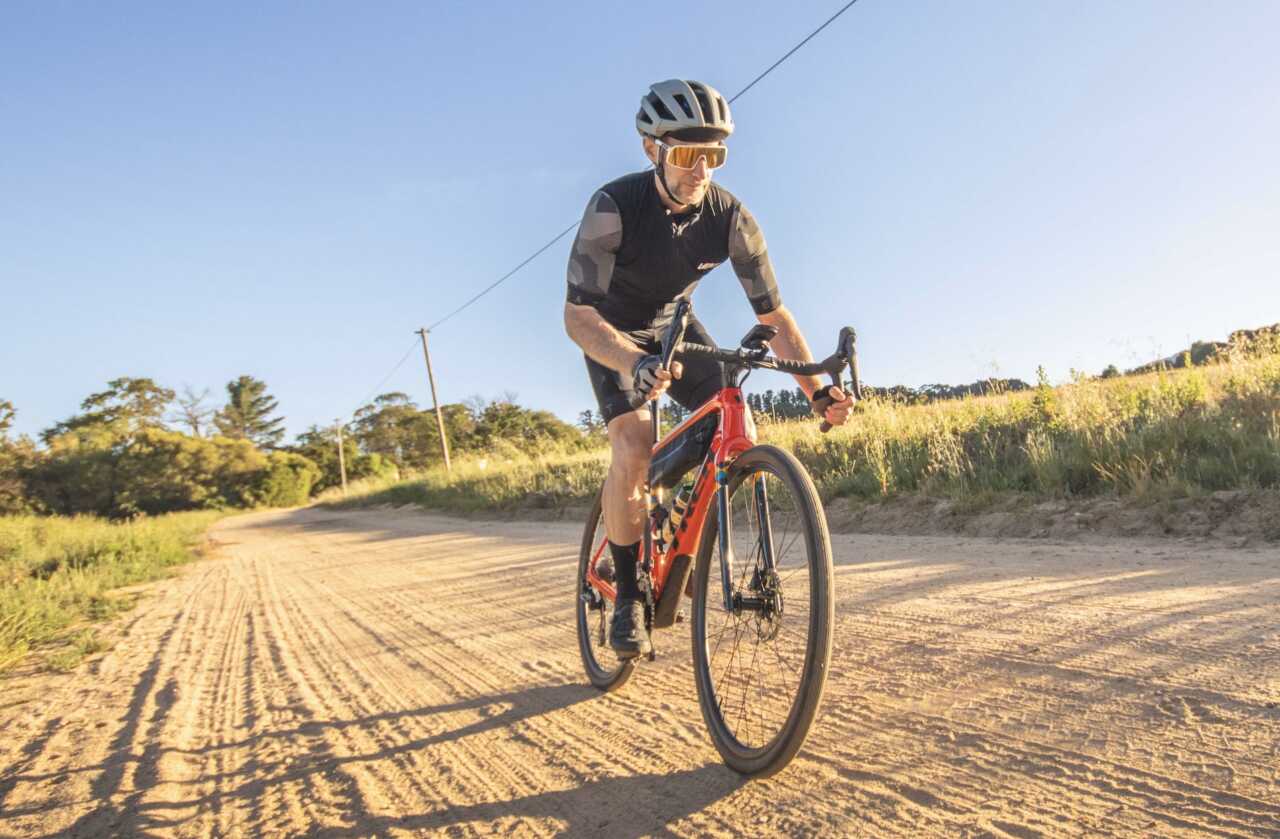
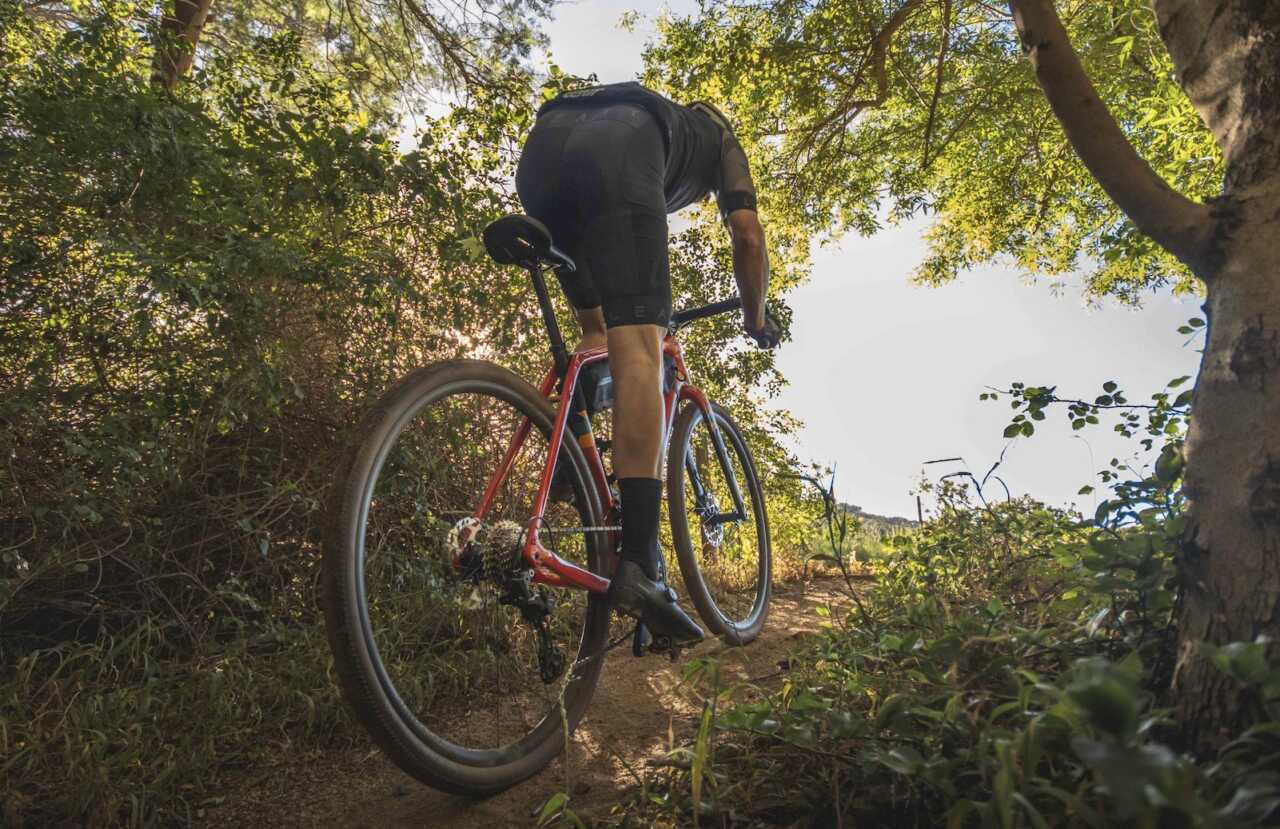
I’ve done a fair share of mixed terrain on this bike. The test rides mostly entailed loops heading south from Cape Town on tar roads, diverting down just about anything off-road, taking in rocky and smooth gravel piste, with plenty of singletrack. Literally from kilometer zero, the first dominating sensations are around how smooth it rolls. I mostly ride XC, Road and eMTB’s — so those are my points of reference — what I can tell you is the SL 5 is shockingly smooth.

Weighing 70kg, I tinkered with tyre pressures before settling on 30psi front and 35psi rear. That felt like a good compromise of speed, grip and flat resistance, for the terrain I was riding. Big-volume tyres and their pressures are heavy influencers on the comfort of a gravel rig but other design elements and technology certainly play their part. As for the IsoSpeed, well you can’t actually feel the movement, at all — I mean there’s really no sensations of a floating seat tube — but it has to be contributing to the comfort.
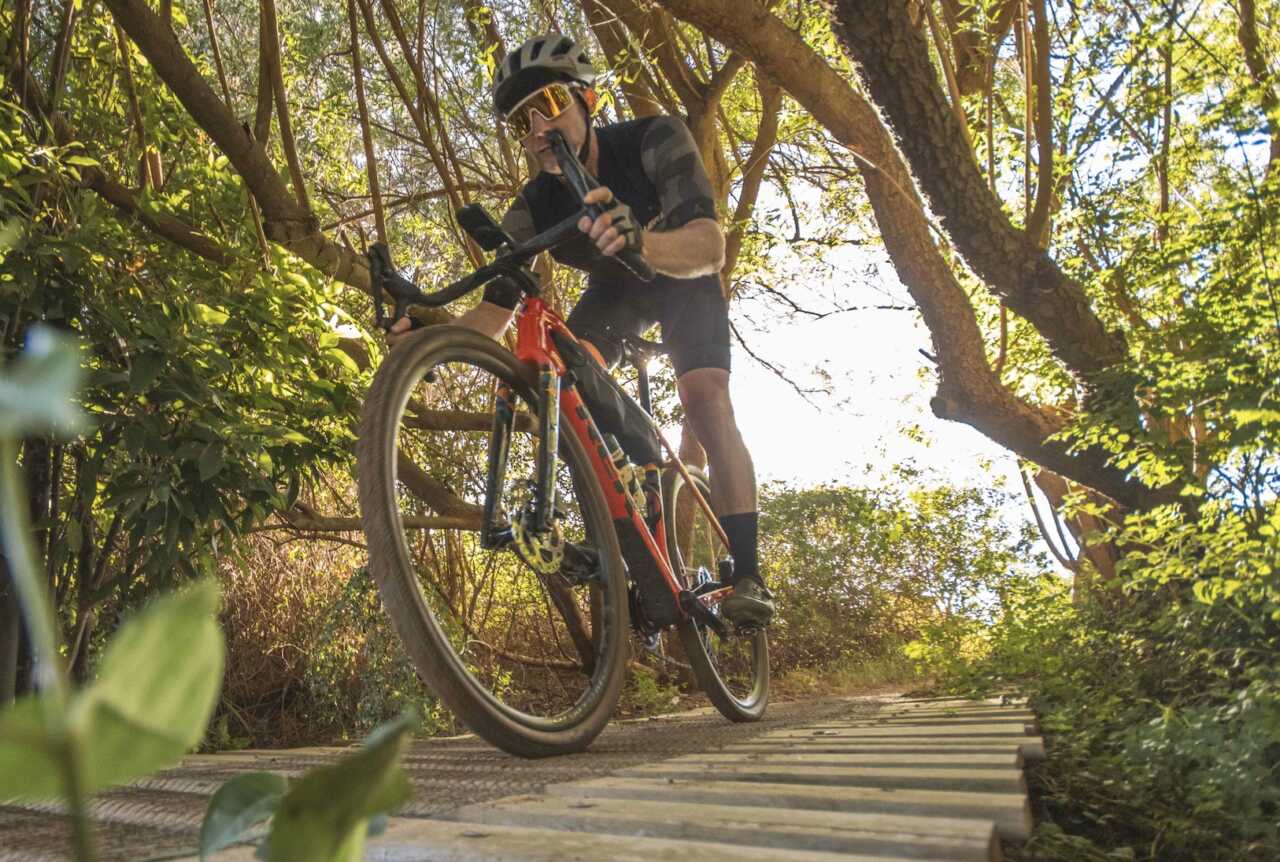
Easily evident is the gravel geometry — if I say it’s ‘confidence inspiring’ I know you are chuckling but it is true. The higher stack and behind-the-front-wheel rider position does wonders for the Checkpoint’s capability on descents, on singletrack, stomping through soft sand and other rad things like hopping pavements. Coupled with a slightly slacker head angle than the first-generation Checkpoint, the shorter stem has a calming effect on steering. It is not a twitchy ride. Compared to my road bike, I feel a lot safer carving the high-speed corners of Chapman’s Peak and Kloof Nek on the Checkpoint. It’s a lekker feeling gunning it down those descents, safely.
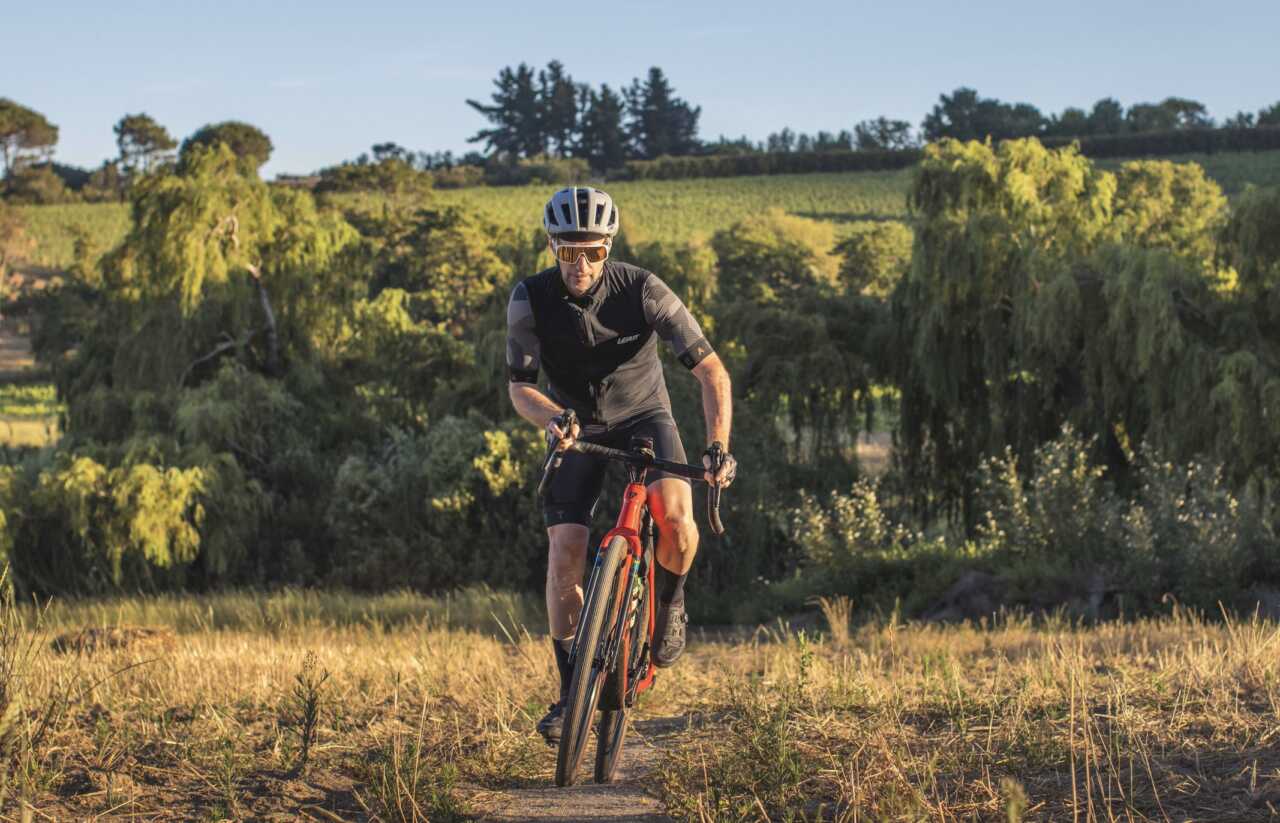
Regarding the build kit, I have one slight negative to report on. I felt a bit under-geared on the longer and steeper climbs around Cape Town. It would be nice to have some more teeth out back to help up the longer grinds. The notable positives on the build kit are: there’s no squealing in the GRX brakes, the Bontrager Verse saddle is everything you’ll want for an all-purpose machine and the 13-degree bar flare felt golden.
I didn’t do any bikepacking missions but the plethora of mounts on the Checkpoint will please those who are partial to adventuring. Do check out the new Bontrager Adventure Bags (reviewed here) if adventuring is your calling — they are not fully waterproof but are made of waterproof materials, they have big capacity, and there’s a hydration bladder compatible option.

Other bits and bobs worth mentioning — the internal cabling is well thought through and rattle-free, I’m touching on 500km now and the GR1 tyres haven’t flatted, they bite pretty well on singletrack too. The bike has three bottle mounts on the inner triangle with one of them under the down tube, which will come in handy for things like the Munga madness. Frame storage now seems like a must-have on any endurance bike and the locking mechanism on the Checkpoint is simple and snug. It’s always impressive just how much can be stored inside the frame: multi-tool, chain breaker, spare links, small pump, CO2 canisters and adaptors, tubeless repair kit, tube with enough space for a lightweight gilet.
Takeout
Trek pegs the SL 5 as the go-anywhere gravel rig that is capable of handling anything from a bikepacking mission to a dash into the country. I’d add it’s also a fantastic option for cutting out the dangerous parts of commuting.
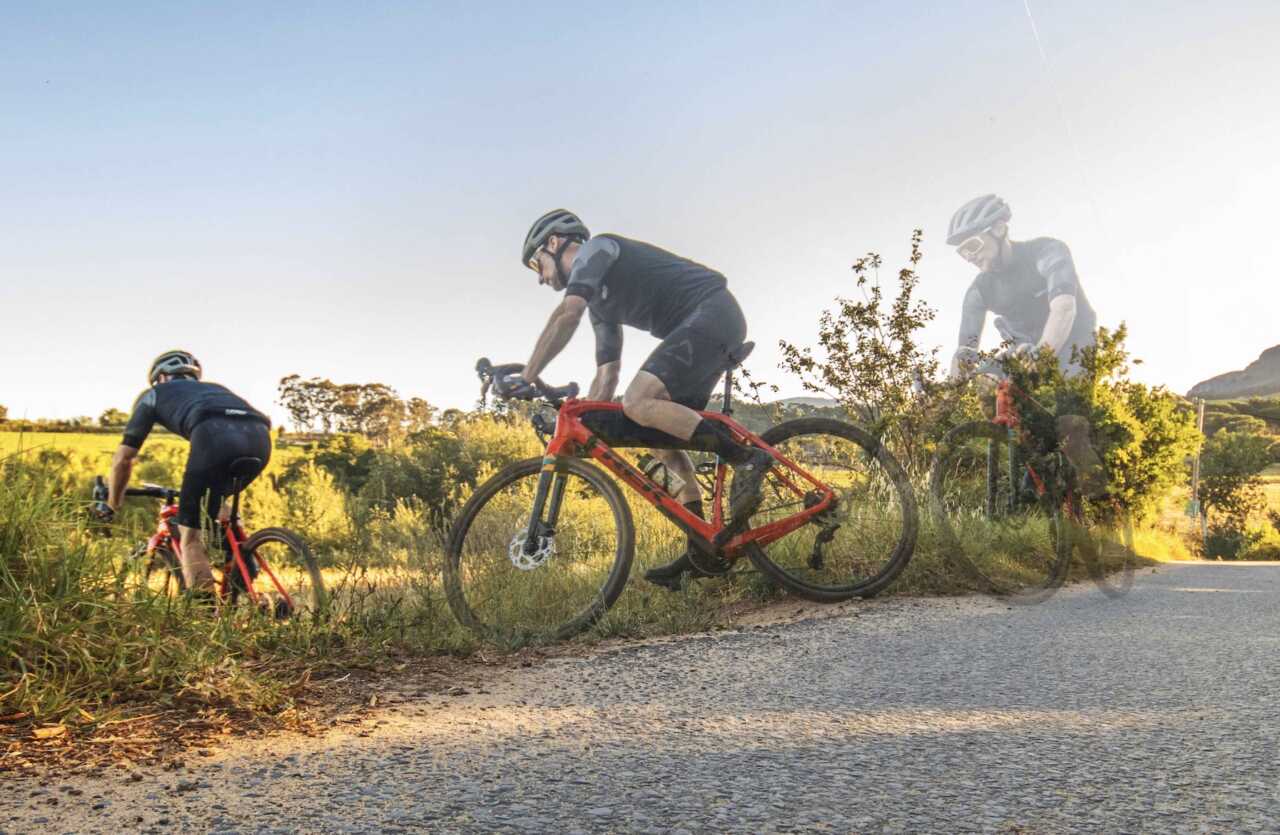
The Checkpoint is a fast and exhilarating ride, the handling is sublime but most of all it’s utterly comfortable. What a rad bike!
| WORDS: Myles Kelsey | LOCATION: Cape Town & Winelands | IMAGES: Chris Taylor |