


Gravel Vs Full-suspension Gravel | Which bike is right for you?

Trek Checkpoint SL 7 AXS vs Trek CheckOUT SL 7 AXS
We put Trek’s rigid and suspension-equipped gravel bikes head-to-head in a series of real-world efficiency tests. The results were closer than expected – but the way each bike feels could make the decision much easier.
There are at least two very different schools of thought when it comes to gravel bikes and they are perceived as being world’s apart when it comes to efficiency. On one side, you have the traditional lightweight, rigid gravel bike: efficient, responsive and perfectly happy turning a long stretch of smooth surfaced road into a fast day out. On the other, you have machines that have things like more storage options, wider range of gearing, racks, super-wide bars, suspension and dropper posts: perfect for touring, adventuring, bike-packing and mega-mileage missions.
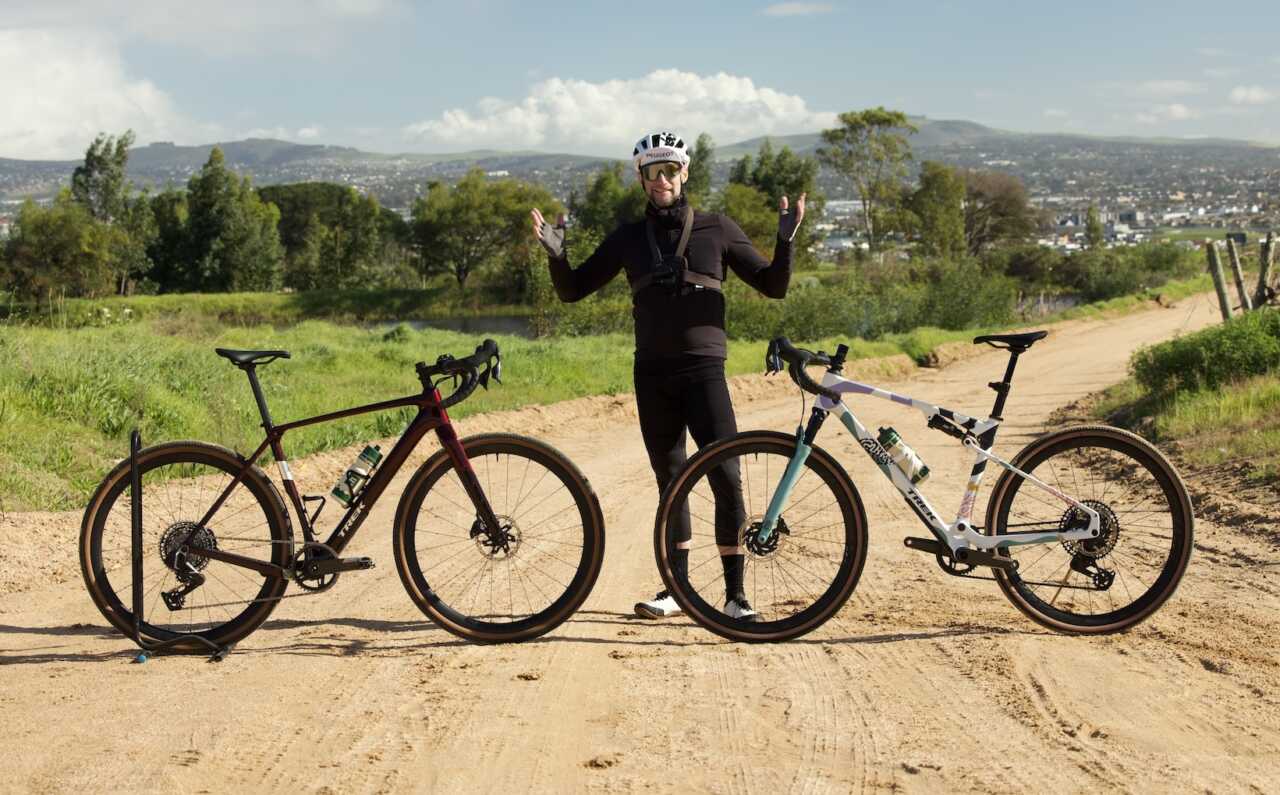
The Trek Checkpoint SL 7 AXS, whilst not their top-end race bike, sits more in the first camp. It’s a highly versatile gravel bike that can tackle everything from tarmac commutes to long-distance adventures and – dressed for the job – can be a very capable gravel race bike. The Trek CheckOUT SL 7 AXS takes a rather different approach. With suspension and significantly more off-road capability, it promises greater comfort, traction and control when the going gets rough.
But how much efficiency do you actually give away by choosing the more capable, full-suspension bike? And, has everyone missed a trick by underestimating the efficiency and potential race-performance of a full-suspension gravel bike? That’s what I wanted to find out…
Video Review
The test: real-world power numbers, speed, time and ride feel
First off, a huge thanks to Bicycle Power for supplying a set of Favero Assioma Pro power-meter pedals for the efficiency testing. The pedals are incredibly straightforward to set up and use, and have proven to be an excellent tool for putting some hard numbers behind what can otherwise be a very subjective test. Catch our review on them here. Thanks also to our friends at Hammerhead for providing the head unit used to record the data throughout the testing. Of course, big love to our friends at Trek for the bikes and the opportunity to explore my curiousness.

Before getting into the results, it’s worth stressing what this test is – and what it isn’t. These are real-world tests rather than controlled laboratory sessions. Wind, gravel surface, temperatures, rider performance and countless other variables can never be eliminated completely outdoors. I have, however, been testing bikes directly for brands and cycling media for decades, and I took every reasonable measure to make the comparison as consistent and repeatable as possible.
The test bikes I used are 100% stock as you’d buy them, the only change I made to components was to match the tyres – so I fitted the Bontrager Girona Pro 42mm tyres to both bikes. 42mm is a little narrow for most riding in South Africa, but going this route also gave me the opportunity to see how the full-suspension bike performed without the stock big meats. My thinking: let the suspension do some of the work that we’d usually rely on a bigger volume tyre to do – and in the process I’d experience the better aero performance and lighter rotational mass of the 42’s. If anyone is wondering I set tyre pressures to 30psi front and 32psi rear, ran the suspension in the fully open setting with sag set at around 15%.
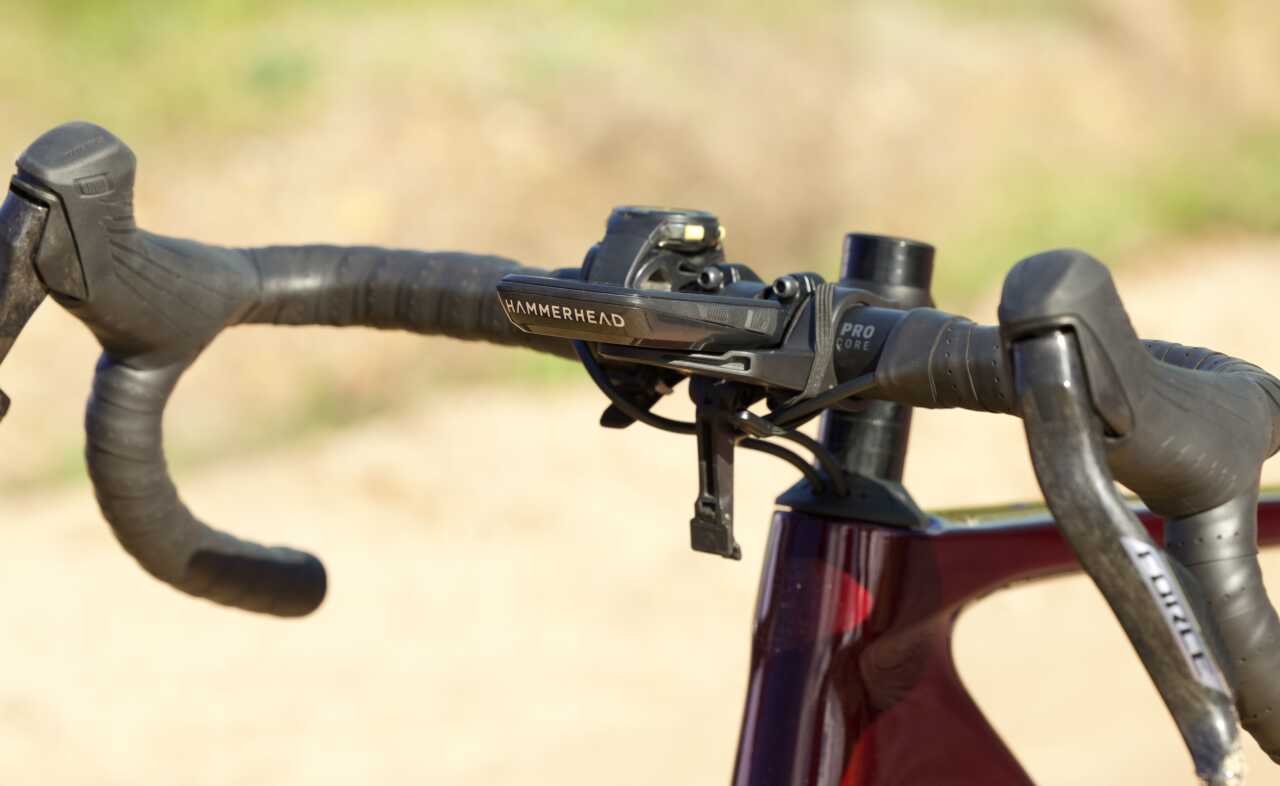
For the test, I matched the stack heights and hood to hood setup of both bikes. As it turned out, despite both bikes having different carbon wheelsets – the gross rotational weights – that’s complete wheelsets – was within 100g of each other. It’s likely the CheckOUT had more sealant than necessary and that (quite conveniently I might add) accounted for the similar rotational weights. Complete bike weight variance was 1.79kg – the ‘price’ of suspension and a dropper. The idea was, for the climb and flat testing, I’d remain seated with my hands on the hoods.
The goal wasn’t to establish a laboratory-grade result and winner. It was to find out whether the differences between these two bikes are meaningful enough to influence performance significantly, (or at all) to quantify those variances and identify exactly where one bike beats the other. Ultimately, I’m trying to provide some service or guidance to anyone shopping for a gravel bike. And the results were fascinating.
Test 1: How many watts does it take to hold 30km/h?
The first test was designed to answer a simple question: which bike is more efficient on relatively smooth, flat gravel? I used a typical false-flat section of road and completed six attempts, averaging the efforts to reduce the effect of the inevitable small variations between runs.
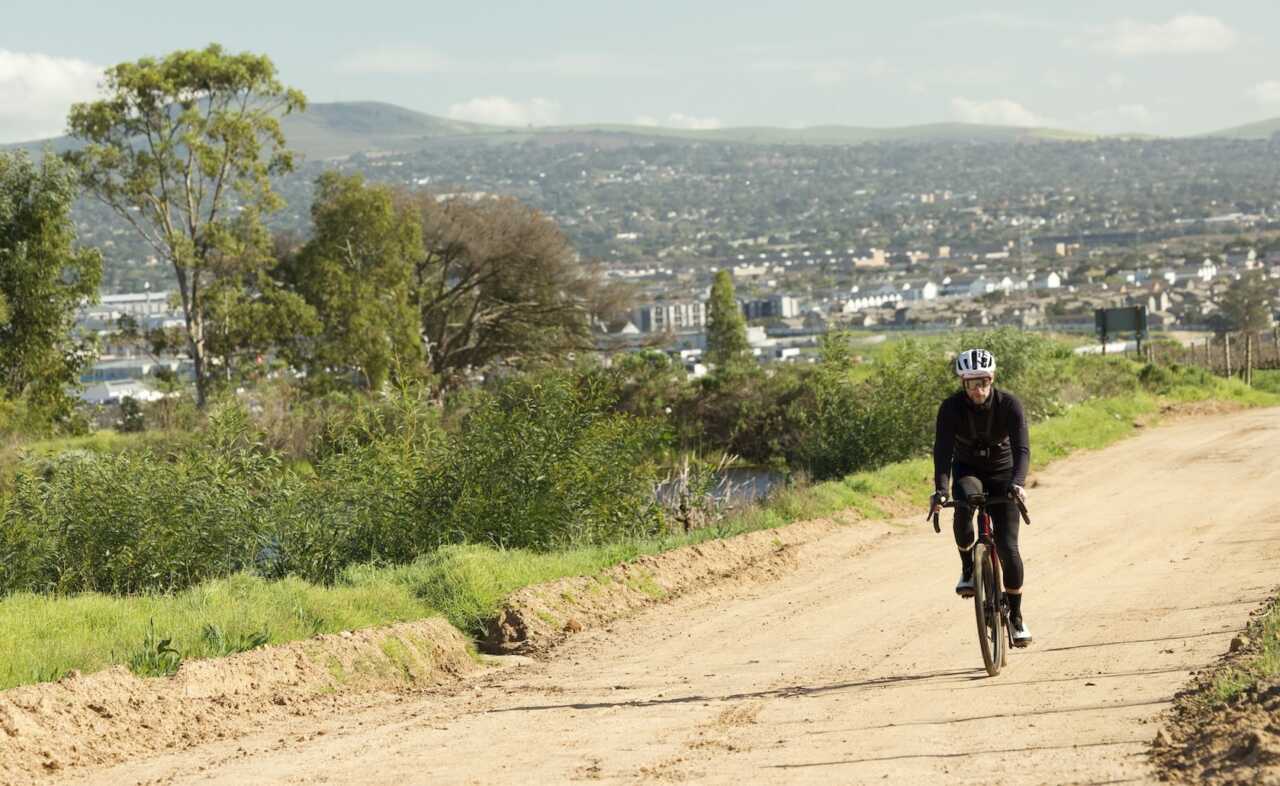
The Checkpoint came out ahead by 15 watts at 30km/h. Considering the power required was over 500watts – a difference of 15watts isn’t a large margin. Perhaps more importantly, the numbers didn’t quite match my perception – the Checkpoint felt dramatically faster – but it wasn’t.
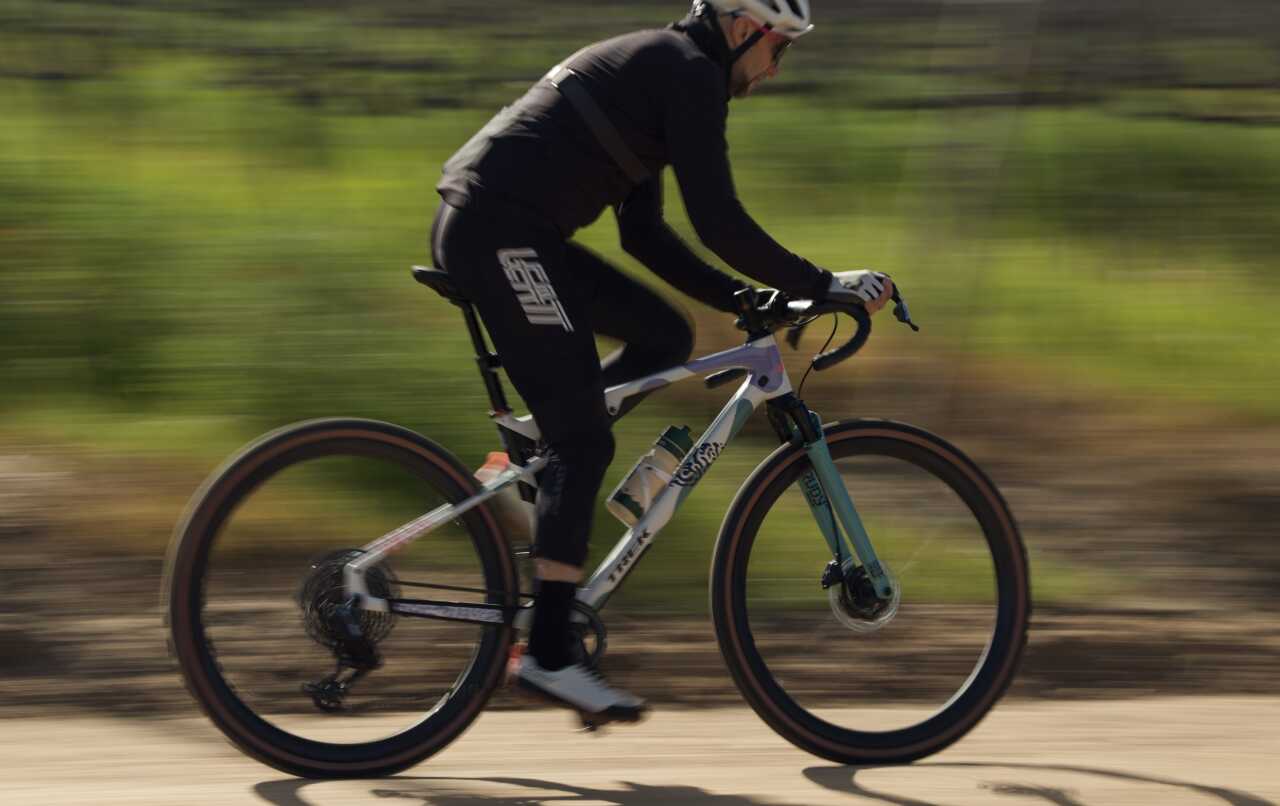
When you’re riding it back-to-back with the CheckOUT, the Checkpoint has an immediacy that is difficult to capture in a simple power-versus-speed calculation. It feels quick to accelerate, direct through the pedals and eager to maintain speed. But the data tells us something important: from our testing it appears the efficiency penalty of choosing the full-suspension CheckOUT isn’t enormous. Kind of like what we saw on Cross-country mountain bikes as they moved to full-suspension many years ago.
Test 2: The climb
The second test moved away from steady speed and into climbing. I completed five repeats of a roughly 700m long climb with an average gradient of 10%, then normalized the power output to 225watts for the four-minute-plus duration of the climb.
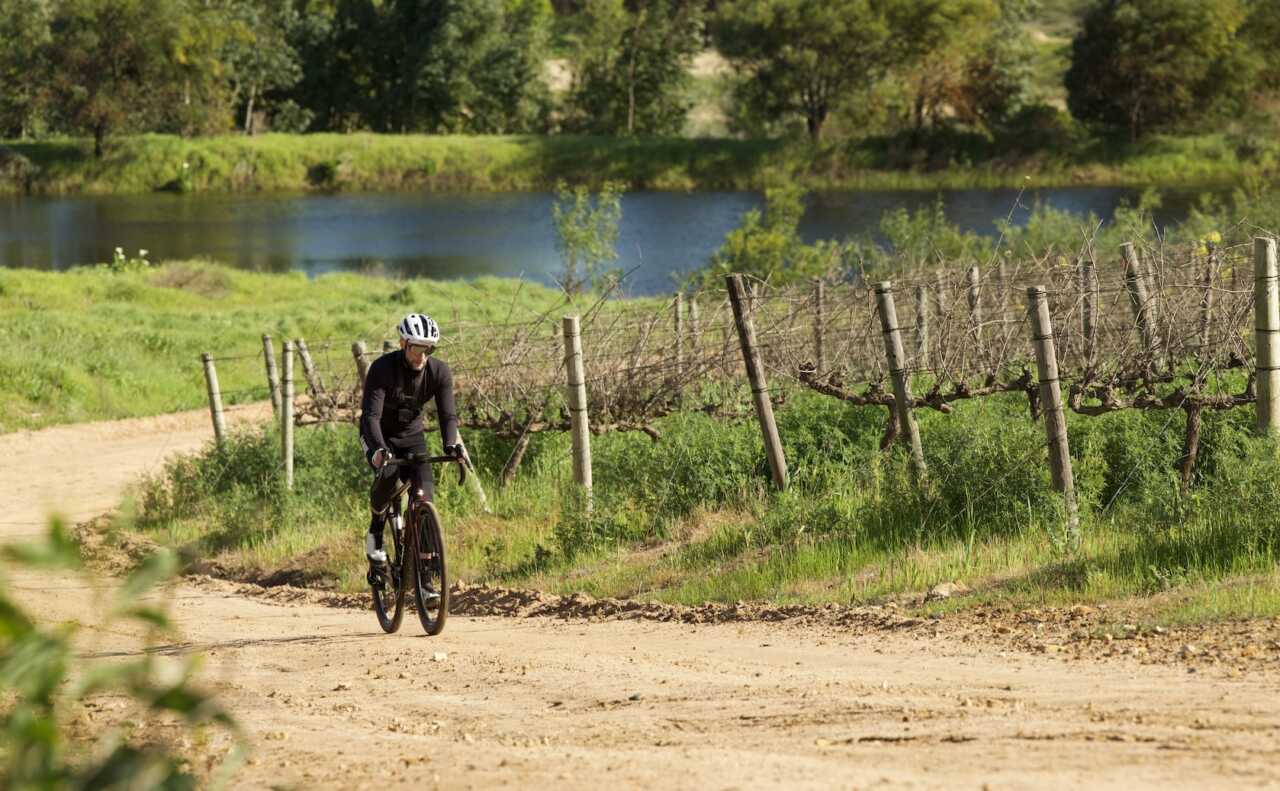
Once again, the Checkpoint was faster. But only just. The difference worked out at approximately two to three seconds. That was one of the most surprising findings of the entire comparison. Based purely on how the bikes felt, I expected the Checkpoint to be 30-seconds faster and disappear up the climb. Instead, the difference was barely enough to register in practical terms – just two to three seconds on a four minute effort.
Thinking about the results, yes the Checkpoint has the advantage when you’re simply looking at the stopwatch, but the CheckOUT’s additional traction and suspension can change the way you approach a rough or loose climb – and I think this is where the magic lies… heart rates don’t spike when the bike is calm and tracking the terrain without loss of traction.

On technical gravel, maintaining traction is often more important than producing another few watts. If the rear wheel loses traction, or your butt is bouncing off the saddle or you are forced to soft-pedal or dismount, theoretical efficiency doesn’t mean much. The suspension on the CheckOUT simply makes it easier to keep the power down when the surface gets rough. I found it’s easier to hold a cadence, keep a rhythm and control the effort. On the Checkpoint I was constantly compensating and adjusting for changes in gradient, changes in the surface and changes in my level of fatigue.
Test 3: Downhill speed
I also managed to squeeze in a third test – a downhill maximum speed comparison on a straight gravel road – the same one we used for the climb test. This wasn’t a full speed kamikaze test. Instead, I looked for the maximum speed at which I felt completely safe and comfortable on each bike when barreling down the road. Said another way, I was looking for the speed at which the respective bikes began to feel sketchy and unsafe. On the CheckOUT, I was regularly hitting a top speed around 15km/h higher than on the Checkpoint, before reaching the point where I felt I needed to back off. That’s a huge difference!
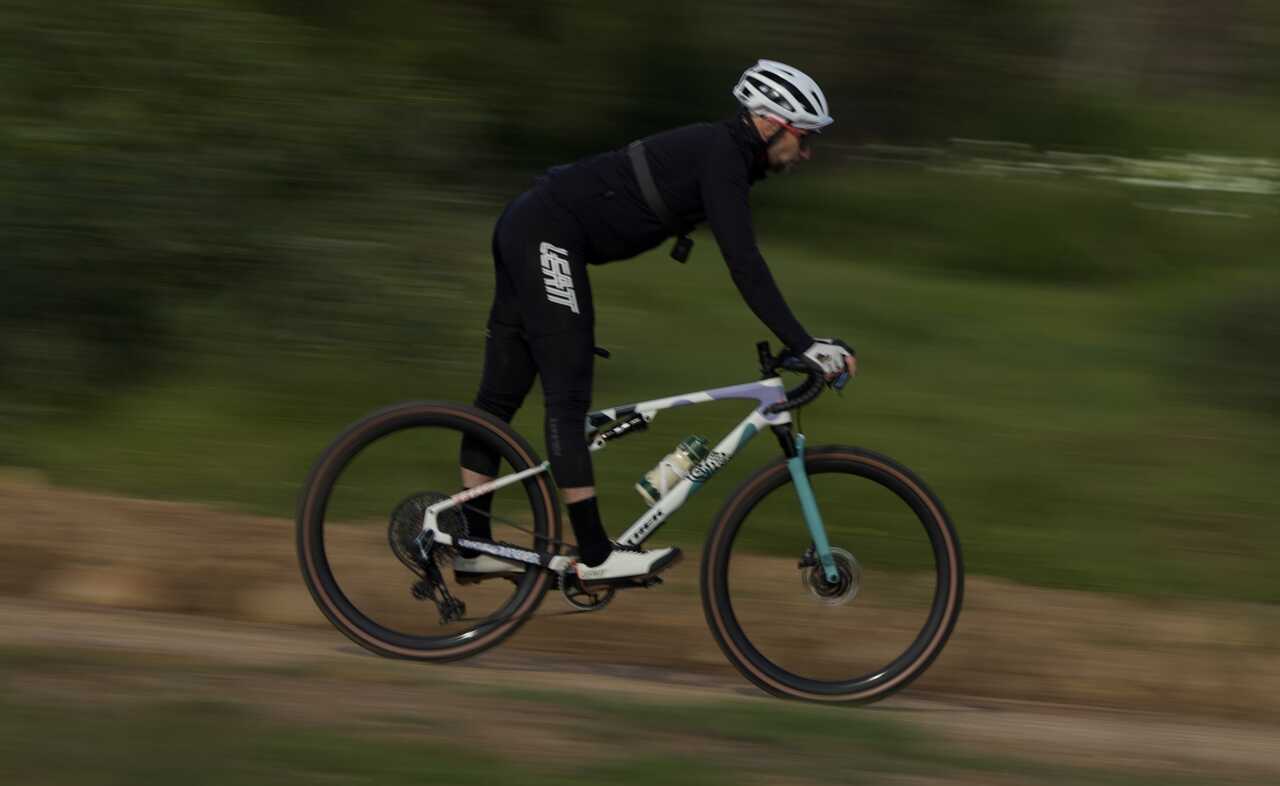
And it highlights something that a simple efficiency test can’t really quantify: speed isn’t only about how efficiently a bike converts watts into forward motion. It’s also about how much confidence the bike gives you when at pace, in a bunch on unknown terrain or in this case, maxing out on a downhill. The CheckOUT’s suspension, dropper post and more composed handling allowed me to stay off the brakes for longer – clocking a far higher max speed.
Living with the Trek Checkpoint
Over and above the actual test day, I spent significant time on both bikes on varied terrain. In terms of ‘living with’ the Checkpoint – it’s biggest strength is its sheer versatility. It can be a gravel race bike one weekend, an adventure bike the next and a remarkably capable road bike when you swap in a faster tyre. That’s why I think of it as the quintessential modern gravel bike.
It’s incredibly versatile | If your riding regularly moves between tarmac and gravel, the Checkpoint makes a compelling case for being your one-bike solution. It has the speed and efficiency to feel at home on the road, while retaining enough off-road capability for serious gravel riding.
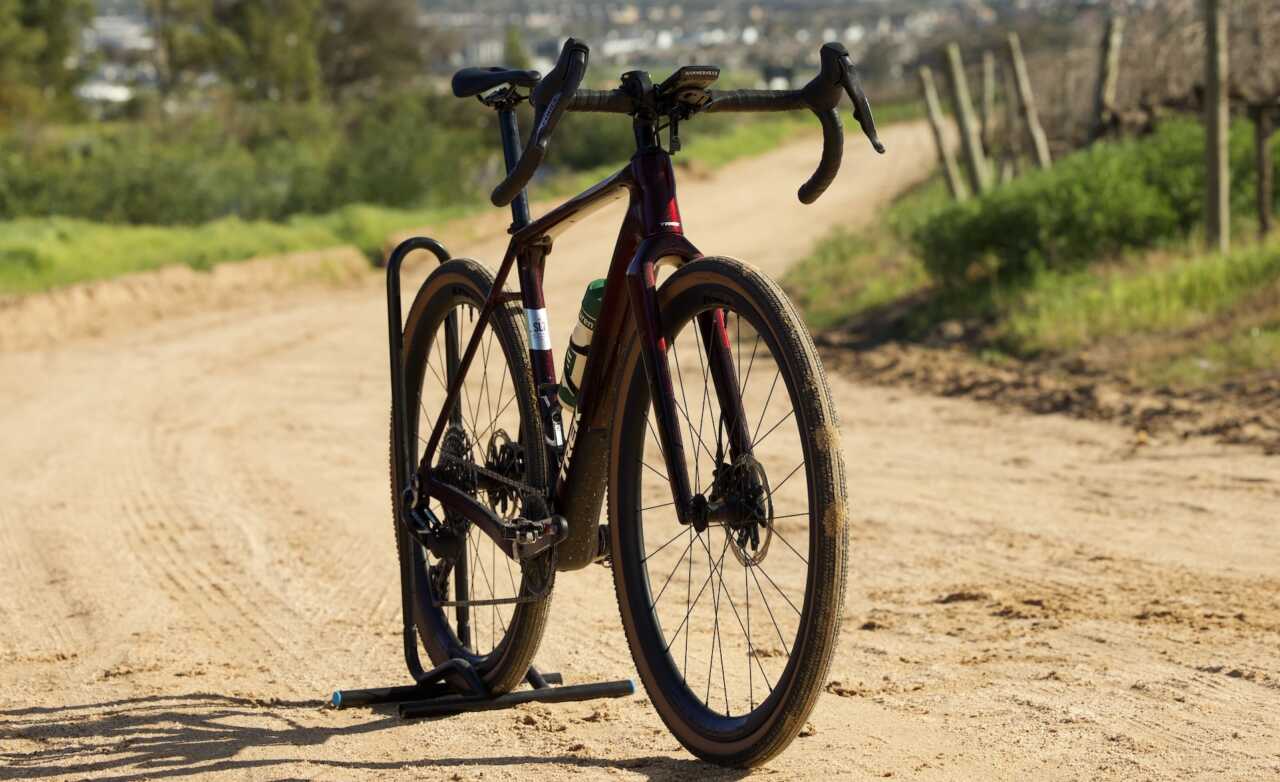
There’s a lot of tyre clearance | Trek quotes maximum tyre clearance at around 50mm, although, depending on the tyre and wheel combination, there is potential to go beyond that. That gives you plenty of scope to tailor the bike to your riding, whether you’re chasing speed with a narrower slick-ish gravel tyre or looking for more grip, compliance and a suspension-like feel from the tyres.
IsoSpeed makes a difference | The Checkpoint’s IsoSpeed system provides around 8mm of vertical compliance, and I can feel it’s more comfortable than bikes without it. It’s not suspension in the conventional sense, but it takes the edge off repeated impacts and helps make long rides considerably more comfortable. For riders spending hours on corrugated gravel, that matters. Even on road rides, I am thankful for it.
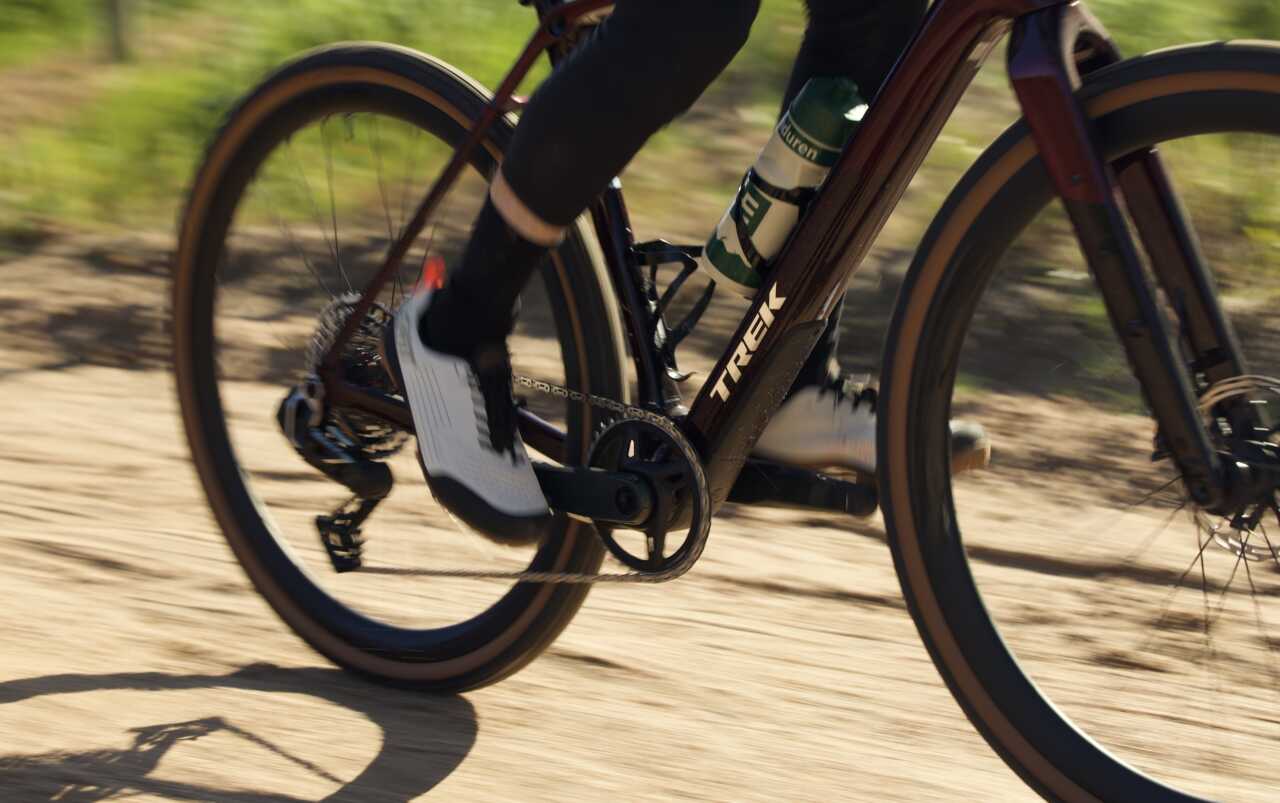
The frame storage is genuinely useful | The integrated frame storage is another feature that quickly goes from “nice-to-have” to something you wonder how you lived without. I found its a practical place to carry tools, spares and other essentials without filling your pockets or bolting bags all over the frame.
Living with the Trek CheckOUT
The CheckOUT is a different proposition. Change the tyres and/or cockpit and it can cover an enormous range of riding. It’s more versatile than the CheckOUT. The one area where I wouldn’t choose it over the Checkpoint is for competitive or semi-competitive road racing. Obviously! You’d have weight issues and maybe max-chainring size issues. But if most of your riding happens away from smooth tarmac, the equation changes dramatically.
Traction changes everything | One of the biggest advantages of the CheckOUT is the amount of traction it gives – even with the 42mm tyres. When I pushed the pace up lose, technical climbs, the bike stayed composed. Instead of having to back off because the rear wheel is skipping or spinning, I found I can maintain my rhythm, my cadence and keep tapping away at the pedals. That can be the difference between riding a section and having to get off and push. And that isn’t something a power-meter test necessarily captures.
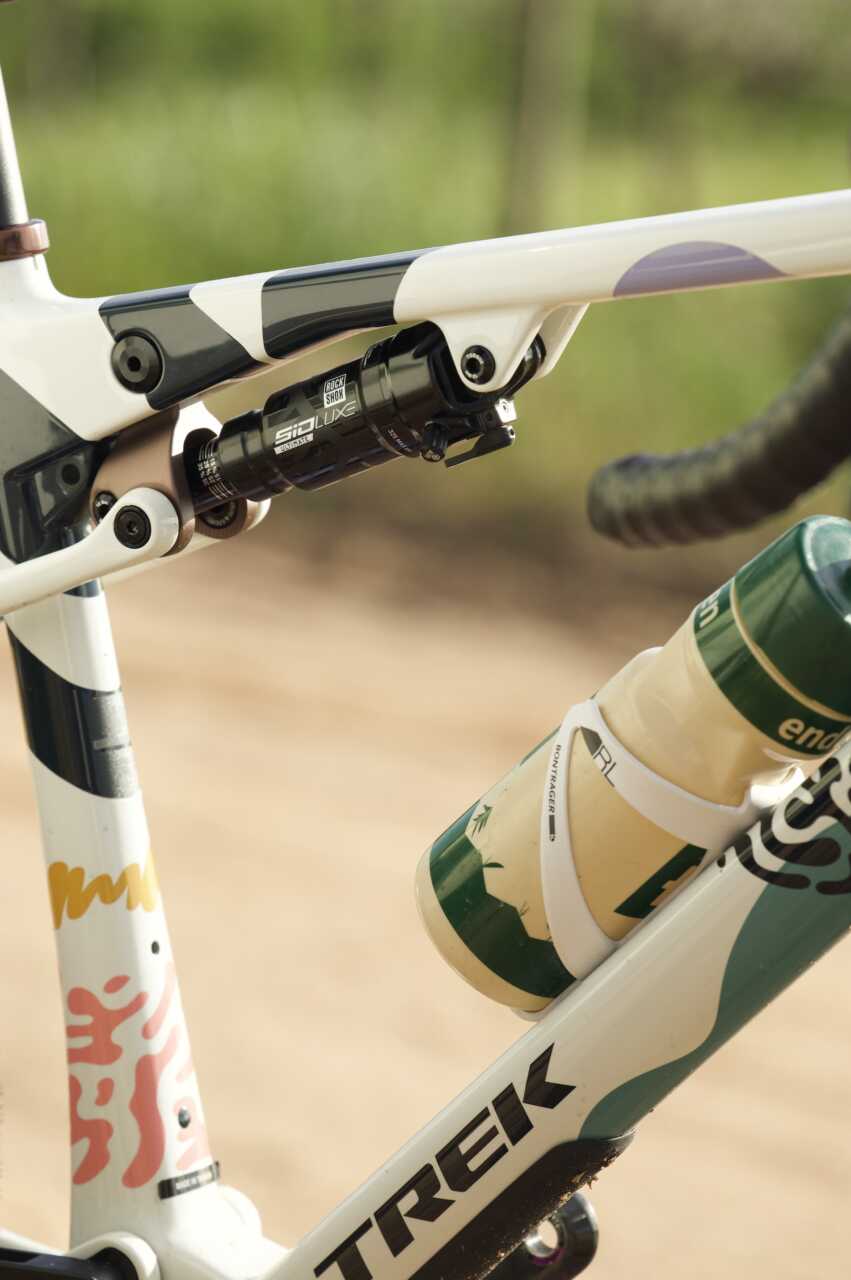
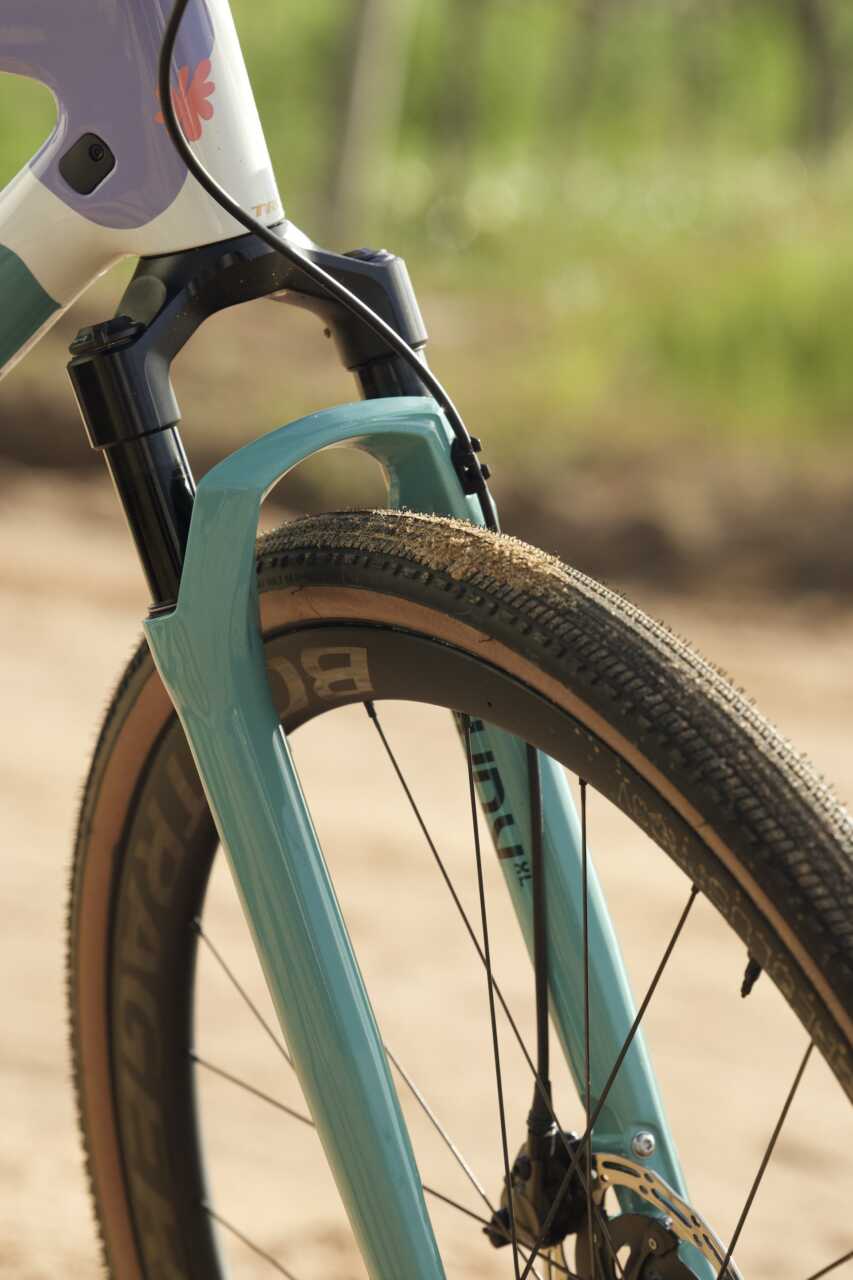
It floats rather than bounces | This is perhaps the biggest difference I noticed when jumping between the two bikes. The Checkpoint reacts to rough terrain in a way you’d expect from a rigid gravel bike, albeit one with a good degree of compliance. The Checkpoint ‘feels’ fast but a lot of that is not real speed, it’s perceived speed because you are bouncing all over the saddle and the road. The CheckOUT on the other hand, floats over all that rough stuff as if it’s not even there. Rather than bouncing from one impact to the next, the suspension allows the bike to move beneath you while the tyres stay connected to the ground. There are simply fewer vibrations reaching my hands, feet and butt – which means Mr Fatigue will visit me later, not sooner – especially on longer rides.
You can run lighter, faster tyres | Interestingly, the suspension also opens up another possibility: running a faster tyre without necessarily giving up the off-road capability you might expect from a bigger, heavier rubber setup. During the test, the 42mm tyres I used were far faster than the stock 55mm tyres, yet the bike retained plenty of comfort and control thanks to the suspension. That’s an important distinction. You don’t necessarily need monster tyres on the CheckOUT.
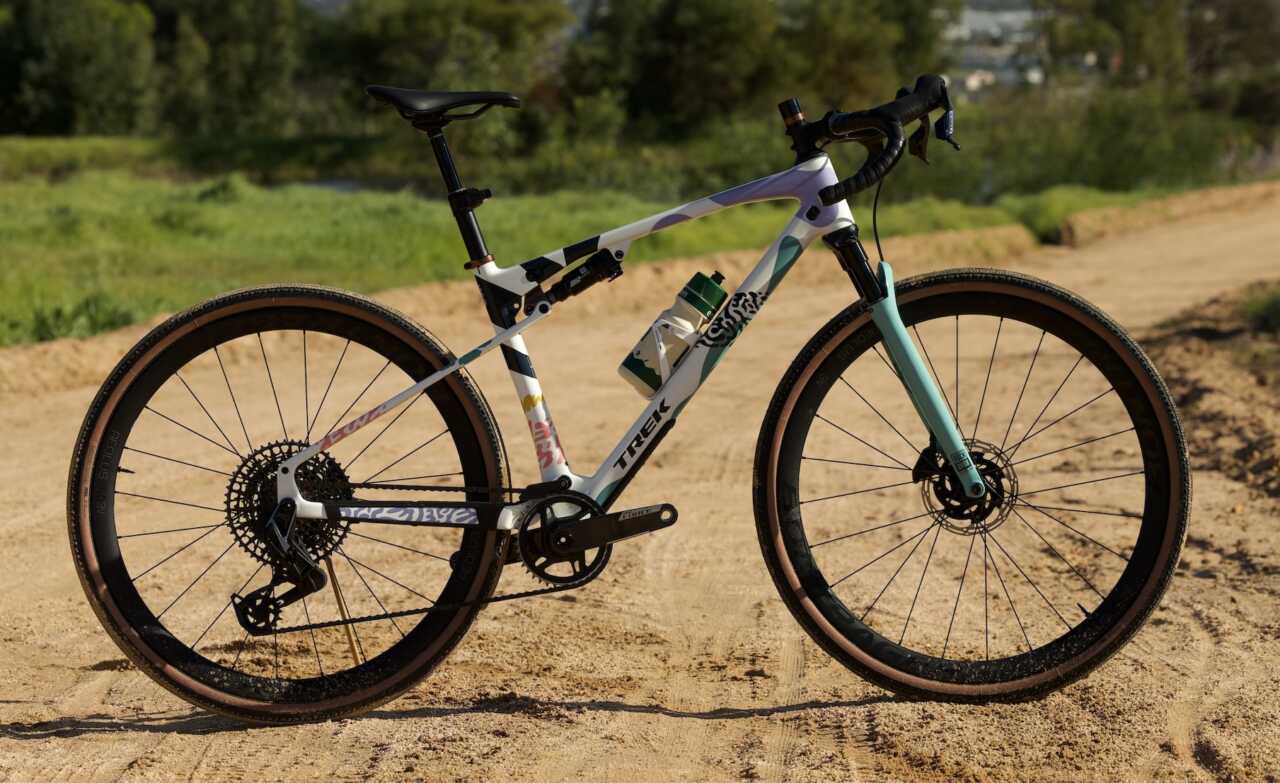
Less fatigue | This is perhaps the biggest advantage, and it’s the hardest one to quantify. Every time after riding the CheckOUT, I felt like I’d taken less of a beating. My hands and lower back were noticeably happier, and I generally felt fresher at the end of a ride. For a short race, you might not care. For a six-hour off-road gig, a full day in the saddle or a multi-day something, you absolutely will.
The handling is the real revelation | The CheckOUT’s handling is vastly more confidence-inspiring than that of a typical rigid gravel bike – especially when the surface turns toward a Category 3 or 4. That matters for experienced racers, because confidence allows you to carry more speed. But it could be even more important for riders who aren’t particularly experienced off-road. This is a bike that remains calm when the terrain gets sketchy, rocky or unpredictable and it makes technical gravel feel much less intimidating. And then there’s the elephant in the room…
Yes, people will look at you! | The CheckOUT is not (currently!) a conventional gravel bike. Traditionalists may struggle to understand why a gravel bike needs suspension. . Expect some strange looks and the occasional double take when you roll up to a group ride, coffee shop or local bike shop. (Hi Gerard W!) But after riding it, I’m less concerned with what it looks like and much more interested in what it allows me to do. And there’s one test the CheckOUT wins every single time: The smile test!
So, which one should you buy?
I think the answer comes down to paying careful consideration to where you’re actually going to spend your time riding. I see plenty of gravel-bike buyers who still spend around 60% of their riding time on the road. Me – I’m probably doing more than that. If that sounds like you, I’d choose the Checkpoint. It’s the better all-rounder for riders who need almost road-bike efficiency but want the freedom to head onto gravel whenever the opportunity arises. The Checkpoint feels fast, direct and versatile. It is arguably the good choice if you’re not sure exactly what your gravel riding will look like.
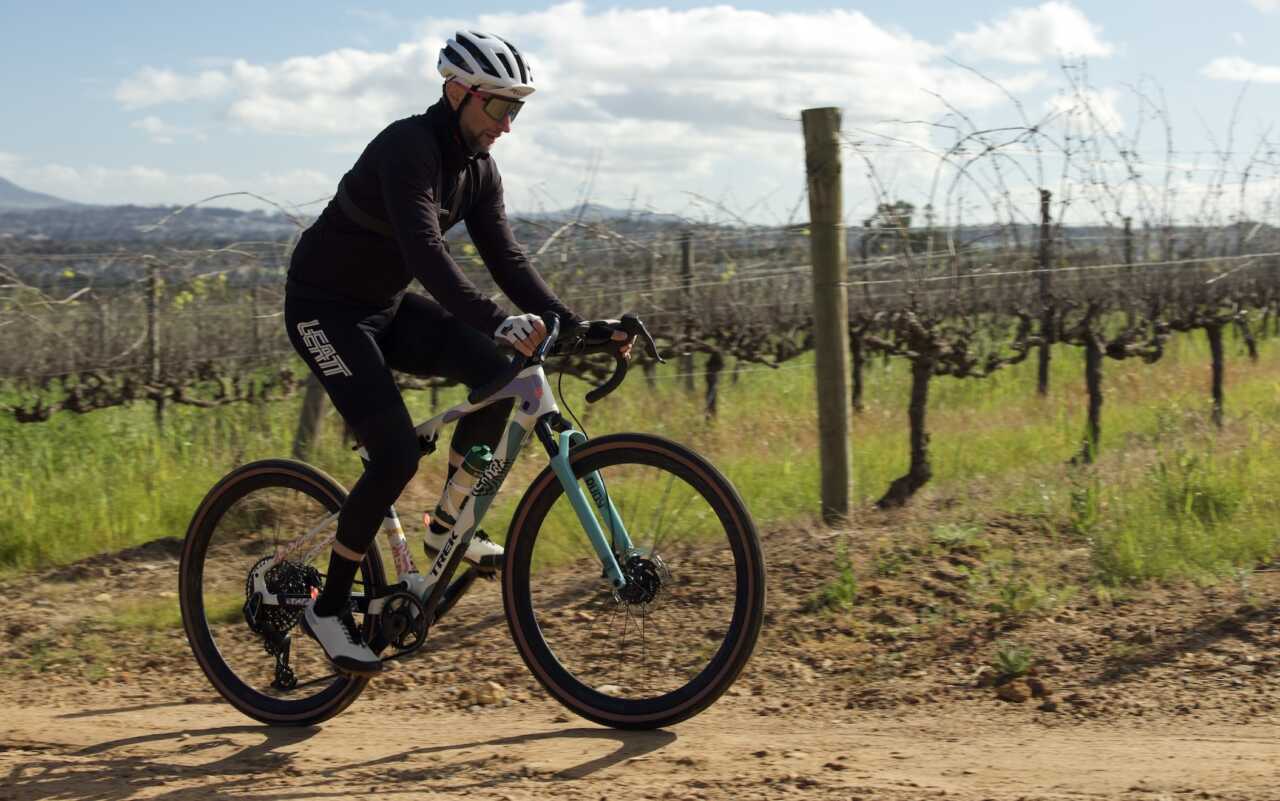
But, I think, if you’re going to spend 60% or more of your time riding typical South African gravel roads – particularly Category 2 through 4 terrain – I’d take a very serious look at the CheckOUT. The efficiency numbers from our test day don’t show anything in the way of a significant disadvantage. And once the terrain gets rough, the additional traction, control, comfort and downhill confidence begin to outweigh the performance of a rigid bike. That’s the key takeaway from this comparison. After riding this bike, I do think there is a place at the races for full-suspension gravel bikes and I do expect to see more of them popping up from other brands.
Bottom Line
The Checkpoint is the better choice if speed on smoother surfaces and road versatility are your priorities. The CheckOUT is the better choice if your definition of gravel involves rougher roads, technical terrain and long hours away from the tarmac. On paper, the Checkpoint may be the faster bike, fractionally. But out in the real world, the CheckOUT can make you faster simply because it gives you the confidence to keep riding faster for longer. And for me, that’s what made this comparison so interesting. The stopwatch and power meters favour the Checkpoint, only just. Almost everything else favours the CheckOUT. Now for the mic drop moment; imagine a CheckOUT with Flight Attendant… //
| Visuals: Ruben Oosthuizen |