


Tour de France 2026 Preview: A Route Built for Legends

The re-introduction of a Team Time Trial, early big mountain stages and an abundance of summit finishes makes this one for the books!
The 2026 Tour de France is shaping up to be one of the most demanding and spectacular editions in recent memory. From a historic start in Barcelona to a brutal Alpine finale and a return to Paris via Montmartre, this year’s race appears designed to keep the yellow jersey battle alive until the very last weekend.

At 3,333 kilometers and featuring more than 54,000 metres of climbing, the 113th edition of the Tour is packed with challenges. There are opportunities for sprinters, chances for breakaway specialists, and enough mountain stages to ensure that only the strongest climbers come out tops in the three-week battle. Add in both a Team Time Trial and an Individual Time Trial, and the recipe is there for a classic Tour de France.
Overview of the Route
The 2026 Tour de France begins outside France for the fourth time in five years, with a Grand Départ in Barcelona. The opening stage is a 19km Team Time Trial – the first time the Tour has started with a Team Time Trial since 1971. It’s a bold move from race organizers and immediately places pressure on GC teams to arrive firing on all cylinders.
After two stages in Catalonia, the race heads north into France and wastes little time before introducing the mountains. Unlike some editions where the first week is dominated by sprint stages and nervous crosswind battles, the 2026 route brings serious climbing into play almost immediately.
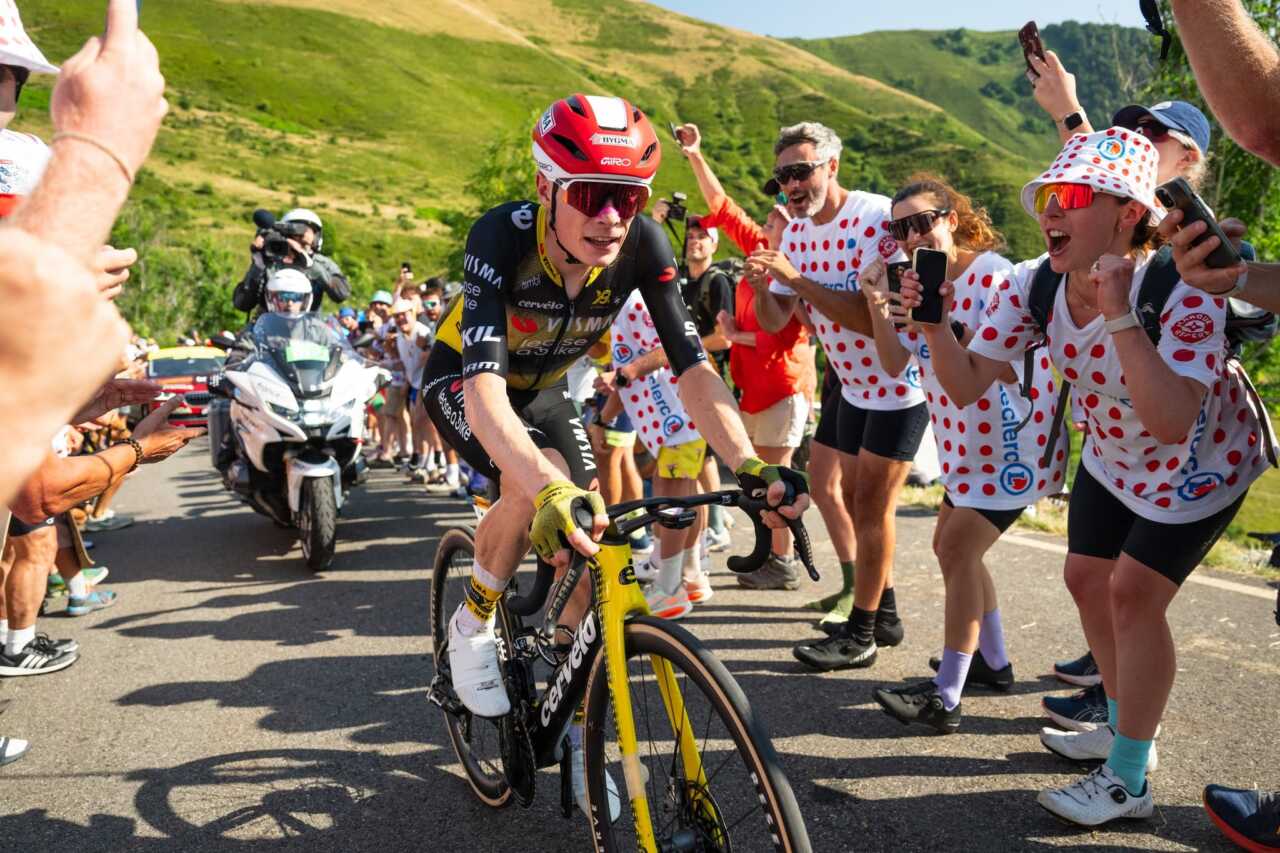
The Pyrenees arrive during the opening week, highlighted by a summit finish at Gavarnie-Gèdre. From there the race travels through the Massif Central, Vosges and Jura Mountains before reaching the Alps for what could be one of the most decisive final weeks in modern Tour history.
The route includes seven flat stages, four hilly stages, eight mountain stages, five summit finishes, one Team Time Trial and just a single Individual Time Trial. The relatively low amount of time trialing compared to previous eras favours the pure climbers, while the abundance of mountain finishes means the GC riders will have countless opportunities to attack.

One of the biggest talking points is the placement of the Individual Time Trial. Rather than appearing early in the race, it arrives deep into the final week. By that point, fatigue will be a major factor, potentially creating significant time gaps between rivals. Then comes the Alpine showdown.
In a move that has already generated enormous excitement among fans, the race finishes atop Alpe d’Huez on both Stage 19 and Stage 20. Never before has the Tour featured back-to-back summit finishes on cycling’s most iconic climb. Stage 20, widely considered the Queen Stage, includes the Col du Galibier, Télégraphe, Croix de Fer and Col de Sarenne before the final ascent of Alpe d’Huez. It is a stage designed to create legends.

The race concludes in Paris, where riders will once again tackle the Montmartre climb before the finish. Rather than the traditional procession for the sprinters, the final day could provide one last opportunity for attackers to upset the script.
GC Favourites
Tadej Pogačar | Any discussion about Tour favourites begins with Tadej Pogačar. The Slovenian continues to redefine what is possible in modern cycling, combining explosive climbing, aggressive racing and world-class time trialing. The 2026 route appears tailor-made for his attacking style. With relatively few time trial kilometres and numerous summit finishes, Pogačar will likely view this route as an opportunity to put rivals under pressure from the very first mountain stage. If he arrives in Barcelona in his usual form, he remains the man to beat.

Jonas Vingegaard | If anyone has consistently shown they can challenge Pogačar over three weeks, it’s Jonas Vingegaard. The Danish climber thrives in the high mountains and has proven repeatedly that he can match, and sometimes exceed, Pogačar when the gradients become severe. The double Alpe d’Huez finale and brutal Alpine stages should suit his strengths perfectly. If Vingegaard can limit losses during the explosive opening week and arrive in the Alps within touching distance of yellow, fans could be in for another classic duel.

Remco Evenepoel | Remco enters another Tour with immense expectations. The Belgian superstar possesses one of the strongest engines in the peloton and will likely relish the late-race Individual Time Trial. The question remains whether he can consistently match the climbing level of Pogačar and Vingegaard across three weeks of relentless mountain stages. If he survives the Pyrenees and remains competitive heading into the final week, his Time Trial ability could become a crucial weapon.

The Dark Horses
Every Tour produces surprises and 2026 could be no different. Young French sensation Paul Seixas has already generated considerable excitement ahead of what could be a breakthrough Tour appearance.

Meanwhile riders such as Isaac del Toro, Florian Lipowitz, Juan Ayuso, Tobias Johannessen, Tom Pidcock, Carlos Rodríguez, Thymen Arensman, Cian Uijtdebroeks and Matteo Jorgenson could all emerge as podium contenders, if the favourites falter.
Five Must-Watch Stages
Stage 1: Barcelona Team Time Trial | The opening day immediately creates intrigue. A Team Time Trial as the Grand Départ is something fans rarely see, and the strongest squads could gain valuable seconds before the race has properly begun. Expect aggressive racing, cool tech and the first real clues about which teams are ready to challenge for yellow.
Stage 6: Pau to Gavarnie-Gèdre | The first major mountain showdown arrives in the Pyrenees. With a summit finish and significant climbing, this stage could reveal which contenders are genuine Tour winners and which riders are simply hoping to survive. The yellow jersey may not be decided here, but weaknesses will certainly be exposed.

Stage 15: Champagnole to Plateau de Solaison | By the third week fatigue becomes a major factor, and this 183km mountain stage through eastern France could prove surprisingly decisive. Plateau de Solaison (11.3km at 9.1%) is one of the newer climbs on the Tour map and offers gradients steep enough to create meaningful time gaps. Riders carrying even the slightest weakness into the final week could pay a heavy price.
Stage 16: Évian-les-Bains to Thonon-les-Bains (Individual Time Trial) | Time Trials often play a decisive role in Grand Tours and this one arrives at the perfect moment. Placed deep into the race after two weeks of climbing, the 26km TT stage will reward riders who have managed their efforts carefully. GC hopefuls with strong Time Trial abilities could gain crucial seconds before the Alpine finale.

Stage 20: Le Bourg-d’Oisans to Alpe d’Huez | This is the stage everyone has circled. The Queen Stage. Galibier. Télégraphe. Croix de Fer. Sarenne. Alpe d’Huez via the Col de Sarenne. More than 5,400 metres of climbing packed into a single day. If the yellow jersey battle is still close, this could become one of the defining stages of the modern Tour era. Fans can expect attacks, collapses, heroics and perhaps the moment that decides the 2026 Tour de France.
Final Thoughts
The 2026 Tour de France feels deliberately designed to encourage attacking racing. The opening Team Time Trial, early mountain stages, limited Time Trial kilometres and back-to-back finishes on Alpe d’Huez create a route where no rider can afford to wait until the final week. For fans, that’s excellent news.
Whether it’s another chapter in the Pogačar-Vingegaard rivalry, the emergence of a new superstar, or an unforgettable showdown on the slopes of Alpe d’Huez, the 2026 Tour promises three weeks of world-class racing from Barcelona to Paris. And if the route delivers on its promise, this could be the Tour we talk about for years to come. //
| IMAGES: UCI, Getty, Meta |