

Review: TREK Top Fuel 9.9 XX1 AXS | The stage race specialist & singletrack crusher

The range-topping version of Trek’s new-for-2020 Top Fuel marathon bike is simply a rocket on the trails.
With a plethora of design changes to improve efficiencies during long days in the saddle and a racey all-carbon build, this over-the-counter Super Bike might prove to be the epitome of new-school marathon rigs.

THE BUILD
With this unapologetically high-end 9.9 model, you are getting the complete race package with all the bells and whistles. SRAM’s chic oil-slick finish chain/cassette combo, a 12-speed AXS wireless electronic shifting setup and carbon XX1 crankset to boot. The grip mounted TwistLoc dual remote lockout system simultaneously locks out the front and rear suspension to optimize efficiency on smooth surfaces. The RockShox Deluxe Ultimate shock delivers coil-like small bump performance and has a neat internal token system to tweak the air volume chamber to customize the ride feel. The Bontrager Kovee wheels are a light-weight, 28 hole, direct-pull, bladed-spoke wheelset with a 30mm inner width to improve grip. The DebonAir equipped 120mm Pike Ultimate is a buttery smooth and quick-handling short offset fork. The other singletrack enablers within the build kit are the long (170mm) AXS Reverb dropper post, robust Bontrager XR3 tyres in a 2.4″ width and a larger front rotor.

Bontrgarer Arvada seat 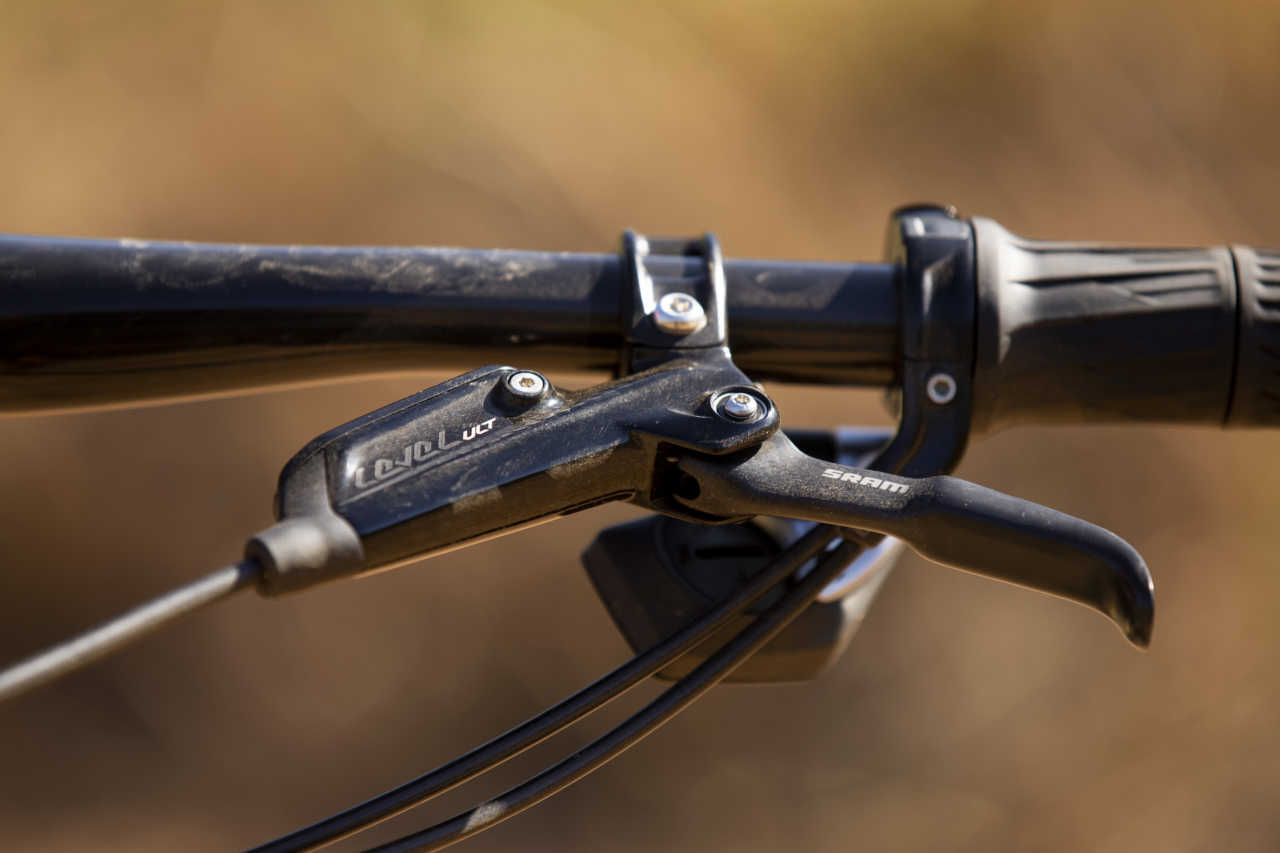
SRAM Level Ultimate brakes with carbon levers 
Top tier carbon chassis


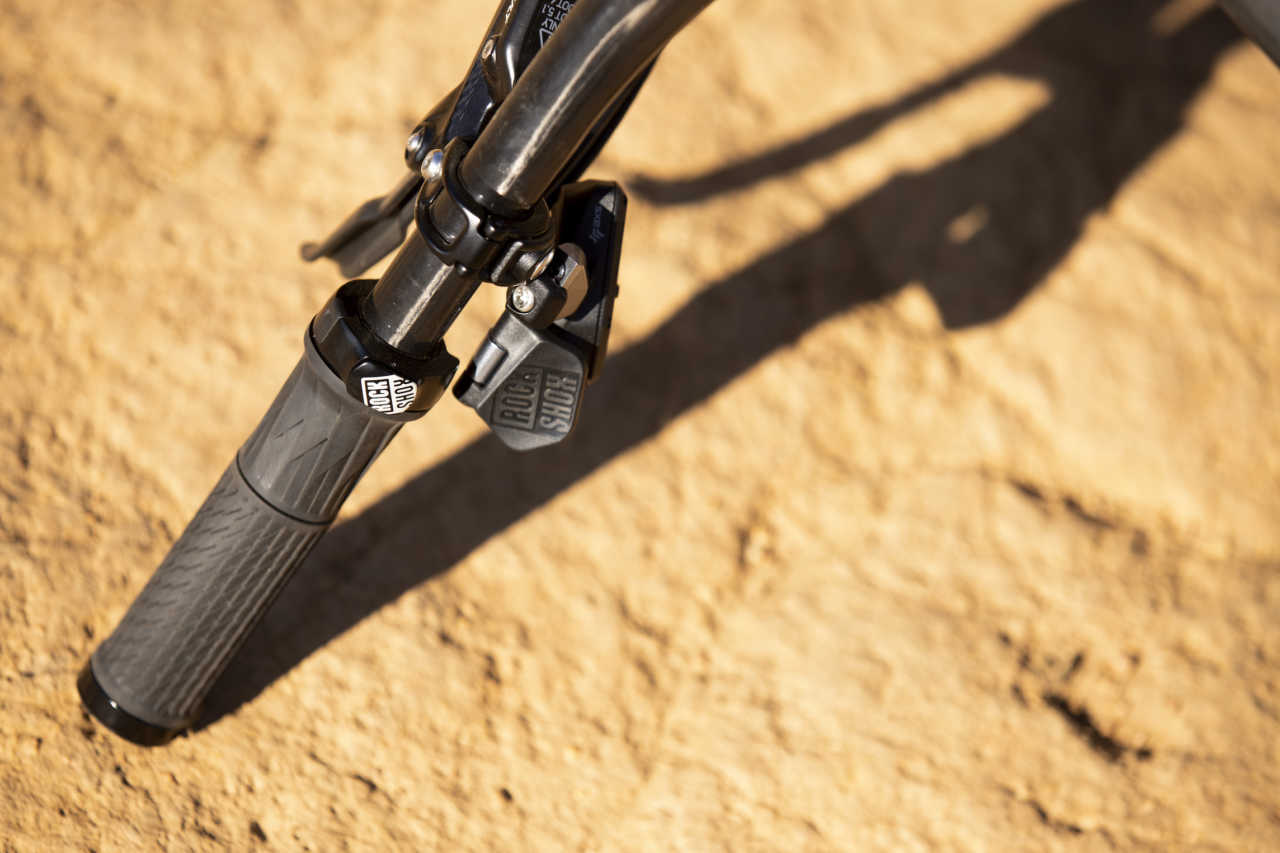
RockShox TwistLoc suspension lockout. 
The RockShox Deluxe Ultimate shock features a token adjust air chamber to customize progressivity. 
RockShox Pike Ultimate short offset 120mm fork.

Direct-pull, bladed-spoke wheelset by Bontrager. 
The Bontrager Kovee Pro 30 carbon wheels feature a wider inner diamteter rim which improves grip.
BUILD DETAILS
| FRAME | | Top Fuel 9.9 OCLV Carbon main frame and stays, Magnesium rocker, Mino Link, ABP, 115mm travel |
| FORK | | RockShox Pike Ultimate, DebonAir spring, Charger 2 RC 2 damper, 42mm offset and 120mm travel |
| SHOCK | | RockShox Deluxe Ultimate, Bontrager DropLock remote |
| BARS | | Bontrager Line Pro, OCLV Carbon, 15mm rise, 750mm width |
| STEM | | Bontrager Kovee Pro, 35mm clamp, 70mm length, 13-degree |
| LOCKOUT | | RockShox TwistLoc |
| SEAT | | Bontrager Arvada |
| SEATPOST | | RockShox Reverb AXS, 170mm travel, wireless |
| WHEELS | | Bontrager Kovee Pro 30 carbon, 108T, 28h, wide internal, direct pull bladed spokes |
| TYRES | | Bontrager XR3 Team Issue, 120Tpi, 29 x 2.4″ |
| CASSETTE | | SRAM Eagle, 10-50, 12 speed |
| MECH | | SRAM XX1 Eagle AXS |
| SHIFTER | | SRAM Eagle AXS wireless |
| CRANKS | | SRAM XX1 Eagle AXS, DUB, 32T, 175mm |
| CHAIN | | SRAM XX1 Eagle |
| BRAKES | | SRAM Level Ultimate, carbon levers, 180mm / 160mm rotors |
| WEIGHT | | 11.4kg (with sealant, no pedals) |
| RRP | | R149 999 |

The size Large frame runs a long (170mm) Reverb AXS dropper. 
The AXS Reverb controller means no hoses or wires clutter up the cockpit.

The XR3 is a 2.4″ tyre with a bigger edge. 
Fast-rolling center tread pattern.
GEOMETRY

Seat tube angle options are 75.5° or 75° 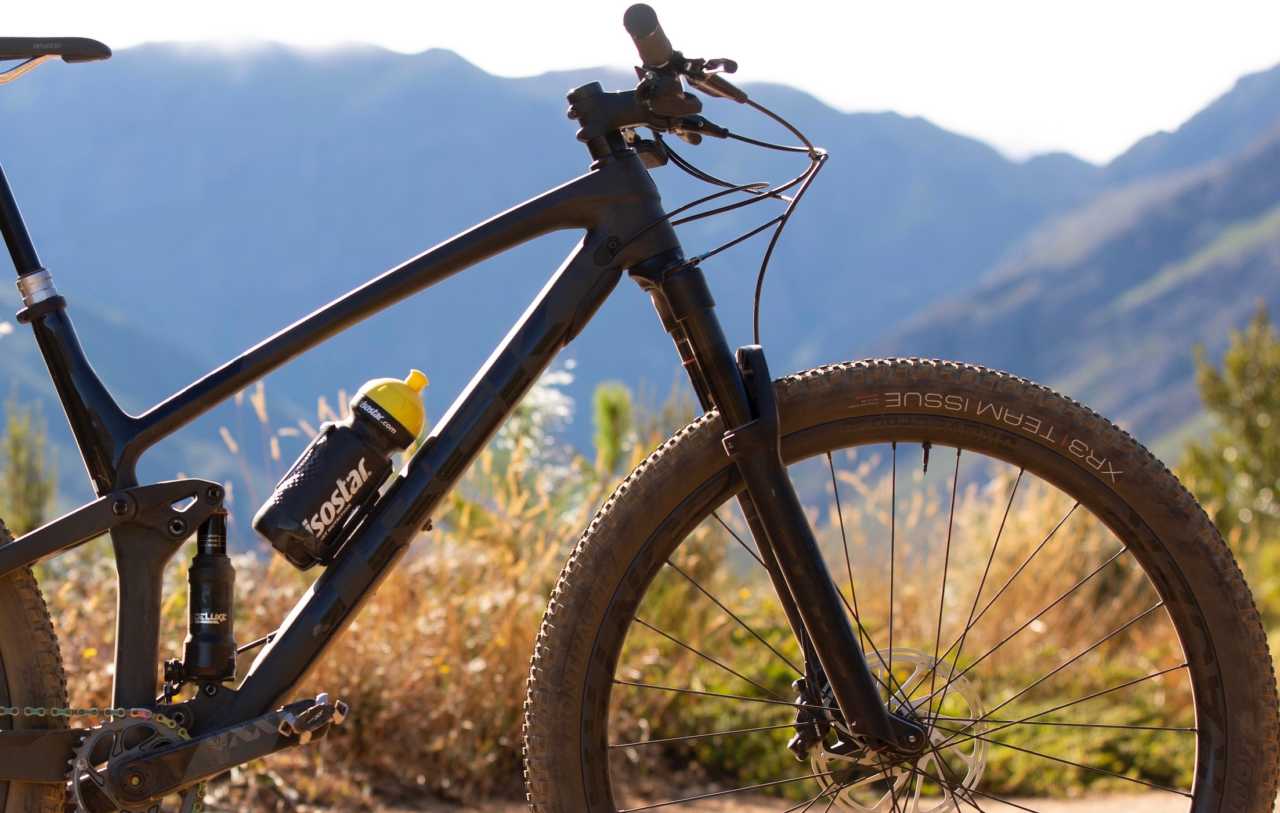
Head angle options are 68° or 67.5°
Thankfully, the traditional short reach and long stem marathon bikes with their sketchy handling characteristics, are slowly but surely becoming something of the past. Whilst Trek is not the very first brand to revise their marathon racing geometry to suit higher speeds, this new Top Fuel is certainly doing its part to redefine the marathon genre. Perhaps a handful of traditionalists might view the 67.5° head tube angle (68° in high setting) as being on the slack side, but in my opinion, it is very much the space that will become the new norm for marathon race bikes.
IN THE LOW SETTING
| SMALL | MEDIUM | M/L | LARGE | X-LARGE | XX-LARGE | |
| REACH | 405 | 440 | 456 | 470 | 487 | 510 |
| STACK | 594 | 594 | 594 | 603 | 612 | 622 |
| STANDOVER | 725 | 730 | 735 | 745 | 765 | 780 |
| HEAD TUBE ANGLE | 67.5° | 67.5° | 67.5° | 67.5° | 67.5° | 67.5° |
| SEAT TUBE ANGLE | 75.0° | 75.0° | 75.0° | 75.0° | 75.0° | 75.0° |
| HEAD TUBE LENGTH | 90 | 90 | 90 | 100 | 110 | 120 |
| SEAT TUBE LENGTH | 394 | 419 | 445 | 470 | 521 | 570 |
| WHEELBASE | 1117 | 1152 | 1168 | 1186 | 1207 | 1234 |
| CHAINSTAY | 435 | 435 | 435 | 435 | 435 | 435 |
| BB HEIGHT | 337 | 337 | 337 | 337 | 337 | 337 |

WHY SHOULD A MARATHON BIKE BE DIFFERENT TO A LAP RACING BIKE?
…. because the inherent nature of marathon or endurance racing is that a lot of the course is ridden blind. This means you are often unaware of what awaits you on the other side of a natural fade-away, drop-off or switchback as you likely have not ridden the course before. There could be a plethora of sharp rocks, loose surfaces, tree trunks or steep roll-offs waiting to end your race. Additionally, marathon racing puts a lot more strain and fatigue into your system because you are out there for hours and hours, getting bounced all over the place. The answer lies firstly in a bike with calmer geometry so you don’t get chucked over the bars when you encounter the unexpected. Secondly, having slightly more suspension will help reduce the build-up of fatigue from the constant vibration and pounding your body endures.
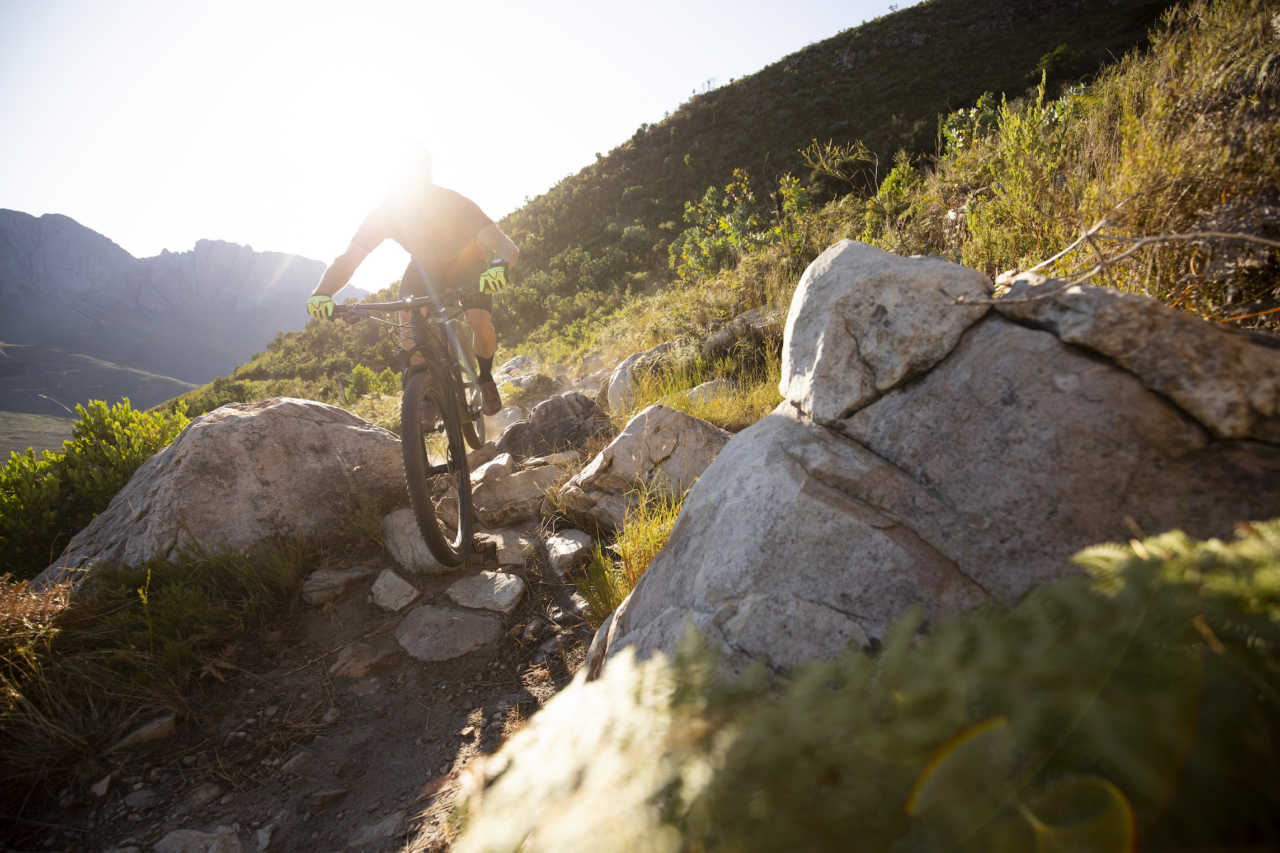
Marathon racers are usually racing ‘blind’ – on unknown tracks. 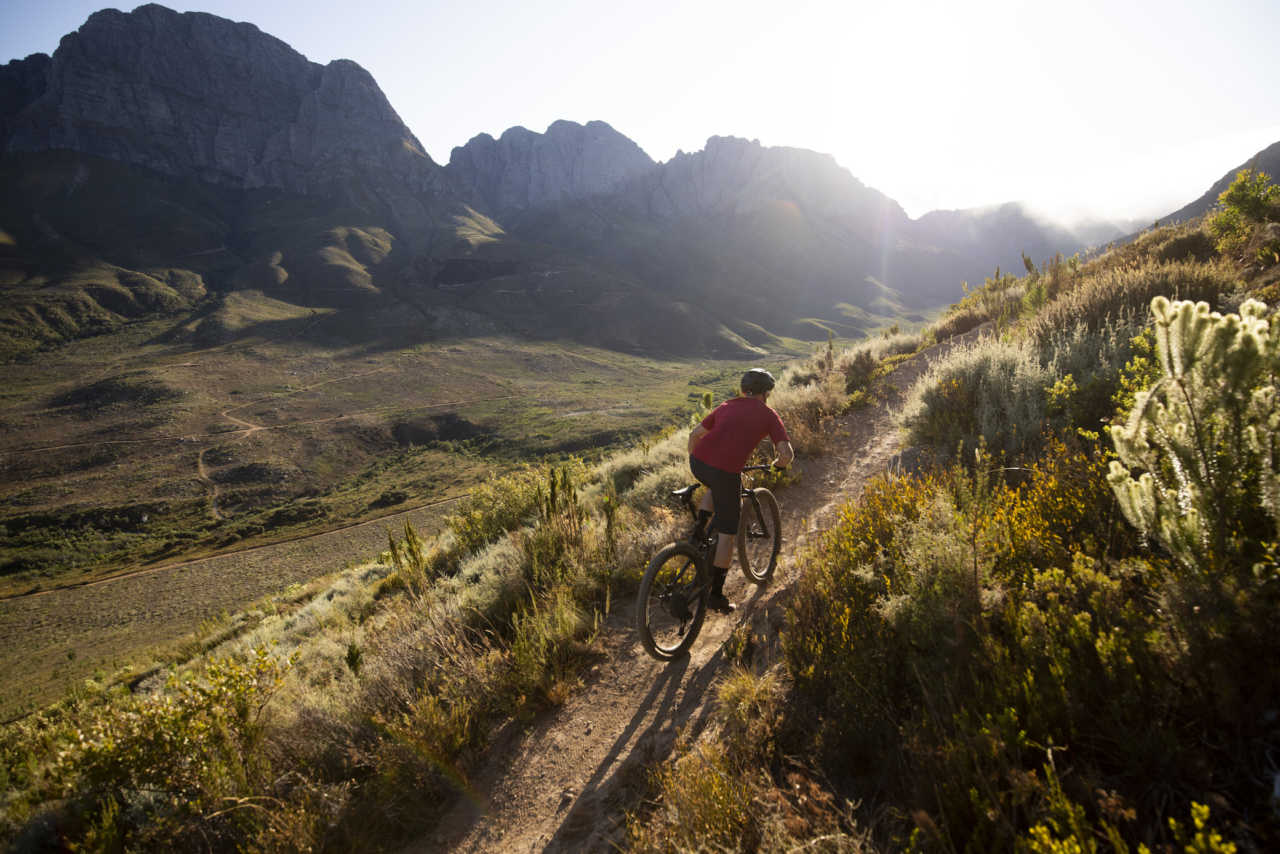
Long days in the saddle send a lot of fatigue inducing vibrations into your body.
In contrast, cross country lap racers – like the Olympic Games, World Cup, National, Provincial or School League type events – are not racing blind. They have the opportunity to walk, pre-ride and study every inch of the racetrack prior to competition. They know where all the ‘snipers’ are. By the time the race is underway, they have calculated their line choice, approach speed and tactic for every single technical section. Basically, because they are highly skilled, know every inch of the track and are only racing for around 90 minutes, they generally opt for slightly shorter travel bikes with ‘sensitive’ geometry.
SUSPENSION LAYOUT
The Top Fuel is essentially a rocker link driven, single-pivot suspension layout which uses the split pivot (ABP) system. Moving away from the old Full-Floater system (a linkage which connected the chainstay to the lower shock mount) has improved the weight and stiffness of the chassis. Moving the main pivot a tiny bit forward on this bike has improved the small bump compliance, which, reduces rider fatigue on long days out.

Trek’s ABP (split pivot) design has the stays pivoting on the rear axle. 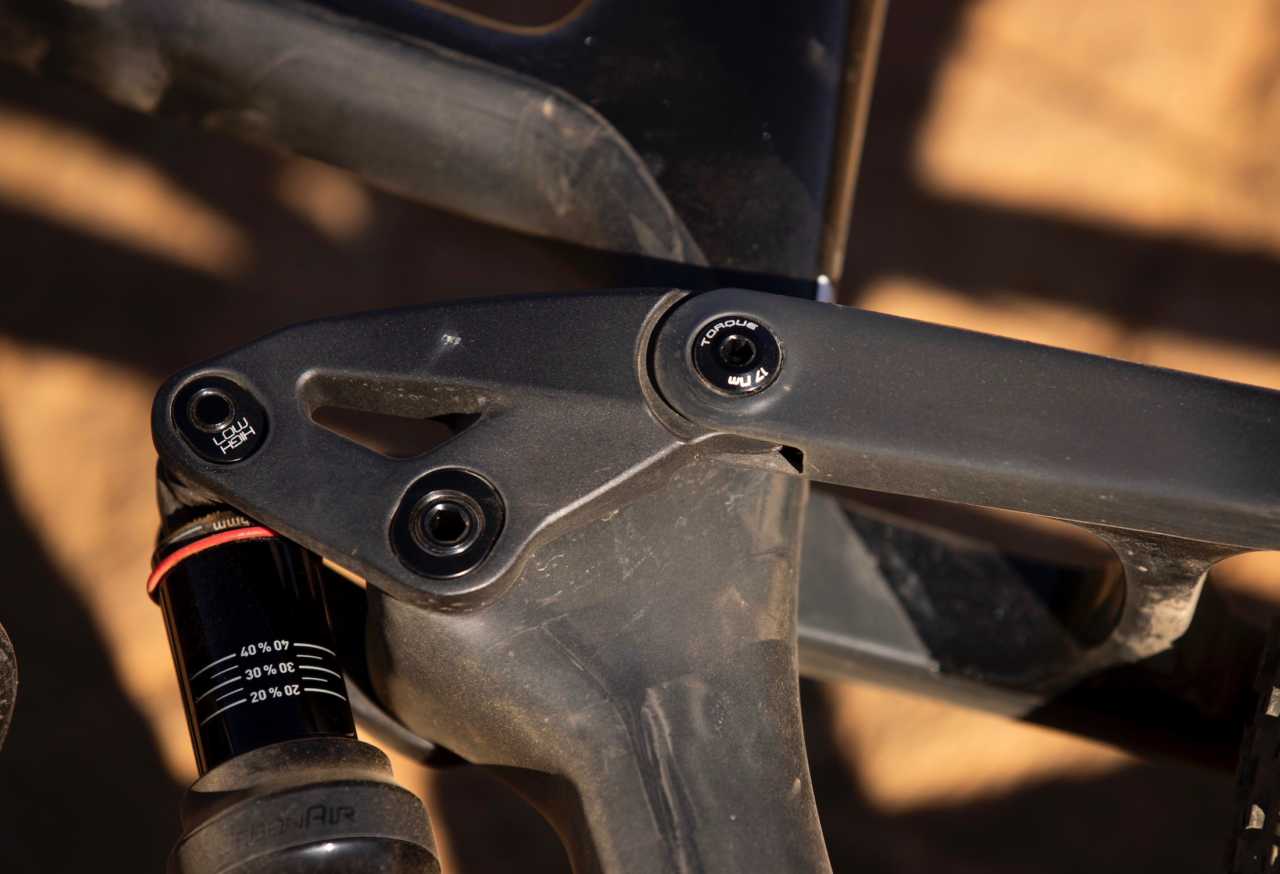
The magnesium rocker link scrubs off some grammage. 
The main pivot sits a little further forward and the shock mounts directly onto the downtube.
RIDE IMPRESSIONS


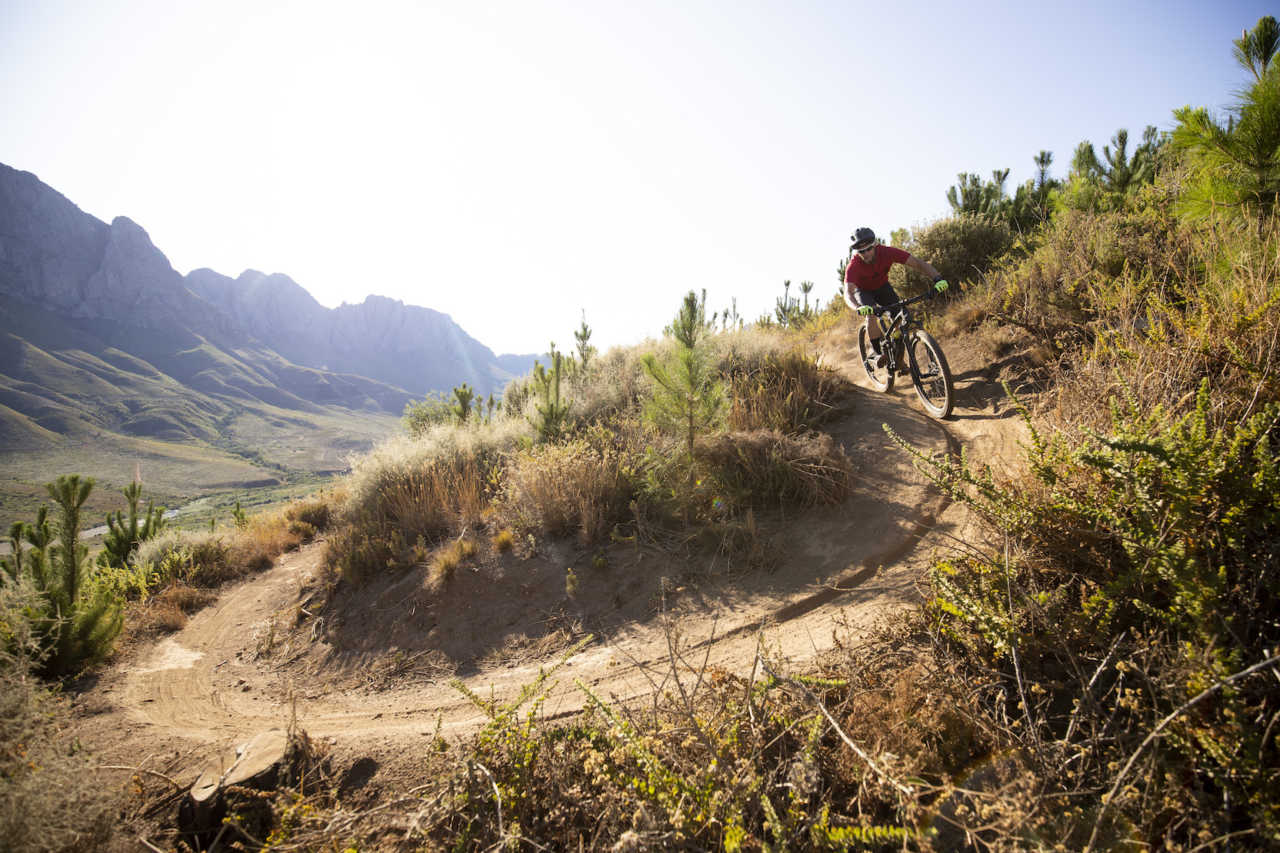
Set up for the turn 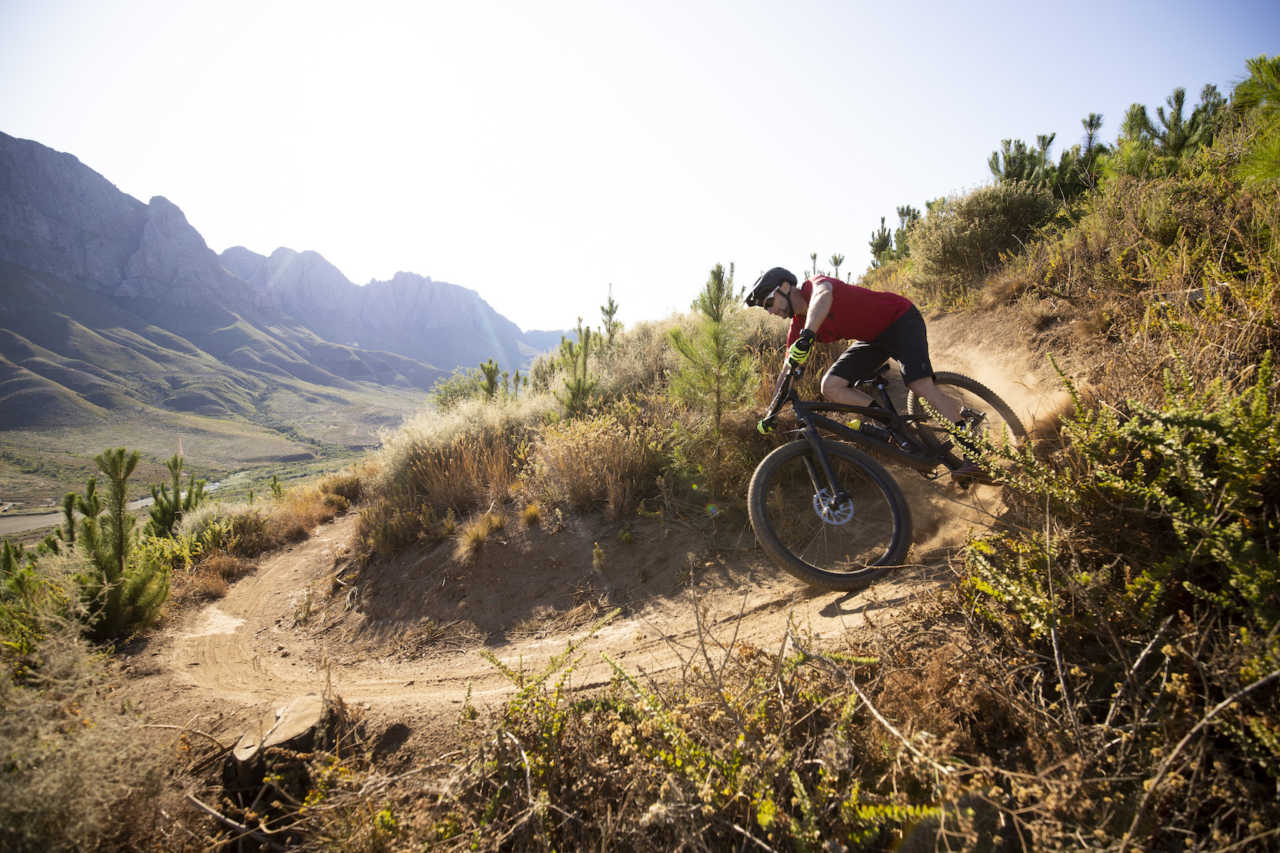
Sight the exit 
Get off the brakes 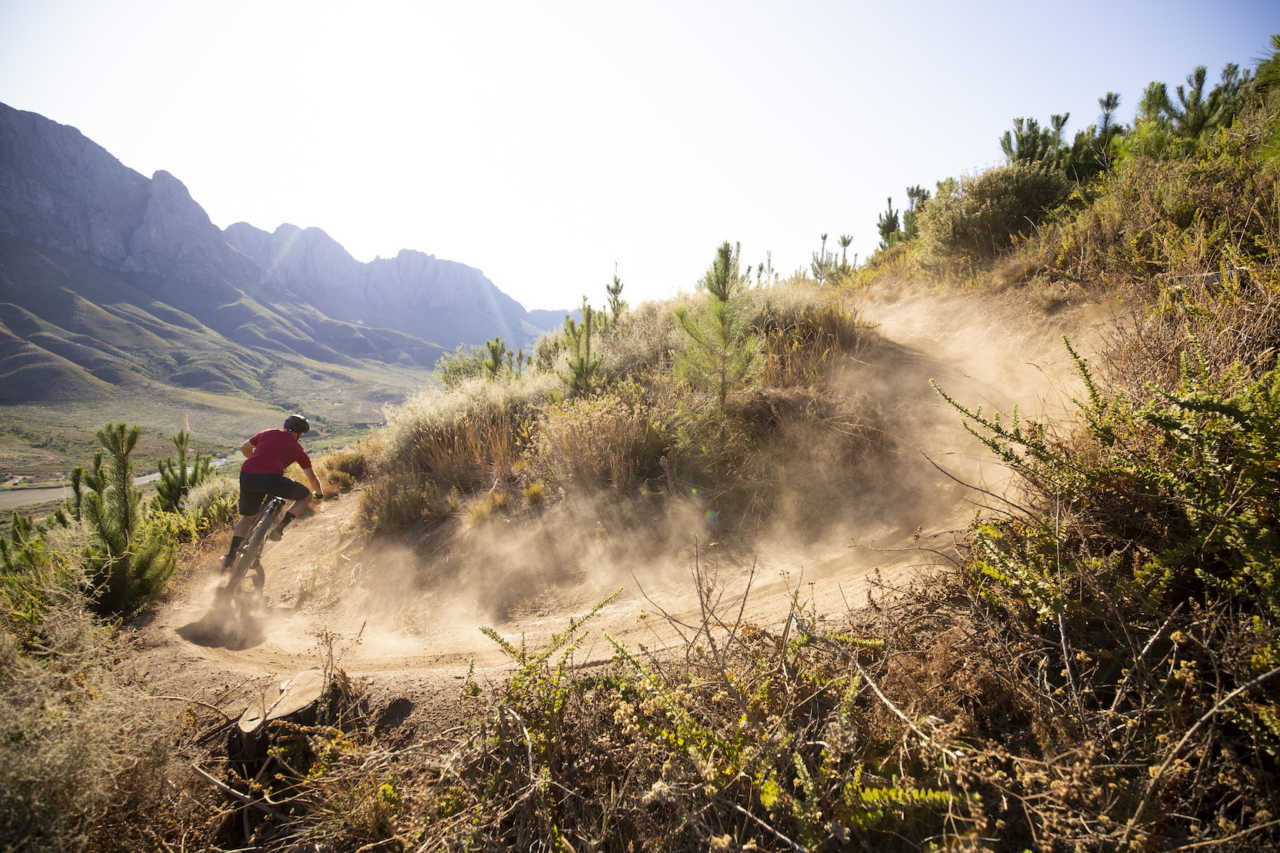
Rail it


IF YOU BUY IT
The rear shock has an air volume chamber which accommodates up to three tokens. The bike is sold with two tokens in the shock, which is an average setup suitable for most conditions. If you are after a firmer ride in the open setting, ask your bike store to fit the third token, readjust your sag setting, then rebound and see how it rolls. This air volume chamber is a fantastic feature and you are doing yourself and injustice if you do not experiment with it to find the perfect setup. I also found the bike rides a little swifter with a couple of extra clicks of rebound – so that’s over and above where you would usually ride your rebound.
For smoother marathon tracks – like at KAPSani2c – you can definitely look at running a Bontrager XR1 or XR2 tyre on the front and rear. I would recommend adding silicone slip-on grips to the purchase basket and whatever you do do not take the dropper post off! It’s an enabler, you are far faster and safer with it, it is going to prevent a crash, perhaps save a collarbone and once you are used to it you will wonder how you ever rode without one. Lastly, find a good wrench who will know how to shrink wrap the cables to clean up the cockpit.
THE TECH & MARATHON SETUP TIPS
TAKEOUT
I think everyone agrees that finding the absolute perfect marathon bike for South Africa, is a case of horses-for-courses. If we look to the professionals, it is interesting that despite having the brawn and skills to be fast on shorter travel XCO type bikes, some of them are racing marathons and stage races on bikes that have more than 100mm. You are welcome to disagree with me, but I believe that about 85% of the field at most South African marathon or multi-day events would be faster, safer and have a better experience on a machine that is forgiving, compliant and efficient. The Top Fuel is such a bike. It is a rocket in the singletrack. It is comfortable on long rides. In this top of the line AXS build, it is most certainly a Super Bike equipped to handle any marathon or stage race.

| IMAGES: Gary Perkin | LOCATION: Jonkershoek, Stellenbosch |
| MORE: trekbikes.com |